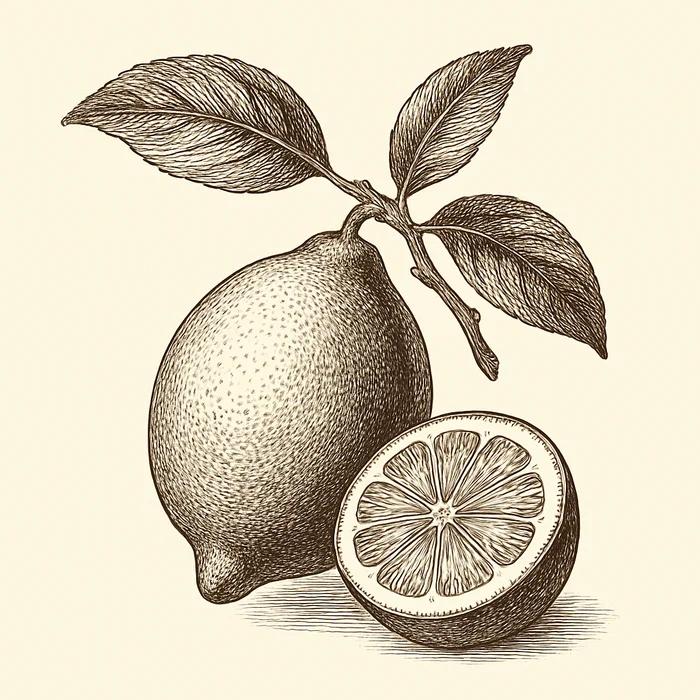
Lemon
Used throughout the Longevity Diet as a flavoring in beverages and as a dressing for vegetables. Also a source of vitamin C. Recommended: ½ lemon squeezed into tea or coffee; as dressing for cooked vegetables.
Why It Matters for Longevity
Lemon is used in the Longevity Diet as a daily flavor enhancer that simultaneously solves a key nutritional challenge: improving non-heme iron absorption from plant foods. Vitamin C from lemon reduces ferric iron to the more bioavailable ferrous form, increasing non-heme iron absorption 2–6 fold when consumed alongside plant-based iron sources such as legumes and leafy greens. Vitamin C also plays an active role in mammalian iron metabolism at multiple steps beyond absorption, including iron storage and mobilization from ferritin (Lane and Richardson, 2014, Free Radic Biol Med).
The polyphenol profile of citrus fruit -- including hesperidin, eriocitrin, and d-limonene -- has been associated with reduced oxidative stress and cardiovascular protection. Red orange and citrus polyphenols demonstrate antioxidant, anti-inflammatory, and antiproliferative activities in experimental models and epidemiological studies (Grosso et al., 2013, Oxid Med Cell Longev).
Across 95 prospective studies, fruit and vegetable intake was dose-dependently associated with reduced all-cause mortality, cardiovascular disease, and cancer incidence; citrus fruit contributed meaningfully to the protective associations observed (Aune et al., 2017, Int J Epidemiol).
Hesperidin: The Flavanone with Cardiovascular Evidence
Hesperidin is the dominant flavanone in lemon and orange peel. Its bioavailability depends on gut microbial conversion to hesperetin, the aglycone form -- absorption is therefore variable and microbiome-dependent. A systematic review and dose-response meta-analysis of 13 RCTs (705 total participants) found hesperidin supplementation at 292-1,000 mg/day reduced serum triglycerides by 13.85 mg/dL (95% CI: −27.21, −0.49), LDL cholesterol by 5.29 mg/dL (95% CI: −9.63, −0.95), total cholesterol by 5.42 mg/dL (95% CI: −10.10, −0.75), and systolic blood pressure by 1.37 mmHg (95% CI: −2.73, −0.02) (Khorasanian et al., 2023, Front Nutr). Hesperidin's mechanisms include inhibition of HMG-CoA reductase and acyl-CoA cholesterol acyltransferase (ACAT) -- the same cholesterol-synthesis enzyme targeted by some pharmaceutical agents -- along with suppression of NF-κB and COX-2 expression.
The supplement doses in those RCTs (292-1,000 mg/day) far exceed what you would get from squeezing half a lemon. A half lemon delivers roughly 5-10 mg hesperidin, almost entirely in the pith and peel. To meaningfully capture hesperidin, zest matters more than juice: grating lemon zest over dishes adds concentrated flavanone alongside d-limonene without the pharmacological dose required in trials. The population-level fruit intake data likely reflects cumulative exposure across multiple citrus sources over years, not daily therapeutic doses.
Eriocitrin: What Distinguishes Lemon from Other Citrus
Eriocitrin (eriodictyol-7-rutinoside) is the flavanone found specifically in lemon, present in concentrations lower in orange and grapefruit. A pharmacokinetic comparison of eriocitrin-rich lemon extract versus hesperidin-rich orange extract in humans found that lemon-derived metabolites achieved significantly lower Tmax and higher Cmax and AUC values, suggesting faster and more complete absorption of lemon flavanone metabolites compared to orange (Pessi et al., 2021, Mol Nutr Food Res). This pharmacokinetic difference means lemon polyphenols may circulate at higher plasma concentrations for a given dietary intake compared to equivalent doses from orange.
Eriocitrin's parent aglycone, eriodictyol, has been identified as having anti-inflammatory activity via NF-κB suppression, though human evidence is currently limited to pharmacokinetic studies rather than clinical endpoint trials.
D-Limonene: The Zest Compound
D-limonene is the primary volatile compound in lemon zest, present at roughly 6 mg per 100g of zest, with negligible amounts in juice. Its chemopreventive interest stems from the induction of phase II detoxification enzymes -- glutathione S-transferase and others -- which metabolize and eliminate carcinogens before they can form DNA adducts. In animal mammary carcinogenesis models, the blocking effect of limonene during the initiation phase was attributed specifically to phase II enzyme induction (Crowell and Gould, 1994, Crit Rev Oncol Hematol).
Human clinical evidence for d-limonene remains limited. A Phase I trial in 32 patients with refractory solid tumors established tolerability at doses up to 8 g/m²/day and documented one partial response in a breast cancer patient. A separate Phase II study (n=43) found that dietary d-limonene concentrated in breast tissue (mean 41.3 µg/g tissue) and reduced tumor cyclin D1 expression by 22% -- cyclin D1 being a cell cycle regulator whose overexpression drives tumour proliferation (Chebet et al., 2021, BMC Cancer). These are signals, not established clinical effects. However, the tissue accumulation data confirm that d-limonene from food reaches target tissues at measurable concentrations, which is a prerequisite for any biological effect.
The practical implication: grate zest over finished dishes. Cooking volatilises limonene, so adding zest after the heat is off or directly to a finished salad preserves the most compound.
Vitamin C and Iron: The Mechanical Connection
The iron-absorption mechanism deserves a precise account. Dietary non-heme iron arrives in the ferric (Fe³⁺) form, which is poorly absorbed -- the intestinal transporter DMT1 only accepts ferrous iron (Fe²⁺). Vitamin C reduces Fe³⁺ to Fe²⁺ directly in the gut lumen, making it immediately transportable. At 50 mg ascorbic acid (roughly the amount in one squeezed lemon), non-heme iron absorption increases 3–6 fold. Beyond the gut, vitamin C also reduces iron mobilized from ferritin storage, participates in transferrin receptor regulation, and acts as an antioxidant to prevent ferrous iron from driving Fenton-chemistry oxidative damage (Lane and Richardson, 2014, Free Radic Biol Med).
For anyone eating a predominantly plant-based diet -- where iron comes from legumes, leafy greens, and whole grains rather than meat -- this single lemon-over-legumes habit potentially rescues a significant fraction of dietary iron that would otherwise pass unabsorbed.
How to Use It
Squeeze ½ lemon into tea or over cooked vegetables. Use lemon-olive oil as the foundational Longevity Diet dressing. Add lemon to bean and lentil dishes to triple iron bioavailability. Use lemon zest for its concentrated limonene and hesperidin content -- grate directly onto finished dishes rather than cooking the zest. The juice is the vitamin C delivery vehicle; the zest is the polyphenol delivery vehicle. Both contribute differently and are worth using.
What to Pair It With
| Ingredient | Why | Tradition |
|---|---|---|
| Olive oil | Foundational Longevity Diet dressing; fat + acid combination for nutrient absorption | The Longevity Diet |
| Chicory | Brightens the bitterness of chicory; classic Mediterranean pairing | The Longevity Diet |
| Kidney beans | Squeezing lemon juice over bean dishes doubles or triples iron bioavailability | The Longevity Diet |
| Fennel | Acid cuts fennel's anise notes; classic Sicilian combination | Sicilian |
| Herring | Vitamin C from lemon enhances mineral absorption from fish; classic preparation | Nordic / Mediterranean |
| Honey | Traditional tonic combination; complementary immune-supporting compounds | Mediterranean |
| Lettuce | Lemon-olive oil dressing; simplest longevity salad base | The Longevity Diet |
Flavor Profile
Tart, bright, acidic, floral (zest). Aroma is citrus, fresh, floral, and zesty from volatile limonene and essential oils. Texture is juicy and aqueous.
The Science
- Lane and Richardson, 2014, Free Radic Biol Med: Vitamin C from citrus actively participates in mammalian iron metabolism at multiple steps; 50 mg ascorbic acid increases non-heme iron absorption 3–6 fold when consumed alongside plant iron sources.
- Grosso et al., 2013, Oxid Med Cell Longev: Citrus polyphenols (hesperidin, eriocitrin, anthocyanins in red orange) demonstrate antioxidant, anti-inflammatory, and antiproliferative activities in experimental and epidemiological studies.
- Aune et al., 2017, Int J Epidemiol: Meta-analysis of 95 prospective studies -- fruit and vegetable intake inversely associated with all-cause mortality, cardiovascular disease, and cancer in a dose-dependent relationship.
- Khorasanian et al., 2023, Front Nutr: Dose-response meta-analysis of 13 RCTs (n=705) — hesperidin supplementation reduced triglycerides by 13.85 mg/dL, LDL by 5.29 mg/dL, and systolic BP by 1.37 mmHg via HMG-CoA reductase and NF-κB inhibition.
- Pessi et al., 2021, Mol Nutr Food Res: Pharmacokinetic study — eriocitrin-rich lemon extract produced higher Cmax and AUC of plasma metabolites versus hesperidin-rich orange extract, indicating superior lemon flavanone bioavailability.
- Chebet et al., 2021, BMC Cancer: Scoping review of human d-limonene trials — tissue concentrations of 41.3 µg/g achieved in breast tissue; 22% reduction in tumor cyclin D1 expression; phase II enzyme induction documented in animal models.
References
- Lane DJ, Richardson DR. The active role of vitamin C in mammalian iron metabolism: Much more than just enhanced iron absorption! Free Radic Biol Med. 2014;75:69-83. PMID: 25048971. doi:10.1016/j.freeradbiomed.2014.07.007
- Grosso G, Galvano F, Marventano S, et al. Red orange: experimental models and epidemiological evidence of its benefits on human health. Oxid Med Cell Longev. 2013;2013:157240. PMID: 23738032. doi:10.1155/2013/157240
- Aune D, Giovannucci E, Boffetta P, et al. Fruit and vegetable intake and the risk of cardiovascular disease, total cancer and all-cause mortality -- a systematic review and dose-response meta-analysis of prospective studies. Int J Epidemiol. 2017;46(3):1029-1056. PMID: 28338764. doi:10.1093/ije/dyw319
- Khorasanian AS, Fateh ST, Gholami F, et al. The effects of hesperidin supplementation on cardiovascular risk factors in adults: a systematic review and dose-response meta-analysis. Front Nutr. 2023;10:1177708. PMID: 37502716. doi:10.3389/fnut.2023.1177708
- Pessi MA, Abrankó L, Berry D, et al. New Insights into the Metabolism of the Flavanones Eriocitrin and Hesperidin: A Comparative Human Pharmacokinetic Study. Mol Nutr Food Res. 2021;65(13):e2001050. PMID: 33799874. doi:10.1002/mnfr.202001050
- Chebet JJ, Ehiri JE, McClelland DJ, Taren D, Hakim IA. Effect of d-limonene and its derivatives on breast cancer in human trials: a scoping review and narrative synthesis. BMC Cancer. 2021;21(1):902. PMID: 34362338. doi:10.1186/s12885-021-08578-5
- Crowell PL, Gould MN. Chemoprevention and therapy of cancer by d-limonene. Crit Rev Oncol Hematol. 1994;17(3):183-202. PMID: 7948106. doi:10.1016/1040-8428(94)90021-3
Key Nutrients
| Nutrient | Per 100g | Notes |
|---|---|---|
| Vitamin C | 53 mg (juice) | Highly bioavailable; water-soluble; unstable -- use fresh squeezed for maximum content |
| Hesperidin (flavanone) | ~20 mg (juice); higher in pith | Inhibits HMG-CoA reductase and ACAT; requires gut microbial conversion to hesperetin for absorption |
| Eriocitrin (flavanone) | ~15-30 mg (lemon-specific) | Higher Cmax and AUC than hesperidin in pharmacokinetic studies; lemon-specific flavanone |
| D-limonene (terpene) | ~6 mg (zest) | Present predominantly in zest/peel; induces phase II detoxification enzymes; heat-volatile -- add zest post-cooking |
| Citric acid | ~47 g/L in juice | Organic acid that enhances mineral absorption and kidney stone prevention |