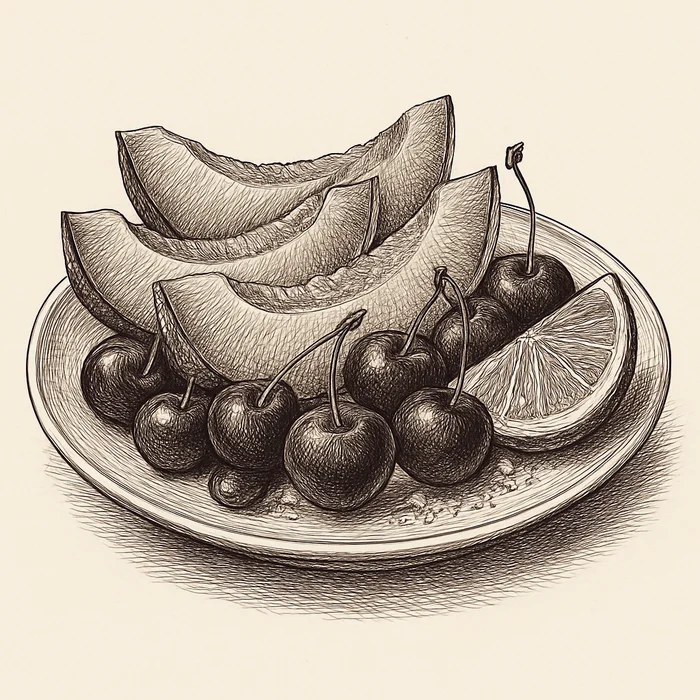
Cantaloupe and Cherry Breakfast Plate with Lime and Flaky Salt
There is a particular kind of late-summer breakfast that the Southern French call le petit dejeuner du marche — the market breakfast — where the cook does almost nothing and the fruit does almost everything. This is that breakfast. Ripe cantaloupe carries a staggering load of beta-carotene (roughly 2,020 mcg per 100 g, more than half your day's vitamin A in two wedges), and the orange pigment is exactly the signal you're looking for: the deeper the flesh, the more carotenoid is in the cell walls. Cherries bring a different, darker antioxidant family — anthocyanins, especially cyanidin-3-glucoside, which peak in plasma about an hour or two after you eat them, along with a small but real dose of naturally occurring melatonin and its tryptophan precursors. Together you get a wide antioxidant spectrum: the fat-soluble carotenoids from the melon (which your body converts to retinol for skin, vision, and immune tissue) and the water-soluble polyphenols from the cherries (which hit NF-kB and Nrf2 pathways and have been shown in trials to nudge blood pressure and LDL downward). A tiny finishing drizzle of good olive oil, or a dollop of whole yogurt on the side, is not optional if you want the beta-carotene to actually cross into your bloodstream — carotenoids are fat-soluble, and water alone won't carry them.
Technique matters more than you'd think for a dish this simple. For the melon, I like a batonnet cut — peel the wedge, lay it flat, cut into 1 cm x 1 cm x 5 cm planks — because the long exposed face releases aroma and it eats more elegantly than cubes. If you have a parisienne scoop and want a prettier plate, melon balls work too, but they weep more and they're harder to dress evenly. For cherries, the move is pit-then-halve: push the pit out with a cherry pitter (or the round end of a chopstick through a paper clip, the classic kitchen hack) while the fruit is still whole, then halve. Halving first pushes the pit deeper into the flesh and you end up shredding the cut. Finish with a lime-salt flourish — a microplane of lime zest and a pinch of flaky salt across both fruits. The salt pulls a whisper more juice to the surface of the melon and the citric acid from lime brightens both fruits while adding vitamin C to the plate. This is the same logic Persian cooks use when they salt melon with dried lime powder, and the same logic Italian nonne use at the end of summer when they dress a fruit plate with nothing but a squeeze of lemon and a few torn basil leaves.
Ingredients
- 1/2 ripe cantaloupe (about 500 g flesh, or ~250 g per person)
- 200 g fresh sweet or tart cherries, stems on
- 1 lime, for zest and juice
- Small handful fresh mint leaves, torn at the last moment
- A pinch of flaky sea salt (Maldon or similar)
- Optional: 2 generous dollops thick Greek yogurt, or 1 tsp extra-virgin olive oil drizzled across the fruit
Method
-
Pick ripe fruit. Cantaloupe: sniff the stem end — it should smell actively floral and faintly musky, almost perfumy. No scent means no flavor. Press gently at the stem scar; it should give slightly, like a ripe avocado's shoulder. For cherries: pick up a handful and pinch a stem — it should be green and pliant, not brown and brittle. The cherries themselves should feel firm, not squishy, with taut unwrinkled skin.
-
Prep the melon. Halve the cantaloupe, scrape out the seeds with a spoon, and cut one half into 4 wedges (save the other half for tomorrow). Slide a knife between flesh and rind, then cut each wedge into batonnets about 1 cm thick and 5 cm long. Arrange across two plates.
-
Pit the cherries. Leaving cherries whole, run each through a cherry pitter over a bowl (catch the juice — there will be some). Halve each pitted cherry and tuck them among the melon batonnets. The juice at the bottom of the bowl goes back over the fruit.
-
Finish. Zest the lime directly over both plates — you want the oils, not just the color. Squeeze a small quarter's worth of lime juice across the fruit. Scatter the torn mint. Add the flaky salt last, from about 20 cm above the plate so it falls evenly. If using, spoon yogurt alongside (not on top — you want the fruit visible) or drizzle the olive oil across the melon specifically.
-
Serve immediately, while the salt is still a crunch and the mint hasn't wilted.
What Can Go Wrong
- Flavorless melon. The number one failure. A cantaloupe that looks perfect but smells like nothing at the stem end will taste like nothing — no amount of salt and lime can rescue it. At the market, lift the melon to your nose before you commit. A ripe one announces itself from 15 cm away.
- Weepy maceration. If you salt and dress the fruit more than 5 or 10 minutes before serving, osmosis pulls water out of the melon and the whole plate turns into a soupy, washed-out puddle. Assemble and finish at the last minute. If you need to prep ahead, cut the fruit and hold it dry and cold, and add the salt/lime/mint only at the table.
- Pit hazards. A cherry pit in a breakfast bowl is a broken tooth waiting to happen, especially if anyone at the table is half-awake. Halve every cherry after pitting, even the ones you swear you got clean — it doubles as a final inspection.
- Over-ripe cherries. Cherries that feel soft or show brown spots taste fermented and turn muddy when dressed. Sort the bag before you start; demote the soft ones to a smoothie.
- Skipping the fat. Beta-carotene from cantaloupe is fat-soluble. Eating the plate entirely on its own, with only water, absorbs a fraction of what you'd get with a dollop of yogurt, a drizzle of olive oil, or even a small handful of almonds on the side. Don't skip the fat if longevity is the point.
- Over-mincing the mint. Mint bruises and turns bitter the moment a knife hits it. Tear the leaves by hand just before plating.