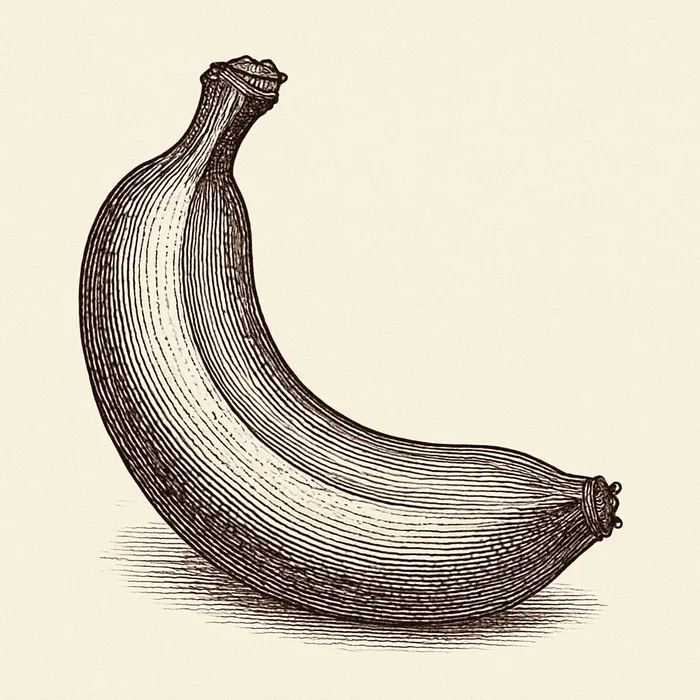
Banana
Fresh banana is used in the Longevity Diet as a breakfast and snack fruit, providing folate (24 mcg per medium, 6% DV) and magnesium (32 mg per medium, 8% DV).
Why It Matters for Longevity
Fresh banana is used in the Longevity Diet as a breakfast and snack fruit, providing folate (24 mcg per medium, 6% DV) and magnesium (32 mg per medium, 8% DV). Folate supports one-carbon metabolism and DNA methylation; magnesium acts as a cofactor in over 300 enzymatic reactions including ATP synthesis and protein synthesis.
Bananas provide resistant starch and fructooligosaccharides that selectively feed beneficial gut bacteria (Bifidobacterium, Lactobacillus), supporting a microbiome profile associated with reduced systemic inflammation and extended healthspan. (Slavin, 2012, Adv Nutr)
Banana consumption is associated with improved glycemic response compared to other high-carbohydrate fruits due to its fiber and resistant starch content; unripe bananas have a glycemic index of ~30 versus ~60 for very ripe ones. (Menezes et al., 2010, Plant Foods Hum Nutr)
Resistant Starch and Ripeness
The functional fiber composition of bananas shifts dramatically across the ripening spectrum. A fully green banana delivers up to 4.7 g resistant starch per 100 g — primarily RS2, the raw granular form resistant to amylase. As banana ripens, enzymatic activity converts RS2 into simple sugars (glucose, fructose, sucrose), collapsing resistant starch content to near zero by the fully yellow-brown stage. This conversion is the primary driver of the glycemic index change. For prebiotic purposes, slightly underripe bananas (firm yellow with traces of green) offer the best balance between palatability and RS delivery. The RS that escapes small-intestinal digestion reaches the colon, where it is fermented by Bifidobacterium and Lactobacillus species to produce butyrate and other short-chain fatty acids that maintain colonocyte integrity and lower mucosal inflammation.
Potassium and Cardiovascular Protection
A medium banana (118 g) provides approximately 422 mg potassium — about 9% of the 4,700 mg daily adequate intake. This contribution is modest per serving but adds up meaningfully in a diet where banana is consumed daily alongside other potassium-rich foods. A systematic review and meta-analysis of 22 RCTs (1,606 participants) and 11 cohort studies (127,038 participants) found that higher potassium intake reduced systolic blood pressure by 3.49 mmHg in hypertensive adults and was associated with a 24% lower risk of stroke (risk ratio 0.76; 95% CI not reported as significant for coronary heart disease) (Aburto et al., 2013, BMJ). The mechanism is well characterized: dietary potassium increases renal sodium excretion (natriuresis), reduces vascular smooth muscle cell calcium influx by membrane hyperpolarization, and improves endothelial function through nitric oxide pathways.
A prospective cohort study of 2,050 Iranian adults followed for a median of 10.6 years found that higher potassium intake was associated with a 56% lower risk of cardiovascular events (HR = 0.44; 95% CI: 0.20–0.94), while a higher dietary sodium-to-potassium ratio was associated with doubled CVD risk (HR = 1.99; 95% CI: 1.13–3.52) (Mosallanezhad et al., 2023, BMC Public Health). These findings reinforce that banana's potassium value is most relevant in the context of an overall dietary pattern, not in isolation.
Antioxidant Compounds: Dopamine and Catechins
Bananas contain dopamine and catechins, both acting as dietary antioxidants rather than as neuroactive compounds (dopamine from food does not cross the blood-brain barrier in meaningful amounts). A chemical analysis of Cavendish bananas found high dopamine content (40–65 mg per 100 g peel; 2.5–10 mg per 100 g pulp) alongside catechins, with combined antioxidant activity comparable on a per-serving basis to many berries as measured by FRAP assay (Kanazawa & Sakakibara, 2000, J Agric Food Chem). Both compounds are polyphenolic structures that quench reactive oxygen species and chelate redox-active metal ions, reducing oxidative stress burden independent of direct cardiovascular effects.
Fructooligosaccharides and Microbiome Diversity
Beyond resistant starch, banana contains fructooligosaccharides (FOS) — short-chain fructose polymers that resist digestion and reach the colon intact. FOS selectively stimulate Bifidobacterium growth, a genus consistently associated in human microbiome studies with reduced intestinal permeability, lower systemic inflammation, and better metabolic outcomes. A review of fruit and vegetable fiber including banana FOS found that these compounds feed distinct bacterial taxa from those stimulated by cellulose or inulin, contributing to microbiome compositional diversity that is itself a marker of metabolic health (Slavin, 2012, Adv Nutr). The practical implication is that a daily banana contributes a different prebiotic substrate than oats or legumes, making it complementary rather than redundant in a high-fiber diet.
How to Use It
Pairs well with plant milk, walnuts, oats. Use as a fruit in your daily meals according to the Longevity Diet guidelines. For maximum resistant starch and prebiotic fiber, use slightly underripe (firm yellow) bananas. For pairing with a grain-heavy meal, a less-ripe banana moderates the combined glycemic load.
What to Pair It With
| Ingredient | Why | Tradition |
|---|---|---|
| plant milk | See synergies | The Longevity Diet |
| walnuts | See synergies | The Longevity Diet |
| oats | See synergies | General culinary |
Synergies
- Oats (complement): Combined soluble and resistant fiber from banana and oats provides sustained energy and robust prebiotic effect, feeding different bacterial populations — beta-glucan from oats favors Lactobacillus; FOS and RS from banana favor Bifidobacterium.
- Walnuts (complement): Pairing banana with walnuts adds protein and healthy fats, lowering the overall glycemic response of the meal and adding alpha-linolenic acid (ALA), a plant omega-3 precursor.
Flavor Profile
Taste: sweet, mildly tangy when unripe. Aroma: fruity, floral, isoamyl acetate-forward. Texture: creamy, soft, starchy when unripe. Category: fresh fruit.
The Science
- Slavin, 2012, Adv Nutr: Review of health benefits of fruits and vegetables including resistant starch and prebiotic fibre in bananas feeding beneficial gut bacteria.
- Menezes et al., 2010, Plant Foods Hum Nutr: Unripe banana flour showed lower glycaemic response in in vitro fermentation; resistant starch content is high in unripe bananas and decreases as they ripen.
- Kanazawa & Sakakibara, 2000, J Agric Food Chem: Cavendish bananas contain high amounts of dopamine -- a potent antioxidant -- alongside catechins; antioxidant activity comparable to many berries on a per-serving basis.
- Aburto et al., 2013, BMJ: Meta-analysis of 22 RCTs and 11 cohort studies; potassium intake reduced systolic BP by 3.49 mmHg in hypertensives and stroke risk by 24%, establishing the cardiovascular rationale for potassium-rich foods.
- Mosallanezhad et al., 2023, BMC Public Health: Prospective cohort (n = 2,050, 10.6 years follow-up) showing higher potassium intake associated with 56% lower CVD risk; higher Na/K ratio associated with doubled CVD risk.
References
- Slavin JL, Lloyd B. Health benefits of fruits and vegetables. Adv Nutr. 2012;3(4):506-516. PMID: 22797986. doi:10.3945/an.112.002154
- Menezes EW, Dan MC, Cardenette GH, Goñi I, Bello-Pérez LA, Lajolo FM. In vitro colonic fermentation and glycemic response of different kinds of unripe banana flour. Plant Foods Hum Nutr. 2011;66(3):231-237. PMID: 20839056. doi:10.1007/s11130-010-0190-4
- Kanazawa K, Sakakibara H. High content of dopamine, a strong antioxidant, in Cavendish banana. J Agric Food Chem. 2000;48(3):844-848. PMID: 10725161.
- Aburto NJ, Hanson S, Gutierrez H, Hooper L, Elliott P, Cappuccio FP. Effect of increased potassium intake on cardiovascular risk factors and disease: systematic review and meta-analyses. BMJ. 2013;346:f1378. PMID: 23558164.
- Mosallanezhad Z, Jalali M, Bahadoran Z, Mirmiran P, Azizi F. Dietary sodium to potassium ratio is an independent predictor of cardiovascular events: a longitudinal follow-up study. BMC Public Health. 2023;23(1):728. PMID: 37072769.
Key Nutrients
| Nutrient | Per 100g | Notes |
|---|---|---|
| Potassium | 358 mg | Highly bioavailable; important for blood pressure regulation and cardiovascular health. |
| Folate (B9) | 20 mcg | Natural food folate; bioavailability ~50%; supports DNA synthesis and repair. |
| Magnesium | 27 mg | Moderate bioavailability (~30-40%); important for over 300 enzymatic processes. |
| Resistant starch | Up to 4.7 g (unripe) | Acts as prebiotic fiber; decreases as banana ripens. |
| Fructooligosaccharides | ~0.3–0.7 g | Prebiotic; selectively feeds Bifidobacterium; distinct substrate from RS. |