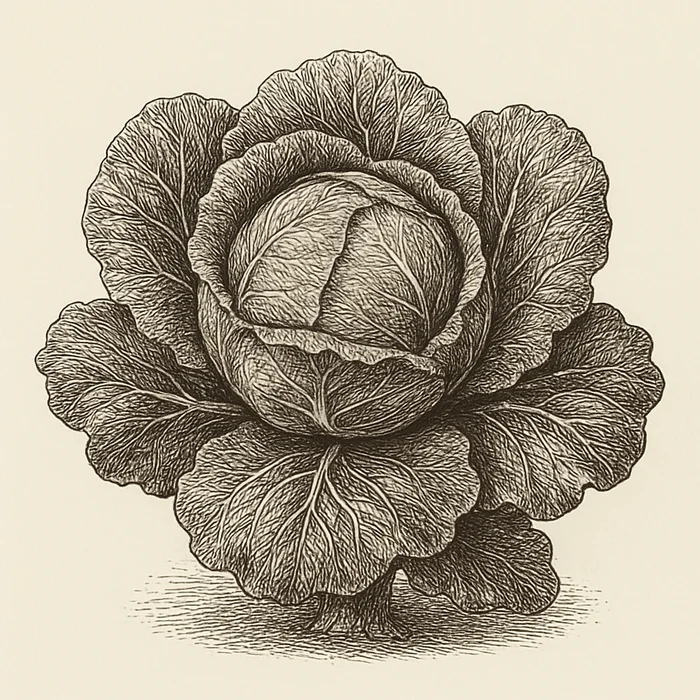
Cabbage
Cabbage is recommended for those with German or Central European ancestry as a safe ancestral food. It provides vitamin C (36 mg per 100g raw), glucosinolates, and -- when fermented into sauerkraut -- live Lactobacillus cultures and vitamin K2 (menaquinone).
Why It Matters for Longevity
Cabbage delivers the same glucosinolate chemistry as all Brassica vegetables, but its primary longevity contribution in the Longevity Diet context is as a base for fermented foods. Sauerkraut (fermented cabbage) is one of the most accessible traditional probiotics, introducing live Lactobacillus plantarum and other lactic acid bacteria to the gut alongside bioavailable vitamin K2 formed during fermentation.
Cruciferous vegetables including cabbage are associated with reduced cancer risk through multiple mechanisms: isothiocyanates and indole-3-carbinol inhibit carcinogen activation, suppress tumor cell proliferation, and modulate immune function (Abdull Razis & Noor, 2013, Asian Pac J Cancer Prev).
Fermented vegetables including sauerkraut are a rich ecological niche for Lactobacillus species, and regular consumption supports gut microbiome diversity associated with reduced inflammatory burden and extended healthspan (Lavefve et al., 2019, Adv Food Nutr Res).
Higher fruit and vegetable intake -- including Brassica vegetables -- is consistently associated with lower all-cause and cardiovascular mortality in prospective cohort data (Aune et al., 2017, Int J Epidemiol).
Sulforaphane and the NRF2 Detoxification Pathway
Cabbage contains glucoraphanin, the precursor to sulforaphane -- an isothiocyanate that modifies the Keap1-NRF2 signaling axis. Under basal conditions, the protein Keap1 continuously targets NRF2 for proteasomal degradation. Sulforaphane covalently modifies reactive cysteine residues on Keap1, releasing this brake and allowing NRF2 to accumulate in the nucleus. There it drives transcription of phase II detoxification enzymes: glutathione S-transferases (GSTs), NAD(P)H quinone oxidoreductase 1 (NQO1), heme oxygenase-1 (HO-1), and thioredoxin reductase. These enzymes conjugate electrophilic carcinogens and reactive oxygen species for urinary excretion.
Cabbage delivers less sulforaphane per gram than broccoli or broccoli sprouts -- approximately 11,000 NQO1-inducer units per gram fresh weight versus ~33,000 for broccoli -- but the pathway and mechanism are identical. The clinical evidence for this pathway comes from sulforaphane-rich broccoli sprout preparations: a 12-week RCT in 291 adults in Qidong, China (a region with high carcinogen exposure) found that a daily beverage providing 600 µmol glucoraphanin and 40 µmol sulforaphane increased urinary excretion of the glutathione-derived conjugate of benzene by 61% and of acrolein by 23% versus placebo (both p ≤ 0.01), with bioavailability sustained across the full 12 weeks of dosing (Egner et al., 2014, Cancer Prev Res). The excretion increase quantifies in vivo NRF2-mediated detoxification, not merely blood levels of the compound.
Cabbage glucoraphanin content is reduced by roughly 30-40% during boiling due to leaching into cooking water, and myrosinase is inactivated above 70°C, shifting conversion to the gut microbiota's bacterial thioglucosidases -- a slower, less efficient route. Raw shredded cabbage, sauerkraut, and quick-stir preparations retain higher glucoraphanin for myrosinase-mediated conversion.
Indole-3-Carbinol and Estrogen Metabolism
When cabbage cells are disrupted by chewing or chopping, the enzyme myrosinase converts glucobrassicin into indole-3-carbinol (I3C). In the acidic environment of the stomach, I3C dimerizes to form 3,3'-diindolylmethane (DIM). Both compounds modulate cytochrome P450 enzyme activity in ways that shift estrogen metabolism toward less genotoxic metabolites.
Specifically, I3C induces CYP1A2 activity, increasing the 2-hydroxylation of estradiol relative to 16α-hydroxylation. The 2-hydroxy pathway (producing 2-hydroxyestrone, 2-OHE1) generates metabolites that bind the estrogen receptor weakly and are excreted efficiently. The competing 16α-hydroxy pathway (producing 16α-hydroxyestrone, 16α-OHE1) produces a more estrogenically active and potentially mutagenic metabolite. A lower 2-OHE1:16α-OHE1 ratio is associated with higher breast cancer risk in epidemiological studies. In a controlled human study of 12 volunteers, one week of I3C supplementation increased the extent of estradiol 2-hydroxylation by approximately 50% (p<0.01), with equal effect in men and women (Michnovicz & Bradlow, 1991, Nutr Cancer). The authors proposed that this dietary modulation of estrogen metabolism could constitute a practical means of lowering cancer risk.
Crucially, this effect requires cell disruption: intact, unchopped cabbage leaves do not release myrosinase efficiently. Raw cabbage that has been shredded, chewed, or fermented provides the highest I3C yield. Cooking above 70°C inactivates myrosinase, partially blunting glucosinolate conversion -- though the gut microbiota can partially compensate via bacterial thioglucosidases.
Sauerkraut and the Gut Microbiome
Sauerkraut is one of the few traditional foods with direct RCT evidence for gut microbiome modulation. A randomized crossover trial in 87 healthy adults (21–69 years) consumed 100g daily of either fresh or pasteurized sauerkraut for four weeks. Both formulations produced species-level changes in the gut microbiome: fresh sauerkraut significantly increased Lacticaseibacillus paracasei abundance, while pasteurized sauerkraut increased Anaerostipes hadrus and elevated serum short-chain fatty acids (acetic acid, propionic acid, and butyric acid) significantly. Overall alpha-diversity and beta-diversity were unchanged, consistent with the microbiome's resilience to short-term interventions in healthy individuals (Schropp et al., 2025, Microbiome).
In IBS patients, where the microbiome is more dysbiotic to begin with, the effect is more pronounced. A pilot RCT in 34 IBS patients found that six weeks of sauerkraut consumption (either pasteurized or unpasteurized) reduced IBS Symptom Severity Scores significantly in both groups (pasteurized: -38.6 points; unpasteurized: -57.0 points; p<0.04 for both), with significant gut microbiota compositional shifts documented by 16S rRNA sequencing. The improvement in both arms -- including pasteurized sauerkraut which contains no live bacteria -- suggests that sauerkraut's prebiotic fiber component (primarily fructans and fermentation-derived organic acids) may drive at least part of the effect, not solely live bacteria (Nielsen et al., 2018, Food Funct).
How to Use It
Raw cabbage in coleslaws and salads maximises vitamin C and glucosinolate content. Shred or chop before eating to activate myrosinase and maximize I3C production. Braised cabbage with caraway and apple is the classic Central European preparation, concentrating nutrients but losing some vitamin C and myrosinase activity. Use unpasteurised sauerkraut as a condiment to introduce live bacteria -- pasteurised versions retain prebiotic fiber and organic acids even after heat treatment, and produced equivalent IBS symptom reduction in the Nielsen et al. trial.
What to Pair It With
| Ingredient | Why | Tradition |
|---|---|---|
| Caraway seeds | Traditional German pairing; complementary digestive compounds | German / Central European |
| Apple | Sweetness balances bitterness; malic acid complements lactic acid in sauerkraut | German |
| Potatoes | Traditional one-pot meal; starch + cruciferous vegetable | Eastern European |
| Olive oil | Fat enhances vitamin K absorption | Mediterranean |
| Lemon | Preserves vitamin C; brightens flavour | Mediterranean |
Flavor Profile
Raw cabbage is crunchy, mildly bitter, and slightly sweet -- especially savoy variety which is more tender. Cooked cabbage mellows in flavour, becoming sweet and earthy. Sauerkraut is sour, tangy, and complex with lactic acid notes; salt content varies widely between brands.
The Science
- Abdull Razis & Noor, 2013, Asian Pac J Cancer Prev: Cruciferous vegetables associated with reduced cancer risk through isothiocyanate and indole-3-carbinol mechanisms.
- Lavefve et al., 2019, Adv Food Nutr Res: Fermented vegetables are a rich source of live Lactobacillus species; microbial ecology of sauerkraut and other fermented vegetables supports gut microbiome diversity.
- Aune et al., 2017, Int J Epidemiol: Systematic review -- higher vegetable intake associated with significantly lower all-cause mortality risk.
- Michnovicz & Bradlow, 1991, Nutr Cancer: In 12 healthy volunteers, one week of I3C increased estradiol 2-hydroxylation by ~50% (p<0.01), shifting estrogen metabolism toward less genotoxic 2-OHE1 pathway.
- Schropp et al., 2025, Microbiome: Crossover RCT (n=87) -- 100g daily sauerkraut for 4 weeks produced species-level microbiome changes and increased serum SCFAs (pasteurized arm); alpha-diversity unchanged in healthy adults.
- Nielsen et al., 2018, Food Funct: Pilot RCT (n=34 IBS patients) -- 6 weeks sauerkraut reduced IBS Symptom Severity Score by 39-57 points; both pasteurized and unpasteurized forms effective, implicating prebiotic fiber rather than live bacteria as the primary driver.
- Egner et al., 2014, Cancer Prev Res: RCT (n=291) -- daily broccoli sprout beverage (600 µmol glucoraphanin + 40 µmol sulforaphane) increased urinary benzene-mercapturic acid excretion by 61% and acrolein conjugate by 23% (both p ≤ 0.01), sustained over 12 weeks; demonstrates in vivo NRF2-mediated detoxification via the same glucosinolate pathway present in cabbage.
- Houghton et al., 2016, Oxid Med Cell Longev: Review of sulforaphane vs. other Nrf2 activators -- sulforaphane from cruciferous vegetables more potently induces NRF2 target gene expression than curcumin, silymarin, or resveratrol; bioavailability advantage due to low molecular weight and lipophilic character.
References
- Abdull Razis AF, Noor NM. Cruciferous vegetables: dietary phytochemicals for cancer prevention. Asian Pac J Cancer Prev. 2013;14(3):1565-1570. PMID: 23679237. doi:10.7314/APJCP.2013.14.3.1565
- Lavefve L, Howard LR, Carbonero F. Berry polyphenols metabolism and impact on the gut microbiota -- and fermented vegetable products. Adv Food Nutr Res. 2019;87:147-246. PMID: 30678814. doi:10.1016/bs.afnr.2018.07.003
- Aune D, Giovannucci E, Boffetta P, et al. Fruit and vegetable intake and the risk of cardiovascular disease, total cancer and all-cause mortality. Int J Epidemiol. 2017;46(3):1029-1056. PMID: 28338764. doi:10.1093/ije/dyw319
- Michnovicz JJ, Bradlow HL. Altered estrogen metabolism and excretion in humans following consumption of indole-3-carbinol. Nutr Cancer. 1991;16(1):59-66. PMID: 1656396. doi:10.1080/01635589109514141
- Schropp N, Bauer A, Stanislas V, et al. The impact of regular sauerkraut consumption on the human gut microbiota: a crossover intervention trial. Microbiome. 2025;13(1):46. PMID: 39940045. doi:10.1186/s40168-025-02035-4
- Nielsen ES, Garnås E, Jensen KJ, et al. Lacto-fermented sauerkraut improves symptoms in IBS patients independent of product pasteurisation -- a pilot study. Food Funct. 2018;9(10):5323-5335. PMID: 30256365. doi:10.1039/c8fo01272h
- Egner PA, Chen JG, Zarth AT, et al. Rapid and sustainable detoxication of airborne pollutants by broccoli sprout beverage: results of a randomized clinical trial in China. Cancer Prev Res. 2014;7(8):813-823. PMID: 24913818. doi:10.1158/1940-6207.CAPR-14-0103
- Houghton CA, Fassett RG, Coombes JS. Sulforaphane and other nutrigenomic Nrf2 activators: can the clinician's expectation be matched by the reality? Oxid Med Cell Longev. 2016;2016:7857186. PMID: 26881038. doi:10.1155/2016/7857186
Key Nutrients
| Nutrient | Per 100g (raw) | Notes |
|---|---|---|
| Vitamin C | 36 mg | 40% DV; partially lost when cooked; well preserved in raw or fermented preparations |
| Glucosinolates | ~15-30 mg | Converted to isothiocyanates by myrosinase on cell damage; requires chopping/chewing |
| Indole-3-carbinol (I3C) | Formed on cell disruption | Dimerizes to DIM in stomach; induces CYP1A2, shifting estrogen to 2-OHE1 pathway |
| Vitamin K2 (MK-4) | Present in sauerkraut | Formed during fermentation; supports osteocalcin carboxylation for bone matrix |
| Prebiotic fiber | 2.5 g | Feeds Bifidobacterium; prebiotic effects synergistic with sauerkraut's probiotics |