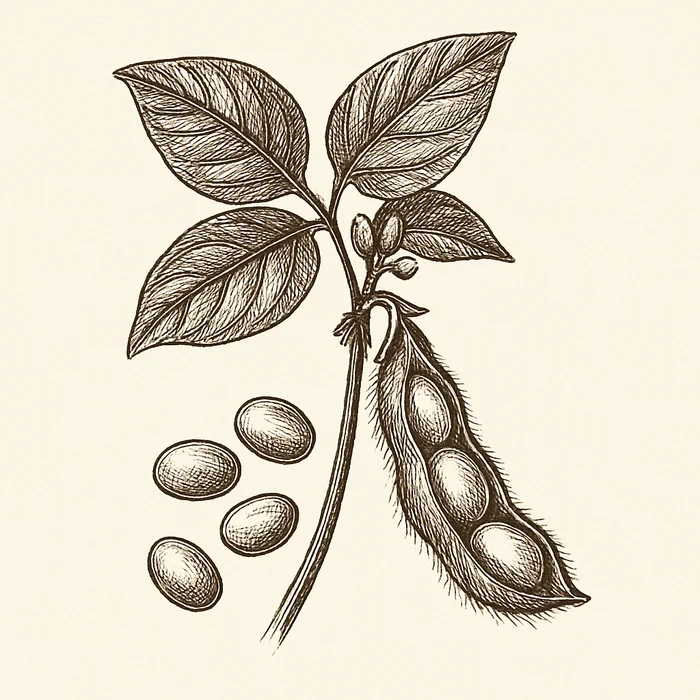
Soybeans
A prospective study of 210,000+ participants found that one serving of tofu per week lowers coronary heart disease risk by 18% — and the isoflavone genistein blocks cancer cell proliferation at concentrations achievable through diet.
Why It Matters for Longevity
Soybeans are unique among plant foods for delivering complete protein (all essential amino acids, PDCAAS comparable to animal protein) alongside pharmacologically active isoflavones. Genistein and daidzein bind estrogen receptors and exert tissue-selective effects: blocking proliferation in breast and prostate cancer cells while supporting bone density and cardiovascular function.
A meta-analysis of 46 RCTs (Blanco Mejia et al., 2019, J Nutr) confirmed that 25 g/day of soy protein reduces LDL cholesterol by approximately 4.76 mg/dL (a 3–4% reduction) and total cholesterol by 6.41 mg/dL, based on a median intervention of ~6 weeks. Soy was a key component of a Canadian cholesterol-lowering food portfolio that achieved 13% LDL reduction — comparable to statin therapy in some participants. The cardiovascular evidence is strong: the Nurses' Health Study and Health Professionals Follow-Up Study combined data from 210,700 participants over 4.8 million person-years, finding that one or more tofu servings per week produced an 18% lower coronary heart disease risk (HR 0.82; 95% CI 0.70–0.95), while isoflavone intake in the top versus bottom quintile was associated with a 13% lower CHD risk (HR 0.87; 95% CI 0.81–0.94) (Ma et al., 2020, Circulation).
Cancer Risk: Isoflavones and the Equol Pathway
The cancer story is nuanced but supported by a substantial evidence base. A meta-analysis of 81 prospective cohort studies found that higher soy intake was associated with a 10% reduced risk of cancer incidence overall (RR 0.90; 95% CI 0.83–0.96), with each additional 25 g/day reducing risk by 4%. Site-specific reductions included 33% for lung cancer (RR 0.67; 95% CI 0.52–0.86) and 12% for prostate cancer (RR 0.88; 95% CI 0.78–0.99). Isoflavone intake independently showed a 6% reduction in cancer incidence (RR 0.94; 95% CI 0.89–0.99), with each additional 10 mg/day reducing risk by 4% (Fan et al., 2022, Front Nutr). Benefit appeared attributable to isoflavones rather than soy protein per se.
For breast cancer specifically, a systematic review and meta-analysis encompassing 37,275 women found that both pre- and post-diagnosis soy isoflavone consumption were associated with reduced risk of recurrence, with pre-diagnosis intake showing a summary hazard ratio of 0.84 (95% CI 0.71–0.98) for overall survival (Qiu & Jiang, 2019, Eur J Nutr). These findings are reassuring for breast cancer survivors who have historically been cautioned against soy due to its estrogenic activity — the selective estrogen receptor modulation (SERM-like behavior) of isoflavones differs mechanistically from estradiol.
Equol: The Microbiome-Dependent Metabolite
Bioavailability of isoflavones depends critically on the gut microbiome. Daidzein is converted by specific bacteria (Slackia isoflavoniconvertens, Lactonifactor longoviformis, and others) into equol — the isoflavone metabolite with the greatest estrogenic and antioxidant activity, a longer half-life, and superior ERβ binding affinity. Only approximately one-third to one-half of human subjects produce equol, depending on their gut microbiota composition — with higher rates in Asian populations habituated to regular fermented soy consumption (~60%) compared to Western populations (~30–50%) (Mayo et al., 2019, Nutrients). RCT evidence indicates cardioprotective effects of isoflavones are more pronounced in equol producers — or exclusive to them in some trials. Equol's cardiovascular benefit is thought to involve direct antioxidant protection of LDL, inhibition of platelet aggregation via nitric oxide enhancement, and anti-proliferative effects on vascular smooth muscle cells. Regular soy consumption may gradually shift the microbiome toward equol-producing strains, suggesting a compounding benefit over time.
Soy Protein, IGF-1, and the Animal Protein Comparison
Unlike animal protein, soy protein does not produce the sustained IGF-1 elevation associated with increased cancer risk. A meta-analysis of 8 clinical trials found that soy intervention was associated with a modest increase in plasma IGF-1 (weighted mean difference: 13.5 ng/mL; 95% CI: 5.2–21.8), but effects were smaller in healthy subjects (+9.8 ng/mL) and in longer interventions, and no study showed the consistent doubling of IGF-1 levels seen with casein-heavy diets (Zeng et al., 2020, Phytother Res). Importantly, soy's isoflavones simultaneously inhibit IGF-1 receptor signaling downstream — genistein inhibits tyrosine kinase activity at the IGF-1R — which may offset the modest IGF-1 elevation at the cellular level. Epidemiological data from large cohort studies show that plant protein substitution for animal protein reduces all-cause and cardiovascular mortality, while high animal protein intake (but not plant protein) in adults under 65 is associated with a 4-fold increase in cancer death risk over 18 years.
How to Use It
Tofu: grill thin slices or add cubes to soups in the last 10-15 minutes. Edamame: boil pods in salted water (1 cup = 18g protein, 121% RDA folate). Miso: dissolve in soup at the end (heat destroys probiotics). Tempeh: slice and pan-fry for the richest protein and probiotic content. Choose whole soy foods over isolated soy protein supplements.
What to Pair It With
| Ingredient | Why | Tradition |
|---|---|---|
| Capers | Genistein + quercetin synergy amplifies anticancer effects | Mediterranean-Asian fusion |
| Ginger | Classic aromatic complement; anti-inflammatory synergy | East Asian |
| Sesame | Complementary plant protein; traditional pairing | East Asian |
| Turmeric | Curcumin + genistein combined anticancer pathways | Southeast Asian |
| Garlic | Allicin + isoflavones for cardiovascular health | Global |
Flavor Profile
Mild and beany when fresh, with a grassy aroma that becomes nutty when roasted. Tofu is neutral and absorbs surrounding flavors. Fermented forms (miso, tempeh, natto) develop deep umami and complex savory notes. Edamame is sweet and slightly nutty with a firm, satisfying bite. Texture ranges from silky (soft tofu) to chewy (tempeh) to creamy (soy milk).
The Science
- Blanco Mejia et al., 2019, J Nutr: Meta-analysis of 46 FDA-identified RCTs; 25 g/day soy protein reduced LDL by 4.76 mg/dL and total cholesterol by 6.41 mg/dL; mechanism involves hepatic LDL receptor upregulation.
- Ma et al., 2020, Circulation: 210,700 participants, 4.8M person-years; ≥1 tofu serving/week = 18% lower CHD risk (HR 0.82); top isoflavone quintile = 13% lower CHD risk (HR 0.87); strongest effect in premenopausal and postmenopausal women not on HRT.
- Fan et al., 2022, Front Nutr: Meta-analysis of 81 cohort studies; soy intake associated with 10% lower overall cancer incidence; lung cancer RR 0.67 (33% reduction); prostate cancer RR 0.88 (12% reduction); each +10 mg/day isoflavones reduces cancer risk by 4%.
- Qiu & Jiang, 2019, Eur J Nutr: Meta-analysis, 37,275 breast cancer patients; pre-diagnosis soy isoflavones associated with HR 0.84 (95% CI 0.71–0.98) for overall survival; reduced recurrence risk.
- Mayo et al., 2019, Nutrients: Equol — the active daidzein metabolite — produced by only ~30–50% of Westerners vs ~60% of Asian habitual soy consumers; equol shows superior ERβ affinity, antioxidant activity, and CVD protection vs parent isoflavones.
- Zeng et al., 2020, Phytother Res: Meta-analysis of 8 clinical trials; soy intervention raised IGF-1 by 13.5 ng/mL overall; effect smaller in healthy subjects (+9.8 ng/mL) and longer interventions; genistein's IGF-1R tyrosine kinase inhibition likely offsets systemic IGF-1 rise.
References
- Blanco Mejia S, Messina M, Li SS, et al. A Meta-Analysis of 46 Studies Identified by the FDA Demonstrates that Soy Protein Decreases Circulating LDL and Total Cholesterol Concentrations in Adults. J Nutr. 2019;149(6):968-981. PMID: 31006811. doi:10.1093/jn/nxz020
- Ma L, Liu G, Ding M, et al. Isoflavone Intake and the Risk of Coronary Heart Disease in US Men and Women: Results From 3 Prospective Cohort Studies. Circulation. 2020;141(14):1127-1137. PMID: 32200662. doi:10.1161/CIRCULATIONAHA.119.041306
- Fan Y, Wang M, Li Z, et al. Intake of Soy, Soy Isoflavones and Soy Protein and Risk of Cancer Incidence and Mortality. Front Nutr. 2022;9:847421. PMID: 35308286. doi:10.3389/fnut.2022.847421
- Qiu S, Jiang C. Soy and isoflavones consumption and breast cancer survival and recurrence: a systematic review and meta-analysis. Eur J Nutr. 2019;58(8):3079-3090. PMID: 30382332. doi:10.1007/s00394-018-1853-4
- Mayo B, Vázquez L, Flórez AB. Equol: A Bacterial Metabolite from The Daidzein Isoflavone and Its Presumed Beneficial Health Effects. Nutrients. 2019;11(9):2231. PMID: 31527435. doi:10.3390/nu11092231
- Zeng J, Feng Y, Feng J, Chen X. The effect of soy intervention on insulin-like growth factor 1 levels: A meta-analysis of clinical trials. Phytother Res. 2020;34(7):1619-1626. PMID: 32072706. doi:10.1002/ptr.6636
Key Nutrients
| Nutrient | Per 100g | Notes |
|---|---|---|
| Isoflavones (genistein, daidzein) | 50-150 mg | Daidzein converts to equol in ~30-60% of people depending on microbiome; equol has superior ERβ affinity and antioxidant activity |
| Complete protein | 36 g (dried); 10 g (tofu) | PDCAAS comparable to animal protein; does not produce sustained IGF-1 elevation seen with casein-heavy diets |
| Folate | 375 mcg (edamame/cup) | 121% RDA; critical for homocysteine metabolism |
| Fiber | 6 g (cooked, 100g) | Supports gut microbiota diversity including equol-producing Slackia and Lactonifactor strains |