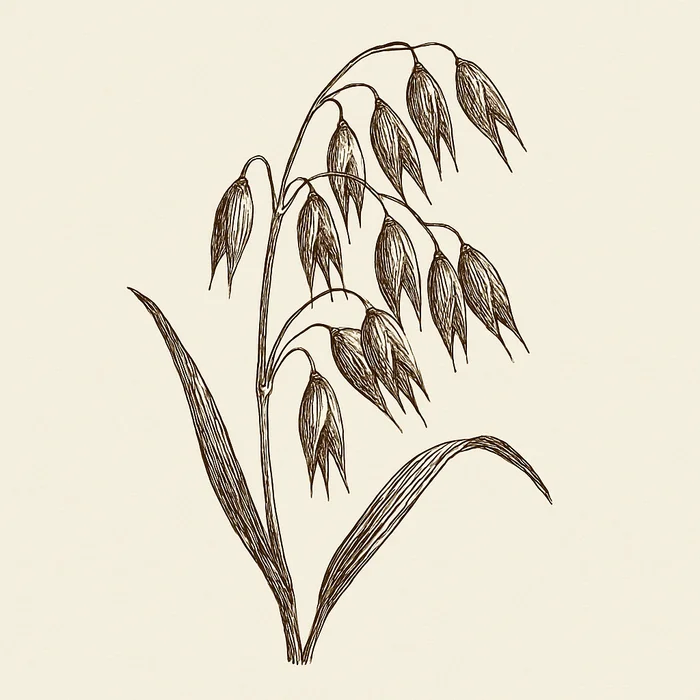
Oats
Oats are one of only two grains that contain significant amounts of beta-glucan -- the soluble fiber that earned the FDA's first food-specific health claim for cholesterol reduction. They also contain avenanthramides, anti-inflammatory polyphenols found in no other cereal grain.
Why It Matters for Longevity
The cholesterol story is settled science. A meta-analysis of 58 RCTs (Ho et al., 2016, Br J Nutr) found that oat beta-glucan significantly reduces LDL cholesterol, non-HDL cholesterol, and apoB -- the full atherogenic lipid panel. The mechanism is well understood: beta-glucan forms a viscous gel in the small intestine that binds bile acids, forcing the liver to pull cholesterol from the bloodstream to synthesize replacements. Both the FDA and EFSA have approved health claims for this effect.
A 2022 meta-analysis of 13 RCTs in hypercholesterolemic adults (Yu et al., 2022, Nutrients) confirmed oat beta-glucan reduced LDL cholesterol by a pooled 0.27 mmol/L (95% CI: −0.35 to −0.20) and total cholesterol by 0.24 mmol/L. Triglycerides and HDL were unaffected, which is consistent with the bile acid mechanism: the intervention selectively depletes the hepatic cholesterol pool used for bile synthesis without broadly disrupting lipid metabolism. The analysis also found that disease severity, daily dose, beta-glucan source, and intervention duration each modulated the response, with larger reductions seen in participants with higher baseline LDL.
The breadth of oat effects extends beyond cholesterol. A large 2022 meta-analysis of 74 RCTs with 4,937 participants (Llanaj et al., Eur J Nutr) found that oat supplementation reduced total cholesterol by 0.42 mmol/L and LDL by 0.29 mmol/L compared to non-oat controls; it also produced a 0.25 mmol/L reduction in fasting glucose, a 0.94 kg reduction in body weight, and a 1.06 cm reduction in waist circumference. When compared specifically to dietary restriction controls, oat intervention additionally reduced HbA1c by 0.42 units and diastolic blood pressure by 1.15 mmHg, suggesting beta-glucan mediates effects on glucose homeostasis through reduced nutrient absorption velocity independent of caloric restriction.
Oats were specifically named in the Canadian cholesterol-lowering food portfolio trial (Jenkins et al., 2011, JAMA), which combined oats, barley, plant sterols, soy protein, and almonds to achieve ~13% LDL reduction with intensive dietary advice -- comparable in magnitude to first-generation statins. The portfolio approach stacks multiple independent mechanisms.
Beyond cholesterol, oats reshape the gut microbiome. An oat-based breakfast intervention (Connolly et al., 2016, Front Microbiol) showed hypocholesterolemic and prebiotic effects, shifting microbial populations toward species associated with short-chain fatty acid production. Butyrate, the preferred fuel of colon cells, has potent anti-inflammatory effects that feed into the broader mechanism by which fiber-rich diets reduce chronic disease risk.
Avenanthramides: The Anti-Inflammatory Polyphenols Unique to Oats
Beta-glucan is not the only active compound in oats that matters for cardiovascular health. Avenanthramides (Avns) are phenolic amides -- formed from anthranilic acid and hydroxycinnamic acid -- found in measurable concentrations only in oats (roughly 15--30 mg per 100 g dry weight). Their primary cardiovascular mechanism operates through NF-κB inhibition: Guo et al. (2008, Free Radic Biol Med) showed that avenanthramides dose-dependently suppressed the phosphorylation of IKK and IκB in human aortic endothelial cells, blocking NF-κB activation stimulated by IL-1β and TNF-α. This suppressed secretion of the pro-inflammatory cytokines IL-6, IL-8, and MCP-1 -- precisely the inflammatory mediators implicated in atherosclerotic plaque formation and progression. The effect is relevant because chronic low-grade vascular inflammation, driven by NF-κB signaling, is now understood as a proximate cause of cardiovascular events independent of LDL level.
Avenanthramides also promote nitric oxide production in vascular endothelial cells, supporting vasodilation through pathways that complement the cholesterol-lowering effect of beta-glucan. The combination of a viscous fiber that sequesters bile acids and a set of polyphenols that suppress endothelial inflammation represents two mechanistically independent pathways to cardiovascular protection operating simultaneously in the same food.
The glycemic response depends heavily on processing. Steel-cut oats have a GI around 42, rolled oats around 55, and instant oats can reach 75. Molecular weight of the beta-glucan decreases with processing, reducing both viscosity and biological activity.
How to Use It
Steel-cut oats for porridge (20-30 min), rolled oats for overnight oats or baking (5 min), whole oat groats for grain bowls (45 min). Use oat flour in pancakes and breads. For cholesterol reduction, aim for at least 3g beta-glucan daily -- roughly 40-60g dry oats. Soaking overnight reduces phytic acid and improves mineral absorption.
What to Pair It With
| Ingredient | Why | Tradition |
|---|---|---|
| Blueberries | Anthocyanins complement cardiovascular benefits; vitamin C improves iron absorption | Northern European / American |
| Almonds | Part of cholesterol-lowering portfolio; healthy fats improve satiety | European |
| Apple | Classic Bircher muesli; pectin adds complementary soluble fiber | Swiss (Dr. Bircher-Benner) |
| Cinnamon | Blood sugar stabilization; warming flavor | Scandinavian |
| Dark chocolate | Complementary flavonoid profiles | European |
Flavor Profile
Mild, clean, and slightly sweet with a nutty undertone that deepens when toasted. Steel-cut oats are chewy and textural; rolled oats cook to a creamier consistency. The neutral flavor profile makes oats a versatile base for both sweet and savory preparations.
The Science
- Ho et al., 2016, Br J Nutr: Meta-analysis of 58 RCTs — oat beta-glucan reduces LDL cholesterol, non-HDL cholesterol, and apoB.
- Yu et al., 2022, Nutrients: Meta-analysis of 13 RCTs in hypercholesterolemic adults — oat beta-glucan reduced LDL by 0.27 mmol/L and total cholesterol by 0.24 mmol/L; no effect on triglycerides or HDL.
- Llanaj et al., 2022, Eur J Nutr: Largest meta-analysis (74 RCTs, 4,937 participants) — oat supplementation reduced LDL by 0.29 mmol/L, fasting glucose by 0.25 mmol/L, body weight by 0.94 kg, and waist circumference by 1.06 cm.
- Jenkins et al., 2011, JAMA: Portfolio diet (oats + barley + soy + almonds + plant sterols) achieved ~13% LDL reduction in 6-month RCT.
- Connolly et al., 2016, Front Microbiol: Oat-based granola breakfast showed hypocholesterolemic and prebiotic effects on gut microbiota.
- Guo et al., 2008, Free Radic Biol Med: Avenanthramides from oats inhibited IL-1β-induced NF-κB activation in human aortic endothelial cells and suppressed secretion of IL-6, IL-8, and MCP-1 dose-dependently.
References
- Ho HV, Sievenpiper JL, Zurbau A, et al. The effect of oat β-glucan on LDL-cholesterol, non-HDL-cholesterol and apoB for CVD risk reduction: a systematic review and meta-analysis of randomised-controlled trials. Br J Nutr. 2016;116(8):1369-1382. PMID: 27724985. doi:10.1017/S000711451600341X
- Yu J, Xia J, Yang C, et al. Effects of Oat Beta-Glucan Intake on Lipid Profiles in Hypercholesterolemic Adults: A Systematic Review and Meta-Analysis of Randomized Controlled Trials. Nutrients. 2022;14(10):2043. PMID: 35631184. doi:10.3390/nu14102043
- Llanaj E, Dejanovic GM, Valido E, et al. Effect of oat supplementation interventions on cardiovascular disease risk markers: a systematic review and meta-analysis of randomized controlled trials. Eur J Nutr. 2022;61(4):1749-1778. PMID: 34977959. doi:10.1007/s00394-021-02763-1
- Jenkins DJ, Jones PJ, Lamarche B, et al. Effect of a dietary portfolio of cholesterol-lowering foods given at 2 levels of intensity of dietary advice on serum lipids in hyperlipidemia: a randomized controlled trial. JAMA. 2011;306(8):831-839. PMID: 21862744. doi:10.1001/jama.2011.1202
- Connolly ML, Tzounis X, Tuohy KM, Lovegrove JA. Hypocholesterolemic and Prebiotic Effects of a Whole-Grain Oat-Based Granola Breakfast Cereal in a Cardio-Metabolic "At Risk" Population. Front Microbiol. 2016;7:1675. PMID: 27872611. doi:10.3389/fmicb.2016.01675
- Guo W, Wise ML, Collins FW, Meydani M. Avenanthramides, polyphenols from oats, inhibit IL-1beta-induced NF-kappaB activation in endothelial cells. Free Radic Biol Med. 2008;44(3):415-429. PMID: 18062932. doi:10.1016/j.freeradbiomed.2007.10.036
Key Nutrients
| Nutrient | Per 100g (dry) | Notes |
|---|---|---|
| Beta-glucan | 2.3-8.5 g | FDA/EFSA health claims at 3g/day for cholesterol reduction |
| Avenanthramides | 15-30 mg | Unique to oats; anti-inflammatory and vasodilatory |
| Manganese | 4.9 mg (191% RDA) | Cofactor for MnSOD antioxidant enzyme |
| Thiamine (B1) | 0.76 mg (63% RDA) | Essential for energy metabolism |
| Phosphorus | 523 mg (75% RDA) | Soaking reduces phytic acid binding |