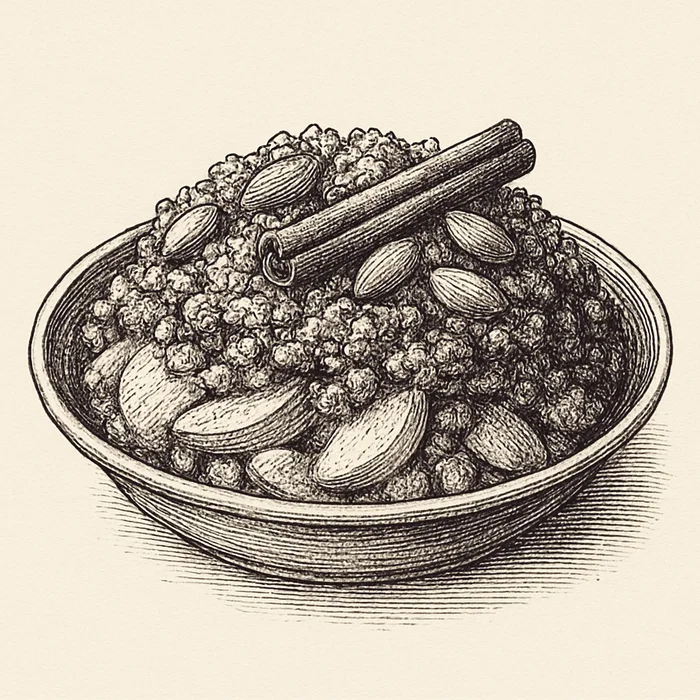
Warm Apple and Almond Crumble with Cinnamon
A dessert that earns its place at the table -- apples provide quercetin, oats provide beta-glucan, almonds provide vitamin E, and cinnamon delivers hydroxycinnamaldehyde, a compound with genuine anti-diabetic activity measured in randomized controlled trials.
Why These Ingredients Together
This crumble exploits the fact that several longevity compounds happen to taste spectacular together. Apples are the second-richest common dietary source of quercetin (after capers), concentrated in the skin -- the same senolytic flavonoid that selectively clears senescent cells in laboratory models. Cinnamon contains hydroxycinnamaldehyde (cinnamaldehyde), which improves insulin sensitivity by enhancing insulin receptor phosphorylation and increasing GLUT4 transporter expression on cell surfaces. Multiple meta-analyses of randomized trials show 1-6g of cinnamon per day significantly reduces fasting blood glucose in type 2 diabetics. The oat topping delivers beta-glucan, the viscous soluble fiber that forms a gel in the small intestine, slowing glucose absorption and blunting the postprandial blood sugar spike that a fruit dessert would otherwise produce. Almonds contribute vitamin E as alpha-tocopherol -- the body's primary lipid-soluble antioxidant, which protects LDL cholesterol particles from oxidation (a key initiating step in atherosclerosis). Together, these ingredients transform what could be an empty-calorie dessert into a postprandial glucose management system that also tastes like autumn.
Ingredients
Filling:
- 6 medium apples (about 900g), mixed varieties (Granny Smith for tartness, Honeycrisp for sweetness)
- 2 tablespoons lemon juice
- 2 teaspoons ground cinnamon
- 1/4 teaspoon ground nutmeg
- 1 tablespoon honey
- 1 tablespoon cornstarch or arrowroot
Crumble Topping:
- 1 cup (90g) rolled oats
- 3/4 cup (90g) almond flour (or roughly chopped whole almonds)
- 1/4 cup (30g) whole almonds, roughly chopped
- 1 teaspoon ground cinnamon
- 1/4 teaspoon flaky sea salt
- 3 tablespoons extra-virgin olive oil or melted coconut oil
- 2 tablespoons honey or maple syrup
To serve:
- Plain Greek yogurt or a small scoop of vanilla gelato
- Extra cinnamon for dusting
Instructions
-
Preheat the oven to 190C (375F). A moderate oven is deliberate here -- you want the apples to soften and release pectin (which will thicken into a syrupy filling) without the topping burning before the interior is done.
-
Prepare the apples. Peel only if you prefer a smoother texture, but know that the quercetin is concentrated in the skin. Leaving skins on at least half the apples preserves the flavonoid content. Core and slice into 1cm wedges. Toss in a large bowl with lemon juice, cinnamon, nutmeg, honey, and cornstarch. (The lemon juice prevents enzymatic browning by lowering pH below the threshold where polyphenol oxidase is active -- and its vitamin C protects the quercetin from oxidative degradation during baking. The cornstarch absorbs excess liquid released by the apples, preventing a soupy filling.)
-
Make the crumble topping. In a separate bowl, combine the rolled oats, almond flour, chopped almonds, cinnamon, and salt. Drizzle in the olive oil and honey, then toss with your fingers or a fork until you have a shaggy, clumpy mixture with pieces ranging from fine crumbs to almond-sized clusters. (The irregular texture is what makes a crumble a crumble -- uniform fine crumbs bake into a dense, biscuit-like cap. You want craggy peaks and valleys that create a mix of crispy and chewy textures.)
-
Assemble and bake. Spread the apple mixture in an even layer in a 9-inch (23cm) baking dish or cast iron skillet. Scatter the crumble topping over the apples in an irregular layer -- do not press it down. (Compressing the topping eliminates the air pockets that allow steam to escape, resulting in a soggy top layer.) Bake for 30-35 minutes until the topping is golden brown and the apple juices are bubbling visibly around the edges.
-
Rest before serving. Let the crumble cool for 10 minutes before serving. (The filling thickens as the pectin from the apples cools and gels. Cutting into it immediately gives you a runny puddle rather than a cohesive fruit layer.) Serve warm with a dollop of Greek yogurt and a dusting of cinnamon. (The protein and fat in the yogurt further blunts the glycemic response, slowing gastric emptying and reducing the blood sugar spike from the fruit sugars.)
What Can Go Wrong
-
Peeling all the apples. The quercetin in apples is concentrated in the skin at levels 2-6x higher than the flesh. Peeling every apple for aesthetics means discarding the most bioactive part of the fruit. A mix of peeled and unpeeled slices is the practical compromise -- you get some silky flesh pieces and some with the slight chew of cooked skin.
-
Using too little cinnamon. The anti-diabetic research uses 1-6g per day -- that is roughly 1/2 to 2 teaspoons. A timid pinch is symbolic. This recipe uses a full tablespoon total (split between filling and topping), which puts you squarely in the clinically studied range. The flavor can handle it: cinnamon's warmth is complemented, not overwhelmed, by apple's acidity.
-
Pressing down the topping. A crumble topping needs to stay loose and irregular. Compacting it prevents steam from escaping the apples below, which saturates the bottom of the topping layer and eliminates the crispy-chewy contrast that defines the dish.
Science Notes
Cinnamon's anti-diabetic mechanism is specific and well-characterized. Cinnamaldehyde (the compound responsible for cinnamon's flavor and aroma) activates PPAR-gamma receptors in adipocytes and enhances insulin receptor autophosphorylation, increasing glucose uptake into cells. A 2019 meta-analysis of 16 randomized controlled trials found cinnamon supplementation significantly reduced fasting blood glucose (mean reduction: 24.6 mg/dL) and HbA1c in type 2 diabetic patients. The oat beta-glucan in the topping adds a second glycemic control mechanism: by forming a viscous gel in the intestinal lumen, it physically slows glucose diffusion across the intestinal wall, flattening the postprandial glucose curve. This is not a theoretical benefit -- the FDA allows a specific health claim on oat products providing 3g or more of beta-glucan per day. Pairing a naturally sweet dessert with these glucose-moderating ingredients is the closest food gets to having its cake and managing it too.
Nutrition Highlights
- Quercetin: Apple skins provide 4-10mg quercetin per apple, contributing to a flavonoid intake associated with reduced cardiovascular and all-cause mortality in prospective cohort studies
- Beta-glucan: The oat topping delivers ~2g per serving, contributing meaningfully toward the 3g/day threshold for cholesterol-lowering and glycemic control
- Vitamin E: Almonds provide ~7mg alpha-tocopherol per serving (nearly 50% of daily needs), the body's primary lipid-soluble chain-breaking antioxidant
- Cinnamaldehyde: Total cinnamon across the recipe provides a clinically relevant dose of the compound shown to improve insulin sensitivity and reduce fasting blood glucose in RCTs