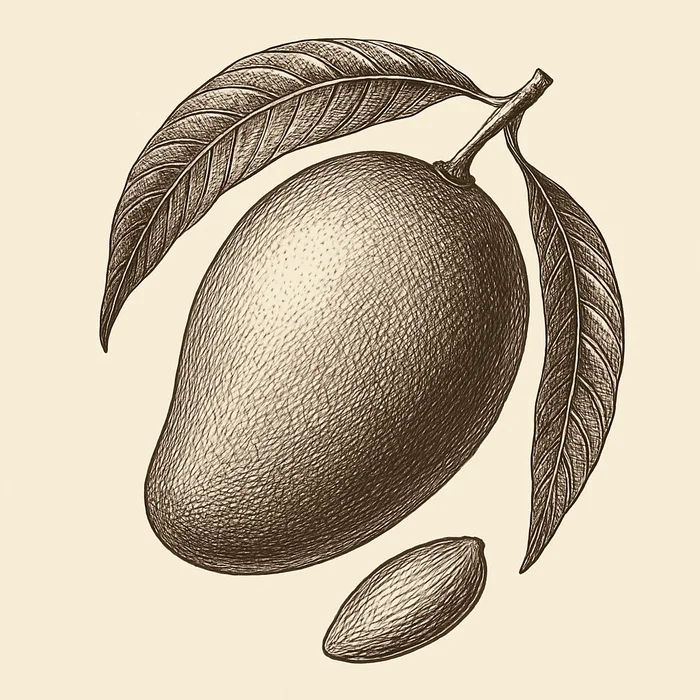
Mango
Mango is listed as a source of vitamin A (112 mcg RAE per 1 whole mango, equivalent to 2,240 IU, 45% DV) and vitamin E (0.7 mg per ½ cup sliced, 4% DV).
Why It Matters for Longevity
Mango is a tropical fruit providing provitamin A beta-carotene and alpha-tocopherol, both fat-soluble antioxidants that protect cell membranes from oxidative damage linked to accelerated aging. It is also among the richest dietary sources of mangiferin, a xanthonoid polyphenol with demonstrated anti-inflammatory, anti-diabetic, and antioxidant properties.
Mangiferin — the predominant bioactive xanthonoid in mango pulp and peel — inhibits high-fat diet-induced vascular injury in animal models through regulation of the AMPK/mTOR/NOX4 pathway, reducing endothelial inflammation and oxidative stress; this provides mechanistic support for mango's inclusion in longevity-oriented anti-inflammatory diets (Jiang et al., 2018, J Pharmacol Sci).
Across 95 prospective studies, fruit intake was inversely associated with all-cause mortality, cardiovascular disease, and cancer in a dose-dependent relationship; tropical fruits including mango contributed to the protective associations (Aune et al., 2017, Int J Epidemiol).
The mangiferin pathway carries additional mechanistic interest for aging biology: AMPK activation suppresses mTORC1, a nutrient-sensing kinase whose excessive activity is strongly associated with accelerated cellular aging and age-related disease. NOX4 (NADPH oxidase 4) is a major source of mitochondrial reactive oxygen species in aged vasculature; mangiferin's NOX4 suppression reduces the mitochondrial ROS burden that drives endothelial senescence. While this mechanism is established in animal models, the prediabetes RCT above provides the first human trial evidence that dietary mango consumption produces relevant metabolic effects consistent with this pathway.
Vitamin C and Collagen Synthesis
Mango provides 36.4 mg of vitamin C per 100 g — roughly 40% of the adult daily reference intake. Vitamin C is an essential cofactor for prolyl hydroxylase and lysyl hydroxylase, the enzymes that catalyze collagen cross-linking; without it, newly synthesized collagen triple helices are structurally unstable. Beyond collagen synthesis, vitamin C quenches lipid peroxidation chain reactions in cell membranes, regenerates oxidized vitamin E (tocopheroxyl radical) back to its active form, and supports neutrophil and natural killer cell function. Because mango is eaten fresh and uncooked in most preparations, its vitamin C arrives at the intestine largely intact — heat-sensitive vitamin C degrades substantially during cooking.
Glycemic Effects
Despite its sweetness, mango has a glycemic index of approximately 51–59, placing it firmly in the low-GI category. A 24-week randomized controlled trial in adults with prediabetes (n=23) found that daily consumption of ~300 g mango stabilized HbA1c while HbA1c rose in the isocaloric control group (p=0.02); fasting blood glucose was significantly lower in the treatment group at week 24 (p<0.02), and insulin sensitivity (QUICKI) improved (p=0.02). Body fat percentage also trended lower in the mango group (p=0.05) (Basiri et al., 2025, Foods). This is consistent with in vitro and animal evidence that mangiferin inhibits α-glucosidase and enhances GLUT4 translocation, slowing glucose entry into the bloodstream.
The glycemic response to whole mango is moderated by its fiber content (1.6 g per 100 g), which slows gastric emptying and blunts postprandial glucose peaks. Pairing mango with dietary fat — olive oil, avocado — further slows digestion and simultaneously enhances beta-carotene absorption.
Gut Microbiome Effects
A 12-week crossover RCT in 27 overweight adults (100 kcal/day fresh mango vs. low-fat cookies) found that mango consumption increased Shannon-Wiener and Simpson alpha-diversity indices of the gut microbiome at week 4, with significant beta-diversity differences between groups at week 12. Mechanistically, mango polyphenols — including gallotannins and gallic acid — promote growth of beneficial bacteria including Lactobacillus plantarum and support intestinal barrier integrity by upregulating tight-junction proteins (Asuncion et al., 2023, Food Sci Nutr). A separate review confirmed that mango polyphenols and fiber modulate gut microbial ecology, reduce intestinal inflammation through NF-κB suppression, and support mucosal barrier function (Kim et al., 2021, Molecules).
Greater gut microbiome diversity is a consistent marker of healthy aging across human cohort data, suggesting this microbiome-modulating property of mango is relevant to longevity outcomes beyond its direct antioxidant activity.
How to Use It
Eat fresh, ripe mango. Pair with extra-virgin olive oil or avocado to enhance absorption of fat-soluble beta-carotene and vitamin E. The peel and seed kernel have higher mangiferin concentration than the pulp, though the flesh is what is typically consumed.
What to Pair It With
| Ingredient | Why | Tradition |
|---|---|---|
| Lime | Vitamin C from lime enhances bioavailability; acid complements mango sweetness | Tropical / Caribbean |
| Chili | Capsaicin complements mango's sweetness; classic tropical preparation | South Asian / Mexican |
| Black beans | Fat-soluble carotenoids from mango absorbed better with beans' fat; complementary antioxidants | Caribbean |
| Olive oil | Dietary fat markedly increases absorption of beta-carotene and vitamin E from mango | General |
Flavor Profile
Sweet, floral, mildly tart. Aroma is tropical, sweet, and fruity. Texture is juicy, fibrous, and smooth when ripe.
The Science
- Jiang et al., 2018, J Pharmacol Sci: Mangiferin inhibits high-fat diet-induced vascular injury via regulation of the AMPK/mTOR/NOX4 pathway in animal models, demonstrating mechanistic cardiovascular protection from mango's primary polyphenol.
- Aune et al., 2017, Int J Epidemiol: Meta-analysis of 95 prospective studies — fruit intake inversely associated with all-cause mortality, cardiovascular disease, and cancer in a dose-dependent relationship.
- Basiri et al., 2025, Foods: 24-week RCT in prediabetic adults — daily mango (~300 g) stabilized HbA1c, improved fasting glucose (p<0.02) and insulin sensitivity (p=0.02) versus isocaloric granola bar control.
- Asuncion et al., 2023, Food Sci Nutr: 12-week crossover RCT (n=27) — mango increased gut microbiome alpha-diversity at week 4 and shifted beta-diversity significantly by week 12 versus low-fat cookies.
- Kim et al., 2021, Molecules: Review — mango gallotannins and gallic acid promote Lactobacillus plantarum growth, suppress intestinal NF-κB signaling, and support tight-junction integrity in the gut epithelium.
References
- Jiang F, Hou W, Shi J, et al. Mangiferin inhibits high-fat diet induced vascular injury via regulation of AMPK/mTOR/NOX4 pathway. J Pharmacol Sci. 2018;137(2):114-121. PMID: 30097377. doi:10.1016/j.jphs.2018.07.011
- Aune D, Giovannucci E, Boffetta P, et al. Fruit and vegetable intake and the risk of cardiovascular disease, total cancer and all-cause mortality — a systematic review and dose-response meta-analysis of prospective studies. Int J Epidemiol. 2017;46(3):1029-1056. PMID: 28338764. doi:10.1093/ije/dyw319
- Basiri R, Dawkins K, Singar S, et al. Daily mango intake improves glycemic and body composition outcomes in adults with prediabetes: a randomized controlled study. Foods. 2025. PMID: 40941087.
- Asuncion DJ, Liu C, Castro GS, et al. The effects of fresh mango consumption on gut health and microbiome. Food Sci Nutr. 2023;11(7):3896-3908. PMID: 37051355.
- Kim H, Castellon-Chicas MJ, Arbizu S, et al. Mango (Mangifera indica L.) polyphenols: anti-inflammatory intestinal microbial health benefits, and associated mechanisms of actions. Molecules. 2021;26(9):2732. PMID: 34066494.
Key Nutrients
| Nutrient | Per 100g | Notes |
|---|---|---|
| Beta-carotene (pro-vitamin A) | 54 mcg RAE | Fat-soluble; absorption increases significantly when consumed with dietary fat such as olive oil or avocado |
| Vitamin C | 36.4 mg | Water-soluble; well absorbed from whole fruit; degrades with heat so best consumed fresh |
| Mangiferin | ~1–4 mg (pulp) | Xanthonoid with antioxidant and anti-inflammatory properties; higher concentration in peel and seed kernel; inhibits AMPK/mTOR/NOX4 and alpha-glucosidase pathways |
| Fiber | 1.6 g | Mix of soluble and insoluble fibers; supports gut microbiota diversity associated with longevity |
| Gallotannins | Moderate | Hydrolyzable tannins that ferment to gallic acid in the colon; selectively promote Lactobacillus growth and suppress intestinal NF-κB |