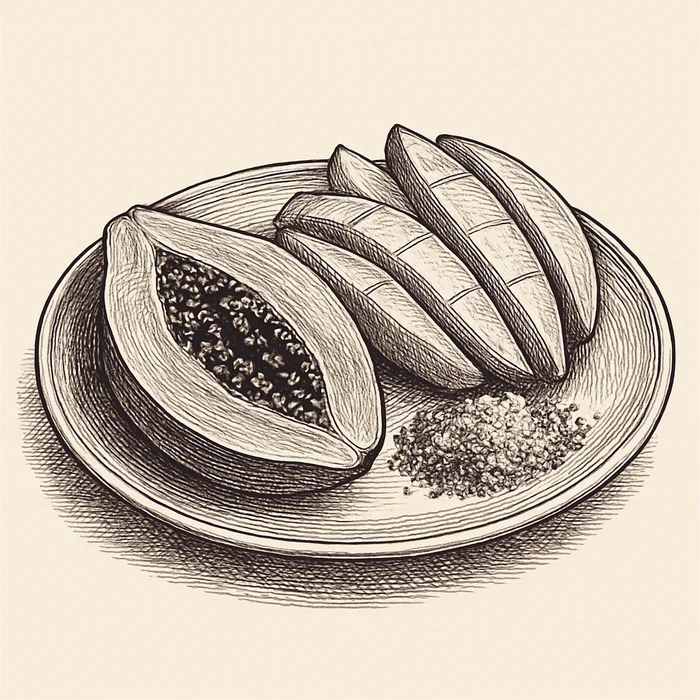
Sunrise Papaya and Mango Plate with Lime-Chili Salt
There's a reason tropical markets from Oaxaca to Bangkok sell cups of sliced fruit with lime wedges and a little twist of chili salt: the combination is doing more work than it lets on. Mango and papaya together provide a broad carotenoid spectrum — lutein, beta-carotene, lycopene, cryptoxanthin — plus vitamin C, folate, and mangiferin. It's a tropical duo that maximises antioxidant diversity in a way a single fruit can't. Papaya leans on lycopene and beta-cryptoxanthin (it's one of the richest dietary sources of both); mango brings mangiferin, a xanthonoid with preclinical anti-inflammatory and anti-diabetic activity, alongside more beta-carotene. Layer them and you cover overlapping-but-distinct territory.
The catch: carotenoids are fat-soluble. Eat them naked and you'll absorb a fraction of what's there. That's why this plate finishes with a slow drizzle of extra-virgin olive oil and a scatter of toasted coconut — enough fat to shuttle the pigments across the intestinal wall. The lime does double duty: its acidity snaps the sweetness into focus, and its vitamin C adds to what's already in the fruit. The chili-salt dusting (a Mexican and Thai street-cart move) wakes up the palate and pushes you to eat slowly. Ripeness is the whole game here: you want papaya that yields to a thumb like a ripe avocado and mango that smells floral at the stem end. Underripe fruit tastes like starch and turpentine; overripe fruit collapses into fermented mush. Aim for the five-minute window in between.
Ingredients
- 1 small ripe red-fleshed papaya (about 500 g / 1 lb), chilled
- 1 large ripe Ataulfo or Kent mango (about 350 g), chilled
- 1 lime, halved, plus extra wedges for serving
- 2 tsp flaky sea salt
- 1/4 tsp ancho or Kashmiri chili powder (mild, fruity — not cayenne)
- Pinch of ground cinnamon (optional, Caribbean touch)
- 2 tbsp unsweetened coconut flakes, lightly toasted
- 2 tsp good extra-virgin olive oil
- Small handful fresh mint leaves, torn
- Freshly grated lime zest
Method
-
Make the lime-chili salt first so the flavours marry. Combine the flaky salt, chili powder, cinnamon if using, and the zest of half the lime in a small bowl. Crush it briefly between your fingers — you want the zest oils to bloom into the salt. Set aside. This is the same base seasoning used on Mexican paletas and Thai fruit carts; the oils in the zest finish the salt and make it cling.
-
Check ripeness before you cut. Ripe papaya yields gently to thumb pressure near the stem and smells faintly musky-sweet. A ripe mango gives at the shoulders and perfumes the air when held to your nose. If either is firm, leave it stem-down on the counter for a day and try again — cutting underripe tropical fruit is the single most common way this dish fails.
-
Halve and seed the papaya. Slice it lengthwise and scoop out the black seeds with a spoon (they're edible and peppery, but they muddy a clean breakfast plate). Peel each half with a Y-peeler, then cut into 1 cm thick half-moons. Papaya's flesh is delicate; use a sharp knife and single clean strokes, not a sawing motion, or you'll crush the edges.
-
Cheek the mango. Stand the mango on its stem end and slice down either side of the flat pit to release the two cheeks. Score a tight grid through the flesh without piercing the skin, then invert the cheek (the hedgehog trick) and slice the cubes free with a paring knife. This technique keeps the fibrous flesh clean and avoids the slippery-slab fight that makes mango frustrating.
-
Arrange, don't toss. Fan the papaya half-moons and the mango cubes across two chilled plates in loose alternating rows. Tossing bruises the fruit and starts weeping within minutes; fanning keeps the structure intact and the colours saturated — papaya's sunset-orange playing off mango's deep gold.
-
Dress in the right order: acid, fat, seasoning, aromatic. Squeeze the remaining lime half generously over both plates. Drizzle the olive oil in a thin thread — this is your carotenoid cofactor, do not skip it. Dust with the lime-chili salt to taste (start with a pinch; you can always add more). Scatter the toasted coconut flakes, then the torn mint. Acid before oil stops the oil from beading; salt after oil helps it stick.
-
Serve immediately with extra lime wedges. The plate is at its best in the first ten minutes — colours bright, textures distinct, aroma lifting. Eat with a fork and a teaspoon, alternating mango and papaya so the flavours stay in conversation.
What Can Go Wrong
- Overripe collapse. Papaya past its prime turns grainy and weeps a cloudy liquid; mango goes stringy and ferments at the pit. If you press the fruit and your thumb sinks in with no resistance, it's past plating stage — redirect it to a smoothie bowl instead. For a plate you need structural integrity.
- Underripe starchiness. Green-shouldered mango tastes like raw potato and astringent sap; hard papaya reads as bitter cucumber. No amount of lime or salt rescues this. Wait the extra day. The mangiferin and carotenoid content also climb sharply during the final ripening window, so underripe fruit shortchanges you nutritionally as well as flavourfully.
- Color fade from pre-cutting. Cut papaya and mango oxidise and dull within 20–30 minutes, especially if left at room temperature. Cut directly before serving; if you must prep ahead, hold the cubes in a bowl with a squeeze of lime juice and a lid, chilled, for no more than 30 minutes.
- Skipping the olive oil. The single most common nutritional misstep with a fruit plate. Without fat, you absorb a fraction of the beta-carotene, lycopene, and cryptoxanthin on the plate. Two teaspoons of good olive oil is not a garnish — it's the reason the carotenoids make it into your bloodstream.
- Heavy-handed chili salt. A pinch per plate accents; a tablespoon bullies the fruit into salty-hot territory and masks the floral notes of the mango. Dust, taste, then adjust. You can always add; you cannot subtract.
- Using citrus that isn't lime. Lemon is too sharp and one-note here; orange is too sweet and adds nothing the fruit doesn't already have. Lime's slight bitterness and floral top notes are specifically what the tropical fruit wants — this pairing shows up in Caribbean, Thai, and South Indian kitchens for a reason.