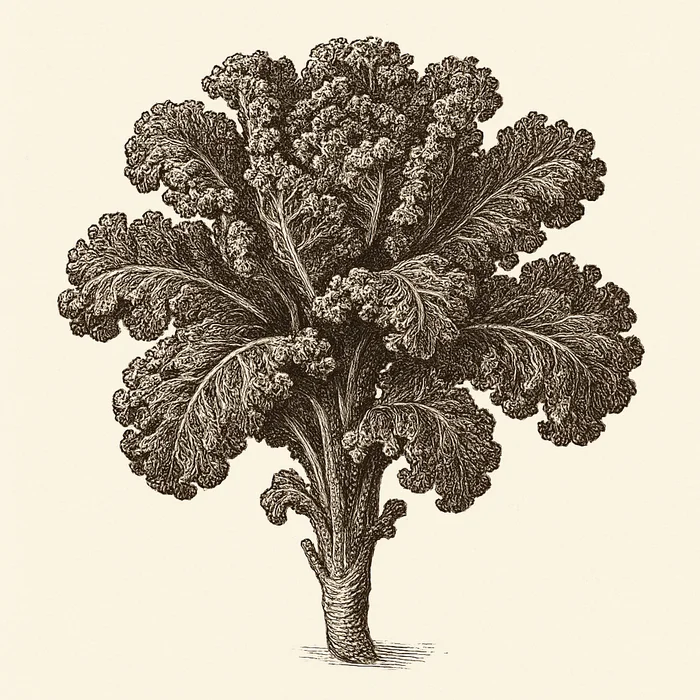
Kale
Kale should only be consumed if it was part of your ancestral diet; otherwise best avoided or used only occasionally.
Why It Matters for Longevity
Kale earns its longevity credentials through glucosinolate-mediated cancer prevention, cardiovascular protection from cruciferous vegetable intake, and a strong vitamin K, vitamin C, and calcium profile supporting bone and immune health.
Glucosinolates and the NRF2 Pathway
Like all Brassica vegetables, kale contains glucosinolates (principally glucoraphanin and sinigrin) hydrolysed by myrosinase into bioactive isothiocyanates including sulforaphane. These compounds activate the Nrf2 antioxidant response pathway by chemically modifying cysteine sensors on KEAP1, which prevents NRF2 from being tagged for degradation. When NRF2 accumulates in the nucleus, it upregulates phase II detoxification enzymes — glutathione S-transferase, NAD(P)H quinone oxidoreductase 1, and heme oxygenase-1 — that neutralize electrophiles and reactive oxygen species before they damage DNA. A comprehensive review identified KEAP1-NRF2 signaling as the validated mechanistic target for sulforaphane's chemopreventive activity, with pharmacodynamic evidence across more than twenty clinical trials using sulforaphane-rich broccoli preparations (Dinkova-Kostova et al., 2017, Trends Food Sci Technol). A broader review of kale's bioactive composition confirmed that sulforaphane and other kale-derived isothiocyanates modulate multiple cancer-relevant signaling pathways and demonstrate chemopreventive activity across multiple cancer models (Šamec et al., 2019, Crit Rev Food Sci Nutr).
Cardiovascular Protection via Arterial Health
Cruciferous vegetable intake, including kale, is inversely associated with subclinical atherosclerosis in prospective epidemiological studies. In a cohort of older women, every 10 g/day increase in cruciferous vegetable intake was associated with approximately 0.8% less carotid intima-media thickness — a direct measure of arterial aging (Blekkenhorst et al., 2018, J Am Heart Assoc). The proposed mechanism involves glucosinolate-derived isothiocyanates reducing vascular oxidative stress and NF-κB-mediated inflammatory signalling in arterial endothelium.
Lutein, Zeaxanthin, and Macular Protection
Kale is among the most concentrated dietary sources of lutein (approximately 18 mg per 100 g raw) and zeaxanthin, two xanthophyll carotenoids that selectively accumulate in the macula of the retina. There they function as macular pigments, filtering high-energy blue light and quenching reactive oxygen species generated by photoreception. A systematic review and meta-analysis of six longitudinal cohort studies found that higher dietary lutein and zeaxanthin intake was associated with a 26% reduction in late AMD risk (RR 0.74, 95% CI 0.57–0.97) and a 32% reduction in neovascular AMD risk (RR 0.68, 95% CI 0.51–0.92), though no significant protection was observed against early AMD (Ma et al., 2012, Br J Nutr). Because lutein and zeaxanthin are fat-soluble, consuming kale with olive oil substantially increases their absorption.
Vitamin K1 and All-Cause Mortality
At 817 mcg per 100 g raw, kale delivers more than six times the daily adequate intake for vitamin K1 (phylloquinone) in a single serving. Phylloquinone activates matrix Gla protein (MGP) through gamma-carboxylation; carboxylated MGP is the dominant local inhibitor of vascular calcification. A participant-level meta-analysis of three US cohorts (n=3,891, median follow-up 13 years) found that individuals with the lowest circulating phylloquinone (≤0.5 nmol/L) had a 19% higher all-cause mortality risk compared to those with adequate levels (HR 1.19, 95% CI 1.03–1.38) (Shea et al., 2020, Am J Clin Nutr). Dietary fat co-ingestion is required for meaningful K1 absorption from kale.
Calcium Bioavailability
Calcium from kale has approximately 40% bioavailability compared to roughly 32% from milk. Kale has relatively low oxalate content compared to spinach, which binds calcium and reduces its absorption significantly. This makes kale a meaningful non-dairy calcium source for plant-based longevity diets, particularly when paired with dietary fat to support fat-soluble vitamin co-absorption.
Thyroid Considerations at Extreme Doses
Glucosinolate hydrolysis also produces goitrin, a compound that can inhibit thyroid peroxidase at very high intakes. This is only a concern for individuals with iodine deficiency consuming kale in raw quantities exceeding several hundred grams daily over prolonged periods. Cooking reduces goitrin formation by partially inactivating myrosinase; standard serving sizes (80–150 g cooked) pose no meaningful thyroid risk in individuals with adequate iodine intake.
How to Use It
Pairs well with olive oil (fat enhances absorption of fat-soluble vitamins K, A, and lutein/zeaxanthin), lemon (vitamin C co-ingestion enhances non-heme iron absorption), and garlic. Use lightly steamed or raw to preserve myrosinase activity and vitamin C. When cooking, add raw mustard seed to restore exogenous myrosinase for glucosinolate conversion.
What to Pair It With
| Ingredient | Why | Tradition |
|---|---|---|
| Olive oil | Fat enhances absorption of fat-soluble vitamins K, A, and E from kale, and of lutein and zeaxanthin | The Longevity Diet |
| Lemon | Vitamin C enhances non-heme iron absorption from kale; brightens flavor | The Longevity Diet |
| Garlic | Complementary anti-inflammatory compounds; classic Mediterranean preparation | Traditional |
| Legumes | Calcium from kale complements plant protein from legumes in a complete longevity meal | Traditional |
Flavor Profile
Bitter, earthy, slightly sweet when cooked. Aroma is green and cruciferous. Texture is tough when raw, tender when massaged or cooked. Massaging raw kale with olive oil and salt softens the leaves and reduces bitterness.
The Science
- Dinkova-Kostova et al., 2017, Trends Food Sci Technol: KEAP1-NRF2 signaling identified as the validated mechanistic target for sulforaphane; pharmacodynamic evidence from over twenty clinical trials with sulforaphane-rich broccoli preparations including protection against chemically induced carcinogenesis in multiple tissue types.
- Šamec et al., 2019, Crit Rev Food Sci Nutr: Comprehensive review of kale as a functional food — kale-derived glucosinolates and their isothiocyanate hydrolysis products activate Nrf2, upregulate phase II detoxification enzymes, and demonstrate chemopreventive activity across cancer models.
- Blekkenhorst et al., 2018, J Am Heart Assoc: Cruciferous vegetable intake inversely associated with subclinical atherosclerosis in older women; each 10 g/day increase associated with ~0.8% less carotid intima-media thickness, a direct marker of arterial aging.
- Ma et al., 2012, Br J Nutr: Meta-analysis of six cohort studies — higher lutein and zeaxanthin intake associated with 26% lower late AMD risk (RR 0.74) and 32% lower neovascular AMD risk (RR 0.68); no significant protection against early AMD.
- Shea et al., 2020, Am J Clin Nutr: Participant-level meta-analysis of 3 US cohorts (n=3,891, 13-year follow-up) — lowest phylloquinone status associated with 19% higher all-cause mortality (HR 1.19, 95% CI 1.03–1.38).
References
- Dinkova-Kostova AT, Fahey JW, Kostov RV, Kensler TW. KEAP1 and Done? Targeting the NRF2 Pathway with Sulforaphane. Trends Food Sci Technol. 2017;69(Pt B):257-269. PMID: 29242678. doi:10.1016/j.tifs.2017.02.002
- Šamec D, Urlić B, Salopek-Sondi B. Kale (Brassica oleracea var. acephala) as a superfood: Review of the scientific evidence behind the statement. Crit Rev Food Sci Nutr. 2019;59(15):2411-2422. PMID: 29557674. doi:10.1080/10408398.2018.1454400
- Blekkenhorst LC, Sim M, Bondonno CP, et al. Cruciferous and Total Vegetable Intakes Are Inversely Associated With Subclinical Atherosclerosis in Older Adult Women. J Am Heart Assoc. 2018;7(8):e008391. PMID: 29618474. doi:10.1161/JAHA.117.008391
- Ma L, Dou HL, Wu YQ, et al. Lutein and zeaxanthin intake and the risk of age-related macular degeneration: a systematic review and meta-analysis. Br J Nutr. 2012;107(3):350-359. PMID: 21899805. doi:10.1017/S0007114511004260
- Shea MK, Barger K, Booth SL, et al. Vitamin K status, cardiovascular disease, and all-cause mortality: a participant-level meta-analysis of 3 US cohorts. Am J Clin Nutr. 2020;111(6):1295-1303. PMID: 32359159. doi:10.1093/ajcn/nqaa082
Key Nutrients
| Nutrient | Per 100g | Notes |
|---|---|---|
| Calcium | 150 mg (raw) | ~40% bioavailability; lower oxalate than spinach makes it a better non-dairy calcium source |
| Vitamin K1 | 817 mcg | Exceptionally high K1; fat-soluble, requires dietary fat for absorption; activates MGP for vascular calcification prevention |
| Vitamin C | 120 mg | Degrades with prolonged cooking; best lightly steamed or raw |
| Lutein + Zeaxanthin | ~18 mg (raw) | Highest dietary concentration of these macular carotenoids; fat-soluble; absorption enhanced with olive oil |
| Glucosinolates | ~100 mg glucoraphanin equivalent | Hydrolysed to sulforaphane by myrosinase; NRF2 activator; reduced by boiling, preserved by steaming |