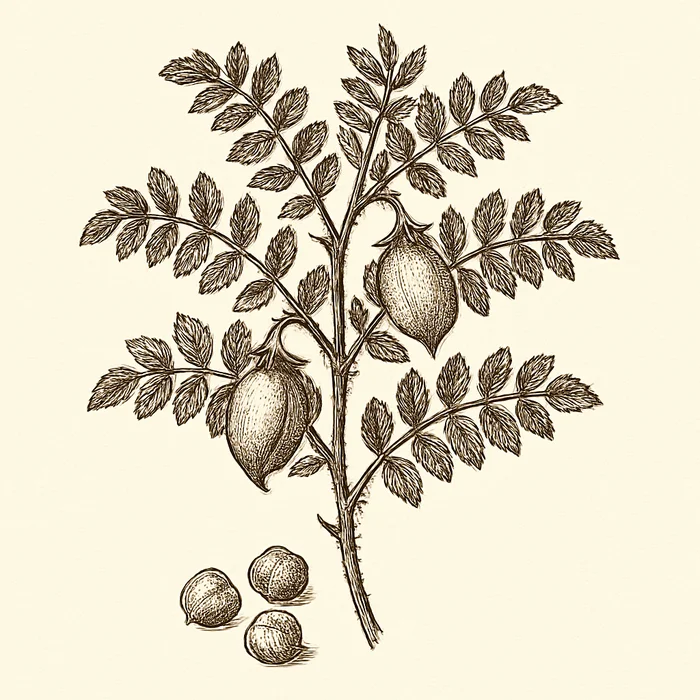
Chickpeas
The legume behind hummus, falafel, and pasta e ceci. Chickpeas deliver 164 calories per 100g cooked -- with 9g protein, 7.6g fiber, and a glycemic index low enough to flatten the blood sugar curve of any meal they join.
Why It Matters for Longevity
A controlled trial (Mollard et al., 2012, Br J Nutr) found that a pulse-containing meal including chickpeas significantly increased satiety and reduced appetite at both the test meal and a subsequent meal compared to a white bread control. A comprehensive review (Jukanti et al., 2012, Br J Nutr) documented chickpeas' effects on glycaemic control, LDL cholesterol reduction, body weight management, and beneficial modulation of gut microbiota. The meta-analysis of 21 RCTs (Messina, 2014, Am J Clin Nutr) confirmed one daily pulse serving cuts LDL cholesterol by 5%.
The high amylose starch in chickpeas is digested slowly, producing a low glycemic response. Soaking for 24 hours before cooking reduces phytate levels, improving mineral absorption.
LDL Cholesterol: Direct RCT Evidence
Two randomized controlled trials by Pittaway and colleagues provide the most direct human evidence on chickpeas and cardiovascular lipids. In the first study, 47 free-living adults were randomized to a crossover intervention comparing chickpea-supplemented and wheat-supplemented diets for at least five weeks each. Serum total cholesterol fell 3.9% (p < 0.01) and LDL cholesterol fell 4.6% (p < 0.01) during the chickpea phase; the researchers attributed the effect primarily to increased dietary fiber and polyunsaturated fatty acid intake from chickpeas displacing other foods (Pittaway et al., 2006, Ann Nutr Metab).
A follow-up 12-week ad libitum trial by the same group (n = 45 adults, minimum 728 g canned chickpeas per week) confirmed the lipid benefit: total cholesterol dropped 7.7 mg/dL and LDL fell 7.3 mg/dL, with dietary fiber identified as the dominant driver, reducing total cholesterol by 15.8 mg/dL when analyzed independently. The trial also found fasting insulin down 0.75 μIU/mL and HOMA insulin resistance down 0.21 units, suggesting chickpea fiber acts on both lipid and glucose metabolism via improved hepatic insulin signaling (Pittaway et al., 2008, J Am Diet Assoc).
The mechanism linking chickpea fiber to LDL reduction involves two complementary pathways. Soluble fiber (including pectin-like fractions and galacto-oligosaccharides) forms a viscous gel in the small intestine that traps bile acids, forcing the liver to synthesize new bile acids from circulating LDL cholesterol — a classic bile acid sequestration mechanism. Simultaneously, chickpea resistant starch reaches the colon intact, where it is fermented by anaerobic bacteria into short-chain fatty acids (SCFAs), principally butyrate and propionate. Propionate is absorbed into the portal circulation and inhibits hepatic cholesterol synthesis, providing a second LDL-lowering mechanism independent of the small intestine.
Gut Microbiome Effects
Chickpeas reshape the colon's microbial community through their combination of resistant starch, oligosaccharides (including raffinose and stachyose), and insoluble fiber. A randomized crossover study in 12 healthy adults tested three-week periods of control diet, 200 g/day canned chickpeas, or 5 g/day raffinose (chickpeas' main oligosaccharide). The chickpea diet increased abundance of Faecalibacterium prausnitzii — a butyrate-producing bacterium consistently associated with reduced gut inflammation — while reducing colonization by pathogenic Clostridium histolyticum-related species from 83% to 42% of participants. The raffinose-only arm did not replicate these effects, indicating that multiple fiber fractions in whole chickpeas drive the microbiome benefit rather than any single compound (Fernando et al., 2010, Beneficial Microbes).
F. prausnitzii produces butyrate, which is the principal energy substrate for colonocytes and exerts anti-inflammatory effects by inhibiting the NF-κB pathway in intestinal epithelial cells. Higher F. prausnitzii abundance is associated with lower mucosal inflammation markers, lower colorectal cancer risk, and reduced gut permeability — all consistent with the epidemiological observation that frequent legume consumers have lower rates of colorectal adenomas.
Glycemic Control and the Second-Meal Effect
Chickpeas have a glycemic index roughly half that of white bread. A systematic review and meta-analysis of 10 RCTs (182 healthy participants) demonstrated that chickpeas reduced blood glucose incremental area under the curve (iAUC) substantially compared to wheat controls; against potatoes the glucose reduction was even larger (Nam et al., 2023, Nutrients). The review identified a mechanistic hierarchy: whole chickpeas outperformed pureed or flour-based preparations because intact cell walls act as a physical barrier controlling water entry and amylase access — two prerequisites for starch gelatinization and rapid hydrolysis. When cell wall integrity is compromised through grinding, glycemic index rises substantially.
The glucose benefit also extends to subsequent meals. In a crossover study by Zafar and Kabir (12 healthy adults), a chickpea preload reduced blood glucose AUC by 29–36% compared to a white bread preload, and participants consumed 194 kcal less at a test meal served 120 minutes later — a 98% energy compensation rate. The authors attributed this to chickpeas stimulating GLP-1 and PYY secretion, incretin hormones that slow gastric emptying and signal satiety to the hypothalamus. Among pulse crops, only chickpeas and lentils have demonstrated this second-meal blood glucose-lowering effect (Zafar & Kabir, 2017, J Food Sci Technol).
The mechanism underlying this response involves two parallel pathways. Short-chain fatty acids produced from chickpea resistant starch fermentation in the colon stimulate enteroendocrine L-cells to secrete GLP-1, which then slows gastric emptying and augments insulin secretion at the next meal. Simultaneously, chickpea protein slows gastric emptying directly, as protein digestion requires more mechanical and enzymatic processing than carbohydrate. The 30–40% amylose content of chickpea starch (compared to roughly 20% in wheat starch) further contributes to slow digestion, as amylose forms a tighter helical structure that resists alpha-amylase more effectively than the branched amylopectin fraction.
Saponins and Additional Bioactives
Chickpeas contain biochanin A and formononetin (isoflavonoids), as well as saponins — glycosides with established in vitro capacity to form insoluble complexes with cholesterol in the gut lumen and to increase fecal bile acid excretion. While the saponin evidence in humans is less direct than the fiber evidence, the compound class contributes to the overall cholesterol-lowering matrix of chickpeas alongside fiber and polyunsaturated fats. The concentration of these bioactives varies with variety and cooking method; dry-heat cooking (roasting) increases bioavailability of some isoflavonoids by reducing cell wall integrity.
How to Use It
Hummus (chickpeas + tahini + lemon + garlic) is nutritionally complete protein. Roast chickpeas for a crunchy snack. Add to pasta (pasta e ceci, a Neapolitan staple). Canned chickpeas are convenient and nutritionally similar to home-cooked. Fresh green chickpeas appear briefly in spring in Mediterranean climates. Cook chickpeas from dried after a 24-hour soak for maximum resistant starch content; cooling cooked chickpeas before eating increases resistant starch further as starch retrogrades into a more crystalline, enzyme-resistant form.
What to Pair It With
| Ingredient | Why | Tradition |
|---|---|---|
| Tahini | Complementary amino acids (methionine + lysine) for complete protein | Middle Eastern (hummus) |
| Durum wheat pasta | Complete protein; traditional combination | Southern Italian (pasta e ceci) |
| Cumin | Essential spice in falafel, chana masala, hummus | Middle Eastern / Indian |
| Lemon juice | Vitamin C improves iron absorption; brightens earthy flavors | Middle Eastern |
| Spinach | Combined iron sources (chana palak) | Indian |
| Extra-virgin olive oil | Finishing fat for hummus and roasted chickpeas | Mediterranean |
Flavor Profile
Nutty, earthy, mild, and buttery. Subtle aroma, slightly grassy when fresh. Creamy interior with firm skin; fluffy when pureed into hummus.
The Science
- Mollard et al., 2012, Br J Nutr: Pulse-containing meal significantly increased satiety and reduced appetite at the current and subsequent meal vs white bread control.
- Jukanti et al., 2012, Br J Nutr: Comprehensive review of chickpea nutritional quality — covers LDL reduction, glycaemic control, weight management, and prebiotic benefits.
- Messina, 2014, Am J Clin Nutr: Meta-analysis of 21 RCTs — one daily serving of pulses including chickpeas reduces LDL cholesterol by ~5%.
- Pittaway et al., 2006, Ann Nutr Metab: RCT, 47 adults, ≥5 weeks — chickpea diet reduced total cholesterol 3.9% and LDL 4.6% vs wheat control; mechanism: increased fiber and polyunsaturated fat.
- Pittaway et al., 2008, J Am Diet Assoc: 12-week free-living trial, 45 adults — chickpea consumption (728 g/week) reduced LDL 7.3 mg/dL, fasting insulin 0.75 μIU/mL, and HOMA-IR 0.21 units; fiber was the dominant driver.
- Fernando et al., 2010, Beneficial Microbes: RCT crossover, 12 adults — 200 g/day chickpeas for 3 weeks increased F. prausnitzii and reduced pathogenic Clostridiales from 83% to 42% colonization vs control diet.
- Nam et al., 2023, Nutrients: Meta-analysis of 10 RCTs, 182 participants — chickpeas significantly reduced postprandial blood glucose iAUC vs wheat and potato controls; whole chickpeas outperformed pureed forms due to cell wall barrier effect; only chickpeas and lentils showed second-meal blood glucose reduction among pulse crops.
- Zafar & Kabir, 2017, J Food Sci Technol: Crossover study, 12 healthy adults — chickpea preload reduced blood glucose AUC by 29–36% and cut ad libitum energy intake by 194 kcal (98% energy compensation at 120 min) vs white bread; attributed to GLP-1/PYY-mediated satiety and delayed gastric emptying.
References
- Mollard RC, Zykus A, Luhovyy BL, Nunez MF, Wong CL, Anderson GH. The acute effects of a pulse-containing meal on glycaemic responses and measures of satiety and satiation within and at a later meal. Br J Nutr. 2012;108(3):509-517. PMID: 22054112. doi:10.1017/S0007114511005836
- Jukanti AK, Gaur PM, Gowda CL, Chibbar RN. Nutritional quality and health benefits of chickpea (Cicer arietinum L.): a review. Br J Nutr. 2012;108(Suppl 1):S11-26. PMID: 22916806. doi:10.1017/S0007114512000797
- Messina V. Nutritional and health benefits of dried beans. Am J Clin Nutr. 2014;100(Suppl 1):437S-442S. PMID: 24871476. doi:10.3945/ajcn.113.071472
- Pittaway JK, Ahuja KDK, Cehun M, Chronopoulos A, Robertson IK, Nestel PJ, Ball MJ. Dietary supplementation with chickpeas for at least 5 weeks results in small but significant reductions in serum total and low-density lipoprotein cholesterols in adult women and men. Ann Nutr Metab. 2006;50(6):512-518. PMID: 17191025. doi:10.1159/000098143
- Pittaway JK, Robertson IK, Ball MJ. Chickpeas may influence fatty acid and fiber intake in an ad libitum diet, leading to small improvements in serum lipid profile and glycemic control. J Am Diet Assoc. 2008;108(6):1006-1013. PMID: 18502235. doi:10.1016/j.jada.2008.03.009
- Fernando WMU, Hill JE, Zello GA, Tyler RT, Dahl WJ, Van Kessel AG. Diets supplemented with chickpea or its main oligosaccharide component raffinose modify faecal microbial composition in healthy adults. Beneficial Microbes. 2010;1(2):197-207. PMID: 21831757. doi:10.3920/BM2009.0027
- Nam T, Kim A, Oh Y. Effectiveness of Chickpeas on Blood Sugar: A Systematic Review and Meta-Analysis of Randomized Controlled Trials. Nutrients. 2023;15(21):4556. PMID: 37960209. doi:10.3390/nu15214556
- Zafar TA, Kabir Y. Chickpeas suppress postprandial blood glucose concentration, and appetite and reduce energy intake at the next meal. J Food Sci Technol. 2017;54(4):987-994. PMID: 28303049. doi:10.1007/s13197-016-2422-6
Key Nutrients
| Nutrient | Per 100g (cooked) | Notes |
|---|---|---|
| Fiber | 7.6 g | One cup = 12g (40% RDA); soluble + insoluble + resistant starch |
| Protein | 8.9 g | High in lysine; combine with grains or sesame |
| Folate (B9) | 172 mcg (43% RDA) | One cup = 71% RDA |
| Manganese | 1.03 mg | 45% RDA per cup; cofactor for antioxidant enzymes |
| Copper | 0.35 mg | 64% RDA per cup; important for iron metabolism |