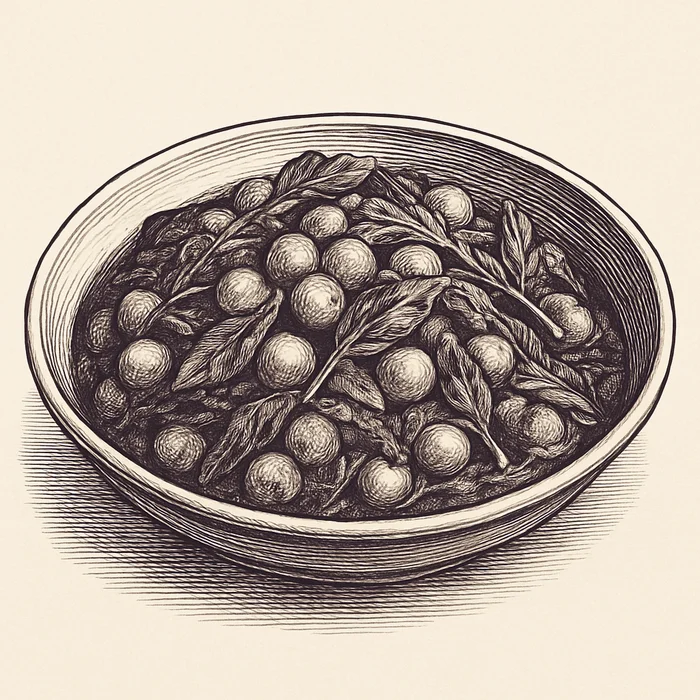
Spiced Chickpea and Spinach Stew
The recipe that makes the piperine-curcumin bioavailability trick the centerpiece of a deeply satisfying one-pot meal, while stacking iron absorption enhancers and lycopene in ways that actually matter.
Why These Ingredients Together
This stew is built around one of the most well-documented nutrient synergies in food science: piperine from black pepper increases curcumin bioavailability by approximately 2000%. On its own, curcumin has less than 1% oral bioavailability -- your liver metabolizes it before it reaches systemic circulation. Piperine inhibits the hepatic and intestinal glucuronidation that destroys curcumin, transforming a symbolic sprinkle of turmeric into a pharmacologically meaningful dose. Blooming the turmeric in olive oil adds a second absorption pathway by dissolving the fat-soluble curcuminoids into a lipid matrix. The tomatoes contribute lycopene, a carotenoid whose bioavailability increases 2-3x when cooked with fat (the olive oil again doing double duty). Spinach brings non-heme iron, and the vitamin C from the tomatoes increases its absorption by 2-6x. The chickpeas deliver 12g of fiber per cup, feeding the Bacteroidetes and Firmicutes populations that produce anti-inflammatory butyrate in the colon.
Ingredients
- 2 cans (480g drained weight) chickpeas, rinsed
- 300g baby spinach
- 1 can (400g) crushed tomatoes
- 3 tablespoons extra-virgin olive oil, plus more for finishing
- 1 large onion, diced
- 4 cloves garlic, minced and rested 10 minutes
- 1 1/2 tablespoons ground turmeric
- 1 teaspoon freshly ground black pepper
- 1 teaspoon ground cumin
- 1 teaspoon smoked paprika
- 1/2 teaspoon ground coriander
- Pinch of cayenne (optional)
- 1 cup (240ml) vegetable stock or water
- 1 tablespoon lemon juice
- 1 teaspoon flaky sea salt, plus more to taste
Instructions
-
Crush and rest the garlic. Mince the garlic and set it aside for a full 10 minutes. Start this before anything else. (Allicin formation requires enzyme contact time before heat exposure. This is the easiest step to skip and the one with the largest measurable impact on garlic's bioactivity.)
-
Bloom the turmeric and black pepper in oil. Heat the olive oil in a Dutch oven or heavy pot over medium heat. Add the turmeric and black pepper, stirring constantly for 45-60 seconds until fragrant and the oil turns deep gold. (This is the critical step. You are dissolving fat-soluble curcuminoids into the oil while the piperine is right there alongside them. This two-pronged approach -- fat dissolution plus piperine's enzyme inhibition -- is what converts turmeric from a coloring agent into an anti-inflammatory delivery system.)
-
Build the aromatic base. Add the diced onion and a pinch of salt. Cook for 5 minutes until softened and translucent. Add the rested garlic, cumin, paprika, coriander, and cayenne. Stir for 30 seconds until fragrant.
-
Add the chickpeas and tomatoes. Pour in the crushed tomatoes, vegetable stock, and chickpeas. Stir well, bring to a simmer, and cook uncovered for 15 minutes, stirring occasionally, until the sauce thickens and the flavors meld. (Cooking the tomatoes with the oil concentrates the lycopene and keeps it in a fat-soluble matrix. Raw tomatoes release lycopene, but cooked-in-oil tomatoes release dramatically more in bioavailable form.)
-
Wilt the spinach. Add the baby spinach in large handfuls, stirring each addition until wilted before adding the next. This takes about 2 minutes total. (Brief cooking wilts the spinach without destroying the folate, which is heat-sensitive. The iron in the spinach will be absorbed alongside the vitamin C from the tomatoes in the same digestive pass.)
-
Season and finish. Remove from heat. Stir in the lemon juice, taste, and adjust salt. Ladle into bowls and finish with a generous drizzle of fresh extra-virgin olive oil and another crack of black pepper.
What Can Go Wrong
-
Burning the turmeric bloom. You have about 60 seconds of stirring time before turmeric goes from fragrant to bitter. Have the onion diced and ready to go in immediately if things start darkening. Medium heat, not medium-high.
-
Watery, thin stew. If you use chickpeas with too much canning liquid or add too much stock, the result is soup, not stew. Drain and rinse the chickpeas thoroughly, and start with less stock -- you can always add more but you cannot easily take it back.
-
Forgetting the lemon at the end. Without the acid, this stew tastes flat and one-dimensional. The lemon brightens everything and -- crucially -- its vitamin C is the mechanism by which your body absorbs the iron from the spinach. It is doing structural nutritional work, not just adding flavor.
Science Notes
The curcumin-piperine interaction is one of the few nutrient synergies backed by a specific, quantified mechanism: piperine inhibits CYP3A4 and UDP-glucuronosyltransferase, the liver enzymes that metabolize curcumin, producing the oft-cited 2000% increase in bioavailability. Multiple RCTs have demonstrated that curcumin at meaningful blood levels reduces CRP, TNF-alpha, and IL-6 -- the inflammatory triad implicated in atherosclerosis, type 2 diabetes, and neurodegeneration. The chickpea fiber here is not just about digestion: studies show that legume consumption at lunch reduces blood glucose response at dinner (the "second-meal effect"), meaning this stew quietly improves your metabolic response to whatever you eat next.
Nutrition Highlights
- Curcuminoids: Meaningful dose from 1.5 tablespoons turmeric, with bioavailability boosted ~2000% by piperine and further enhanced by olive oil co-ingestion
- Fiber: ~14g per serving from chickpeas and spinach, supporting butyrate production and the second-meal effect on glucose
- Plant protein: ~12g per serving from chickpeas, providing the lysine that grains lack
- Lycopene: Significant dose from cooked tomatoes in oil, with bioavailability 2-3x higher than from raw tomatoes