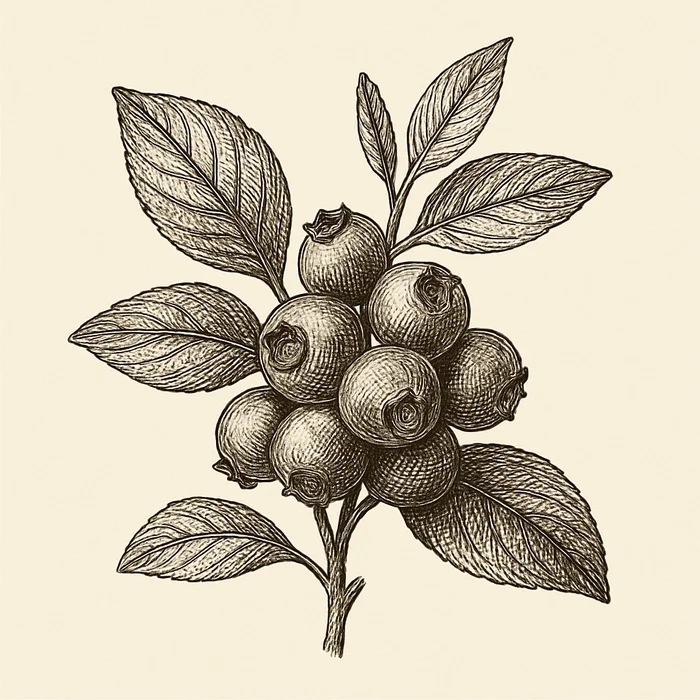
Blueberries
A daily cup of blueberries lowered heart attack risk by 32% in a study tracking 93,000 women over 18 years. The active compounds -- anthocyanins -- are the same pigments that make the berries blue.
Why It Matters for Longevity
Blueberries pack more phenolic compounds than almost any other common fruit, with wild (lowbush) varieties containing up to 300 mg of anthocyanins per 100g. These pigments are not just antioxidants in a test tube -- they have measurable effects on human cardiovascular and cognitive function. The Nurses' Health Study analysis (Cassidy et al., 2013, Circulation), following over 93,000 women, found that high anthocyanin intake from blueberries and strawberries was associated with a 32% reduction in myocardial infarction risk. That is not a supplement trial with exotic extracts; that is regular people eating regular berries.
The cardiovascular mechanism is well-mapped. A meta-analysis (Zhu et al., 2017, J Hum Hypertens) pooled blueberry RCTs and found meaningful reductions in systolic blood pressure, with strongest effects in interventions of 8+ weeks. Broader fruit-and-vegetable pooled cohort analyses (Aune et al., 2017, Int J Epidemiol) show dose-dependent reductions in cardiovascular disease and all-cause mortality, with berries among the strongest signals.
Then there is the brain. Blueberries contain pterostilbene, a resveratrol analogue with four times the bioavailability that crosses the blood-brain barrier. Emerging evidence suggests blueberry supplementation supports cognitive function in older adults. The anthocyanins themselves have only 1-2% intact absorption, but their gut microbial metabolites -- phenolic acids -- are well absorbed and appear to drive much of the biological activity.
Anthocyanins: Mechanism and Bioavailability
The three dominant anthocyanins in blueberries are delphinidin-3-glucoside, cyanidin-3-glucoside, and malvidin-3-glucoside. All three undergo rapid deglycosylation in the gut lumen, generating aglycones that are partially absorbed in the small intestine. The majority, however, reach the colon intact, where bacterial metabolism converts them into small phenolic acids -- protocatechuic acid, hippuric acid, vanillic acid, and phenylacetic acid derivatives -- that are efficiently absorbed and circulate at concentrations far higher than the parent anthocyanins.
These metabolites activate multiple pathways relevant to longevity: they upregulate endothelial nitric oxide synthase (eNOS) to improve vasodilation, suppress NF-κB-mediated inflammatory signalling, and in animal and cell models activate AMPK, the cellular energy sensor that triggers mitochondrial biogenesis and autophagy. A systematic review of 49 randomised placebo-controlled trials (Ahles et al., 2021, Int J Mol Sci) found consistent evidence for berry anthocyanins improving endothelial function (flow-mediated dilation) and memory, with effects emerging across both healthy adults and individuals with cardiometabolic risk factors.
Blueberries and Cognitive Decline Prevention
The evidence for blueberries acting specifically on the aging brain has strengthened considerably. A double-blind, placebo-controlled RCT by Krikorian et al. (2022, Nutrients) enrolled midlife adults aged 50--65 with both insulin resistance and subjective cognitive decline -- a combination that substantially elevates dementia risk. After 12 weeks of daily blueberry supplementation, the treatment group showed statistically significant improvements in lexical access (word retrieval speed, p = 0.003, Cohen's f = 0.66), reduced memory interference (p = 0.04, Cohen's f = 0.20), and self-reported reductions in memory encoding difficulty in daily life (p = 0.03). Peripheral hyperinsulinaemia improved (p = 0.04), and there was a trend toward increased mitochondrial uncoupling -- suggesting that blueberry compounds may partially reverse the metabolic dysregulation that impairs hippocampal function.
This finding matters precisely because the intervention targeted a pre-symptomatic window. Waiting for a clinical dementia diagnosis forfeits the period when dietary interventions can realistically alter trajectory. The fact that blueberry supplementation measurably improved cognition in metabolically impaired midlife adults -- a population with substantially elevated future risk -- argues for earlier, sustained consumption rather than emergency supplementation at later ages.
The mechanism likely involves multiple routes: anthocyanin metabolites crossing the blood-brain barrier and reducing neuroinflammation, pterostilbene directly upregulating BDNF (brain-derived neurotrophic factor), and improved cerebral blood flow via eNOS activation -- all three plausible given the biochemistry and supported by neuroimaging studies in older adults showing increased task-related brain perfusion after blueberry supplementation.
Blueberries, Type 2 Diabetes Risk, and Metabolic Health
The large multi-cohort analysis by Muraki et al. (2013, BMJ), which followed 187,382 participants for up to 24 years and recorded 12,198 type 2 diabetes cases, found that blueberries produced the single strongest fruit-specific diabetes protection signal: three servings per week were associated with a 26% lower T2D risk (HR 0.74). This was the largest effect of any individual fruit studied, including apples (7% reduction), grapes (12% reduction), and bananas (no benefit). Fruit juice, regardless of source, was associated with an 8% higher risk -- underscoring that the protective compounds work through the whole-food delivery system, not isolated sugar.
The metabolic mechanism plausibly combines AMPK activation (improving insulin signalling in muscle and adipose tissue), inhibition of α-glucosidase to slow post-meal glucose rises, and the insulin-sensitising effects documented in the Krikorian midlife trial. These pathways are dose-responsive and cumulative, which is why epidemiological follow-up over decades picks up the signal that shorter interventions may miss.
Blueberries and the Gut Microbiome
The gut microbiome is increasingly recognised as a critical mediator of blueberry's systemic effects. A six-week, cross-over dietary intervention (Vendrame et al., 2011, J Agric Food Chem) gave human volunteers wild blueberry powder daily and found a significant increase in Bifidobacterium species (p ≤ 0.05) relative to placebo, with no significant change in Bacteroides, Prevotella, or Clostridium populations. Bifidobacterium strains produce short-chain fatty acids from fermentable fibre and convert polyphenols into more bioavailable phenolic acid metabolites -- amplifying the downstream cardiovascular and anti-inflammatory effects of the anthocyanins themselves. This makes the relationship between blueberries and the microbiome bidirectional: the berries feed the bacteria, and the bacteria unlock the berries' bioactivity.
How to Use It
Aim for 150g (about one cup) daily. Fresh and frozen are roughly equivalent -- freezing preserves most polyphenol content. Wild blueberries have roughly double the anthocyanin concentration of cultivated varieties, so if you can find frozen wild blueberries, they are the better buy gram for gram. Eating them with a source of fat (yogurt, nuts, or in a smoothie with nut butter) improves absorption of the fat-soluble pterostilbene. Cooking reduces some vitamin C but anthocyanins hold up reasonably well in baking.
What to Pair It With
| Ingredient | Why | Tradition |
|---|---|---|
| Yogurt | Fat improves pterostilbene absorption; probiotics complement prebiotic fiber | Global |
| Oats | Fiber synergy; slow-release breakfast keeps blood sugar stable | Northern European / American |
| Dark chocolate | Complementary flavonoid profiles | European confectionery |
| Walnuts | Omega-3s + polyphenols for combined anti-inflammatory effect | European |
| Lemon | Acid brightens sweetness; vitamin C adds to antioxidant pool | American / European |
| Almonds | Healthy fats improve bioavailability of fat-soluble compounds | Mediterranean |
Flavor Profile
Sweet and tart with a mild tannic finish that dries the palate slightly. The aroma is floral and fruity, leaning wine-like when very ripe. Texture is juicy with a tender skin that bursts easily. Wild blueberries are smaller, more intensely flavored, and less sweet than cultivated highbush varieties.
The Science
- Cassidy et al., 2013, Circulation: Nurses' Health Study (93,600 women, 18 years) — high anthocyanin intake associated with 32% reduced MI risk.
- Zhu et al., 2017, J Hum Hypertens: Meta-analysis of blueberry supplementation RCTs — significant reductions in systolic blood pressure, strongest in interventions ≥8 weeks.
- Aune et al., 2017, Int J Epidemiol: Dose-response pooled analysis — fruit (including berries) reduce CVD, cancer, and all-cause mortality.
- Ahles et al., 2021, Int J Mol Sci: Systematic review of 49 RCTs — berry anthocyanins consistently improve endothelial function (flow-mediated dilation) and memory outcomes.
- Krikorian et al., 2022, Nutrients: 12-week RCT in midlife adults with insulin resistance — blueberries improved lexical access (p=0.003), memory interference (p=0.04), and corrected hyperinsulinaemia (p=0.04).
- Muraki et al., 2013, BMJ: 187,382-person cohort — 3 servings/week blueberries associated with 26% lower T2D risk (HR 0.74); strongest of all fruits studied.
- Vendrame et al., 2011, J Agric Food Chem: 6-week human crossover — wild blueberry powder significantly increased Bifidobacterium spp. (p≤0.05) in gut microbiota.
References
- Cassidy A, Mukamal KJ, Liu L, Franz M, Eliassen AH, Rimm EB. High anthocyanin intake is associated with a reduced risk of myocardial infarction in young and middle-aged women. Circulation. 2013;127(2):188-196. PMID: 23319811. doi:10.1161/CIRCULATIONAHA.112.122408
- Zhu Y, Sun J, Lu W, et al. Effects of blueberry supplementation on blood pressure: a systematic review and meta-analysis of randomized clinical trials. J Hum Hypertens. 2017;31(3):165-171. PMID: 27654329. doi:10.1038/jhh.2016.70
- Aune D, Giovannucci E, Boffetta P, et al. Fruit and vegetable intake and the risk of cardiovascular disease, total cancer and all-cause mortality — a systematic review and dose-response meta-analysis of prospective studies. Int J Epidemiol. 2017;46(3):1029-1056. PMID: 28338764. doi:10.1093/ije/dyw319
- Ahles S, Joris PJ, Plat J. Effects of Berry Anthocyanins on Cognitive Performance, Vascular Function and Cardiometabolic Risk Markers: A Systematic Review of Randomized Placebo-Controlled Intervention Studies in Humans. Int J Mol Sci. 2021;22(12):6482. PMID: 34204250. doi:10.3390/ijms22126482
- Krikorian R, Skelton MR, Summer SS, Shidler MD, Sullivan PG. Blueberry Supplementation in Midlife for Dementia Risk Reduction. Nutrients. 2022;14(8):1619. PMID: 35458181. doi:10.3390/nu14081619
- Muraki I, Imamura F, Manson JE, et al. Fruit consumption and risk of type 2 diabetes: results from three prospective longitudinal cohort studies. BMJ. 2013;347:f5001. PMID: 23990623. doi:10.1136/bmj.f5001
- Vendrame S, Guglielmetti S, Riso P, Arioli S, Klimis-Zacas D, Porrini M. Six-week consumption of a wild blueberry powder drink increases bifidobacteria in the human gut. J Agric Food Chem. 2011;59(24):12815-12820. PMID: 22060186. doi:10.1021/jf2028686
Key Nutrients
| Nutrient | Per 100g | Notes |
|---|---|---|
| Anthocyanins | 164-300 mg (wild); 80-160 mg (cultivated) | Low intact absorption (~1-2%), but gut metabolites are well absorbed; activate eNOS and suppress NF-κB |
| Total polyphenols | 560-836 mg | Wild varieties highest; freezing preserves content |
| Pterostilbene | 0.03-0.52 mg | 4x more bioavailable than resveratrol; crosses blood-brain barrier; upregulates BDNF |
| Vitamin C | 9.7 mg | Good bioavailability; not the primary antioxidant driver |
| Dietary fiber | 2.4 g | Prebiotic effects; selectively feeds Bifidobacterium in human trials |