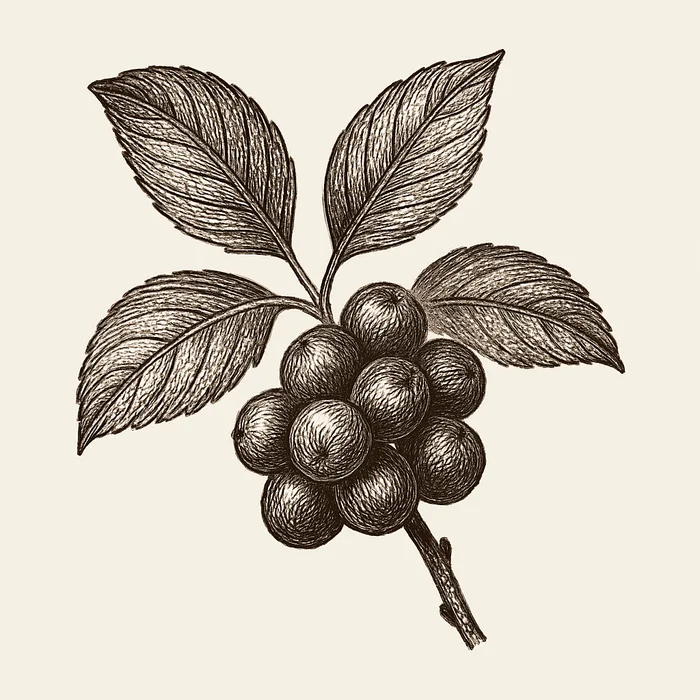
Berries
Small fruit, outsized evidence -- a Nurses' Health Study analysis found women eating 3+ servings of blueberries and strawberries per week had 34% lower heart attack risk, driven largely by anthocyanin pigments most people do not even think about.
Why It Matters for Longevity
Berries sit at the intersection of low glycaemic impact and high polyphenol density, a combination Fontana highlights by listing them among the preferred low-GI fruits alongside apples and prunes. Their sugar content is relatively low, their fibre relatively high, and the result is a modest blood glucose response compared to tropical fruits or dried fruit.
But the real story is anthocyanins -- the pigments that make berries blue, red, and purple. A review of berry anthocyanin and cardiovascular health (Cassidy, 2018, Mol Aspects Med) synthesised trial and cohort evidence showing improvements in blood pressure, endothelial function, and LDL cholesterol from regular berry intake. Broader pooled epidemiological data (Parmenter et al., 2020, Food Funct) confirms flavonoid-rich foods including berries are inversely associated with cardiovascular disease incidence.
The Nurses' Health Study analysis (Cassidy et al., 2013, Circulation) is particularly striking: 34% lower heart attack risk with just three weekly servings of blueberries and strawberries. The proposed mechanism involves anthocyanins improving endothelial function via multiple converging pathways: they upregulate eNOS (endothelial nitric oxide synthase), which drives nitric oxide production and vasodilation; they inhibit NF-κB, reducing the expression of adhesion molecules and pro-inflammatory cytokines that accelerate atherosclerosis; and they activate AMPK in endothelial and immune cells, mimicking some of the same energy-sensing pathways as exercise. Together these mechanisms lower arterial stiffness and blood pressure, and reduce the chronic low-grade inflammation that underpins cardiovascular aging.
Different berries bring different specialities. Blueberries contain pterostilbene, a resveratrol analogue with 4x better oral bioavailability that activates SIRT1 and AMPK longevity pathways. Raspberries and strawberries are rich in ellagic acid, which gut bacteria convert to urolithins -- metabolites that promote mitophagy, the cellular cleanup of damaged mitochondria. Blackberries have the highest anthocyanin content of common berries. And strawberries deliver more vitamin C per 100g than oranges.
Cognitive Protection
The cardiovascular pathways extend into the brain. A systematic review and meta-analysis of 49 RCTs (Ahles et al., 2021, Int J Mol Sci) found that berry anthocyanin supplementation produced significant improvements in memory and attention, along with beneficial changes in brachial artery flow-mediated vasodilation -- suggesting the vascular improvements translate directly to cerebral blood flow. A separate meta-analysis of 13 RCTs (Feng et al., 2022, Nutr Rev) specifically examining cognitively healthy middle-aged and older adults found that anthocyanin supplementation significantly improved processing speed (95% CI 0.08–0.44, P=0.004), with neuroimaging studies showing increased brain activation and improved cerebral blood flow patterns.
The mechanistic picture is coherent: anthocyanins cross the blood-brain barrier, modulate neuroinflammatory NF-κB signaling, reduce oxidative stress in neurons, and improve cerebrovascular endothelial function. The net effect is better neural signaling and slower age-related cognitive decline. That the benefit appears in cognitively healthy individuals -- not just those already impaired -- is notable; it suggests a preventive rather than merely therapeutic role.
Gut Microbiome Effects
Berries are among the most effective dietary modulators of the gut microbiome. A comprehensive review of berry polyphenol metabolism (Lavefve et al., 2020, Food Funct) established that anthocyanins from berries have limited direct bioavailability but undergo extensive metabolism by colonic bacteria, generating smaller phenolic acids with higher bioavailability. This creates a bidirectional relationship: the polyphenols reshape microbial populations while the microbiota converts the polyphenols into more bioactive metabolites. Specifically, berry consumption promotes the growth of Bifidobacterium, Lactobacillus, and Akkermansia -- three genera associated with gut barrier integrity, reduced systemic inflammation, and protection against metabolic disease. The urolithins produced from ellagic acid by gut bacteria are themselves powerful inducers of mitophagy, and their production depends entirely on having the right microbial community. This gut-mitochondria axis is a relatively new frontier in longevity science, and berries sit squarely at the center of it.
Frozen berries retain most of these benefits. Flash-freezing preserves anthocyanin content remarkably well, making berries one of the few foods where the frozen version is nearly as good as fresh.
How to Use It
A cup (about 150g) daily or several times per week is well-supported by the evidence. Fresh in season, frozen year-round. Add to yogurt or oatmeal at breakfast, blend into smoothies, toss into salads, or eat as a snack. Avoid cooking berries at high temperatures for extended periods -- brief heating is fine (as in warm compotes), but prolonged baking degrades anthocyanins. Do not add sugar; berries are sweet enough and the point is to avoid glycaemic spikes.
What to Pair It With
| Ingredient | Why | Tradition |
|---|---|---|
| Yogurt | Probiotics plus berry polyphenols support gut microbiome synergy | European / Global |
| Dark chocolate | Complementary flavonoid profiles; additive cardiovascular benefit | European |
| Oats | Beta-glucan fibre + berry anthocyanins for cholesterol and glucose control | Northern European |
| Nuts (walnuts, almonds) | Fat aids carotenoid absorption; textural contrast | European / American |
| Lemon juice | Vitamin C preserves anthocyanin colour and enhances flavour | Global |
Flavor Profile
Sweet-tart and bright, with the exact balance varying by type -- blueberries lean sweet and mild, raspberries bring sharp acidity, blackberries offer deep wine-like complexity, and strawberries deliver the most aromatic floral sweetness. Texture ranges from the firm pop of a blueberry to the delicate collapse of a ripe raspberry. The aroma is fruity and jammy, becoming more wine-like and concentrated in darker varieties.
The Science
- Cassidy et al., 2013, Circulation: Nurses' Health Study — 3+ weekly servings of blueberries and strawberries linked to 34% lower MI risk; mechanism via eNOS/nitric oxide and NF-κB inhibition.
- Cassidy, 2018, Mol Aspects Med: Review of berry anthocyanins and cardiovascular health outcomes — blood pressure, endothelial function, LDL.
- Parmenter et al., 2020, Food Funct: Epidemiological overview — flavonoid-rich foods (including berries) inversely associated with cardiovascular disease.
- Ahles et al., 2021, Int J Mol Sci: Systematic review of 49 RCTs — berry anthocyanins improve memory, attention, and flow-mediated vasodilation.
- Feng et al., 2022, Nutr Rev: Meta-analysis of 13 RCTs — anthocyanin supplementation improves processing speed in cognitively healthy older adults (P=0.004).
- Lavefve et al., 2020, Food Funct: Review — berry polyphenols increase Bifidobacterium, Lactobacillus, and Akkermansia; gut microbiota converts polyphenols to more bioactive metabolites.
- Fontana: berries listed among lower glycaemic index fruits recommended for regular consumption.
References
- Cassidy A, Mukamal KJ, Liu L, Franz M, Eliassen AH, Rimm EB. High anthocyanin intake is associated with a reduced risk of myocardial infarction in young and middle-aged women. Circulation. 2013;127(2):188-196. PMID: 23319811. doi:10.1161/CIRCULATIONAHA.112.122408
- Cassidy A. Berry anthocyanin intake and cardiovascular health. Mol Aspects Med. 2018;61:76-82. PMID: 28483533. doi:10.1016/j.mam.2017.05.002
- Parmenter BH, Dalgaard F, Murray K, et al. An overview and update on the epidemiology of flavonoid intake and cardiovascular disease risk. Food Funct. 2020;11(8):6777-6806. PMID: 32725042. doi:10.1039/d0fo01118e
- Ahles S, Joris PJ, Plat J. Effects of Berry Anthocyanins on Cognitive Performance, Vascular Function and Cardiometabolic Risk Markers: A Systematic Review of Randomized Placebo-Controlled Intervention Studies in Humans. Int J Mol Sci. 2021;22(12):6477. PMID: 34204250. doi:10.3390/ijms22126477
- Feng RC, Dong YH, Hong XL, Su Y, Wu XV. Effects of anthocyanin-rich supplementation on cognition of the cognitively healthy middle-aged and older adults: a systematic review and meta-analysis of randomized controlled trials. Nutr Rev. 2023;81(3):287-302. PMID: 35960187. doi:10.1093/nutrit/nuac054
- Lavefve L, Howard LR, Carbonero F. Berry polyphenols metabolism and impact on human gut microbiota and health. Food Funct. 2020;11(1):45-65. PMID: 31808762. doi:10.1039/c9fo01634a
Key Nutrients
| Nutrient | Per 100g | Notes |
|---|---|---|
| Anthocyanins | ~25-500 mg | Blackberries highest; gut metabolites are the primary bioactive form |
| Vitamin C | ~10-60 mg | Strawberries highest (~59 mg); more than oranges per 100g |
| Dietary fibre | ~2-7 g | Raspberries highest (~6.5 g); seeds add insoluble fibre |
| Ellagic acid | ~10-50 mg | Raspberries/strawberries; converted to urolithins that promote mitophagy |
| Pterostilbene | ~0.03 mg | Blueberries; 4x better bioavailability than resveratrol |