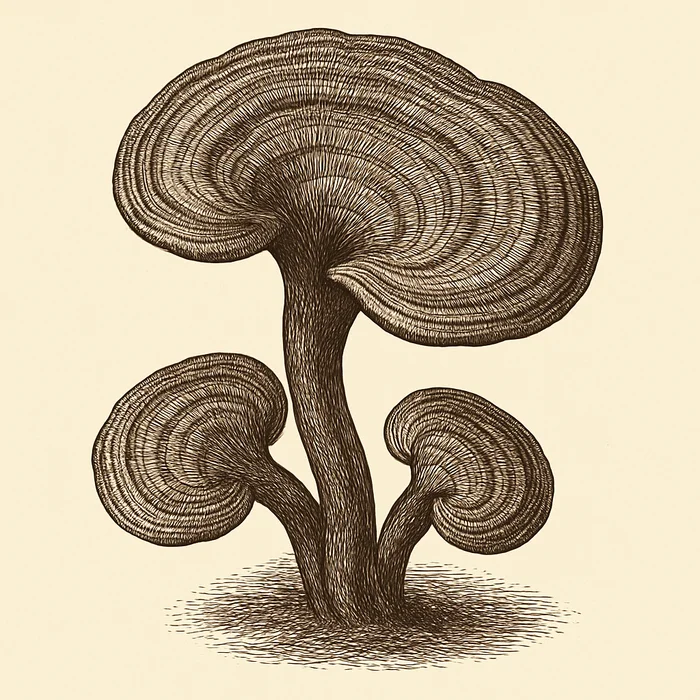
Reishi
Reishi is included in the Longevity Diet mushroom group (75–150 g raw or boiled per dish). It is recognized for its beta-glucan polysaccharides and triterpenoids (ganoderic acids), which demonstrate immunomodulatory and anti-inflammatory effects, and for vitamin D2 synthesis upon UV exposure.
Why It Matters for Longevity
Reishi (Ganoderma lucidum) has the most extensive traditional use of any medicinal mushroom and is backed by meaningful scientific evidence for immunomodulation. Its beta-glucans stimulate natural killer cell activity and macrophage function via Dectin-1 and TLR-2 receptors. Its triterpenoids inhibit NF-κB, one of the master regulators of inflammatory gene expression. These are distinct mechanisms from the ergocalciferol story that applies to all culinary mushrooms.
Reishi mushroom polysaccharides (beta-glucans) and triterpenoids (ganoderic acids) demonstrate immunomodulatory, anti-inflammatory, and antioxidant activities; proposed mechanisms include NF-κB inhibition and enhancement of natural killer cell activity (Wachtel-Galor et al., 2011, in Herbal Medicine: Biomolecular and Clinical Aspects).
Medicinal mushrooms including Ganoderma contain high-molecular-weight beta-glucan polysaccharides with immunomodulating and anti-tumor properties, supported by both in vitro and clinical evidence (Wasser, 2002, Appl Microbiol Biotechnol).
Beta-Glucans and NK Cell Activation: RCT Evidence
The most quantitatively precise clinical evidence comes from a randomized, double-blind, placebo-controlled trial in 135 healthy adults aged 18–55 (70 intervention, 65 placebo) who took 200 mg daily of reishi beta-1,3;1,6-D-glucan for 84 days. By trial end, NK cell counts had risen 19.5% in the treatment group versus a 2.0% decline in placebo (p < 0.0001), and NK cytotoxicity — the direct killing capacity of natural killer cells — increased by 83.1% versus a 4.5% decline in placebo (p < 0.0001). CD4+ T-cells increased 13.4% versus −8.0% in placebo (p < 0.0001) and serum IgA rose 10.0% versus 2.1% (p = 0.031). No significant changes in liver or kidney function markers were observed (Nan et al., 2023, Foods). This trial isolates the beta-glucan fraction specifically; the whole-mushroom preparation used in traditional contexts would deliver both beta-glucans and triterpenoids.
The mechanism underlying the NK cell expansion involves activation of NKG2D and natural cytotoxicity receptors (NCRs) on NK cell surfaces, downstream phosphorylation of MAP kinases, and increased secretion of perforin and granulysin — the granule proteins that punch holes in target cell membranes and trigger apoptosis (Chang et al., 2014, Innate Immunity).
A Cochrane systematic review of five RCTs in cancer patients receiving G. lucidum alongside conventional treatment found that CD3+ T-cell counts increased by 3.91% (95% CI 1.92–5.90%), CD4+ by 3.05% (95% CI 1.00–5.11%), and CD8+ by 2.02% (95% CI 0.21–3.84%), with the authors concluding G. lucidum could serve as an adjunct — though not a replacement — for conventional therapy (Jin et al., 2016, Cochrane Database Syst Rev).
Triterpenoids and NF-κB Inhibition
The ganoderic acid fraction works through a separate and complementary arm. Ganoderic acid C1 reduced TNF-α production in peripheral blood mononuclear cells (PBMCs) from Crohn's disease patients from 2,089 ± 1,240 pg/mL to 992 ± 1,292 pg/mL (p < 0.01), with concurrent significant suppression of IFN-γ and IL-17A and inhibition of IκBα phosphorylation — the upstream gating step for NF-κB nuclear translocation (Liu et al., 2015, Inflamm Bowel Dis). This is human cell evidence, not mouse data, though the patient population was one with heightened baseline inflammation.
Ergothioneine: A Second Longevity-Relevant Compound
Reishi and other mushrooms are the principal dietary sources of ergothioneine, a sulfur-containing amino acid with a dedicated transporter (OCTN1/SLC22A4) in human intestinal epithelium and accumulating tissue concentration, particularly in mitochondria and the nucleus. A 2023 review of prospective cohort data noted that higher plasma ergothioneine levels are associated with significantly reduced cardiovascular mortality and overall mortality risk, and that blood ergothioneine concentrations decline after age 60 — suggesting a potential role in age-related physiological change (Tian et al., 2023, Br J Nutr). The causal direction is not established from observational data alone, but the presence of a specific transporter encoded in the human genome is considered evidence of evolutionary importance for this compound.
How to Use It
Use as part of the 75–150 g daily mushroom intake per Longevity Diet guidelines. Reishi is most commonly consumed as a tea or extract — simmer dried slices in water for 30–60 minutes. The bitter taste is characteristic and indicates triterpenoid content. For beta-glucan content, hot-water extraction is effective; for triterpenoid (ganoderic acid) extraction, alcohol tinctures extract fat-soluble compounds more efficiently. Combine with other culinary mushrooms (portobello, maitake) to diversify bioactive compounds.
What to Pair It With
| Ingredient | Why | Tradition |
|---|---|---|
| Ginger | Complementary NF-κB inhibition; traditional adaptogenic combination | Traditional Chinese Medicine |
| Portobello | Reishi triterpenoids + portobello beta-glucans; complementary immune mechanisms | The Longevity Diet |
| Extra-virgin olive oil | Fat enhances absorption of fat-soluble reishi triterpenoids | General |
| Garlic | Additive anti-inflammatory effects | Mediterranean |
Flavor Profile
Taste: bitter, earthy, woody, umami (in small amounts). Aroma: woody, earthy, mushroom-like. Texture: tough and woody (fresh/dried whole), silky in liquid extracts. Category: medicinal mushroom / tea / supplement.
The Science
- Wachtel-Galor et al., 2011, Herbal Medicine: Biomolecular and Clinical Aspects: Reishi polysaccharides and triterpenoids demonstrate immunomodulatory, anti-inflammatory, and antioxidant activities; mechanisms include NF-κB inhibition and NK cell enhancement.
- Wasser, 2002, Appl Microbiol Biotechnol: Medicinal mushrooms including Ganoderma contain beta-glucan polysaccharides with immunomodulating and anti-tumor properties supported by laboratory and clinical evidence.
- Nan et al., 2023, Foods: RCT (n=135, 84 days) — reishi beta-glucan (200 mg/day) increased NK cell cytotoxicity +83.1% vs −4.5% placebo (p < 0.0001); NK counts +19.5% vs −2.0% (p < 0.0001); no hepatic or renal adverse effects.
- Chang et al., 2014, Innate Immunity: Mechanism — G. lucidum water extract activates NKG2D/NCR receptors on NK cells, triggers MAPK phosphorylation, increases perforin and granulysin secretion, and raises cytotoxicity against cancer cell lines.
- Jin et al., 2016, Cochrane Database Syst Rev: Systematic review of 5 RCTs — G. lucidum combined with chemotherapy raised CD3+ by 3.91%, CD4+ by 3.05%, CD8+ by 2.02% vs standard treatment alone.
- Liu et al., 2015, Inflamm Bowel Dis: Ganoderic acid C1 reduced TNF-α in human Crohn's PBMCs from 2,089 to 992 pg/mL (p < 0.01) via IκBα phosphorylation inhibition; NF-κB downregulation confirmed in colonic biopsies.
- Tian et al., 2023, Br J Nutr: Review — higher plasma ergothioneine (a compound concentrated in mushrooms) associated with reduced cardiovascular and all-cause mortality; levels decline after age 60.
References
- Wachtel-Galor S, Yuen J, Buswell JA, Benzie IFF. Ganoderma lucidum (Lingzhi or Reishi): A Medicinal Mushroom. In: Benzie IFF, Wachtel-Galor S, eds. Herbal Medicine: Biomolecular and Clinical Aspects. 2nd ed. Boca Raton: CRC Press; 2011. PMID: 22593926
- Wasser SP. Medicinal mushrooms as a source of antitumor and immunomodulating polysaccharides. Appl Microbiol Biotechnol. 2002;60(3):258-274. PMID: 12436306. doi:10.1007/s00253-002-1076-7
- Nan C, Liu Y, Chang C, Chen S. Evaluation of Immune Modulation by β-1,3; 1,6 D-Glucan Derived from Ganoderma lucidum in Healthy Adult Volunteers, A Randomized Controlled Trial. Foods. 2023;12(3):638. PMID: 36766186.
- Chang CJ, Chen YY, Lu CC, et al. Ganoderma lucidum stimulates NK cell cytotoxicity by inducing NKG2D/NCR activation and secretion of perforin and granulysin. Innate Immun. 2014;20(3):301-311. PMID: 23803412.
- Jin X, Ruiz Beguerie J, Sze DM, Chan GC. Ganoderma lucidum (Reishi mushroom) for cancer treatment. Cochrane Database Syst Rev. 2016;4:CD007731. PMID: 27045603.
- Liu C, Dunkin D, Lai J, et al. Anti-inflammatory Effects of Ganoderma Lucidum Triterpenoid in Human Crohn's Disease Associated with Down-Regulation of NF-κB Signaling. Inflamm Bowel Dis. 2015;21(8):1918-1925. PMID: 25993687.
- Tian X, Thorne JL, Moore JB. Ergothioneine: an underrecognised dietary micronutrient required for healthy ageing? Br J Nutr. 2023;131(1):1-10. PMID: 38018890.
Key Nutrients
| Nutrient | Per 100g | Notes |
|---|---|---|
| Beta-glucans (polysaccharides) | ~10–50 g (dried fruiting body, varies) | Water extraction (tea/broth) enhances bioavailability compared to raw dried powder |
| Triterpenoids (ganoderic acids) | ~1–3 g (dried extract) | Fat-soluble; responsible for bitter taste and anti-inflammatory properties; alcohol tincture improves bioavailability |
| Ergothioneine | ~5–10 mg (varies by strain) | Dedicated intestinal transporter (OCTN1/SLC22A4) implies evolutionary importance; accumulates in mitochondria and nucleus |
| Vitamin D2 (ergocalciferol) | Variable; up to 400+ IU with UV exposure | Requires UV exposure to accumulate; supplement forms often have minimal D2 unless UV-treated |