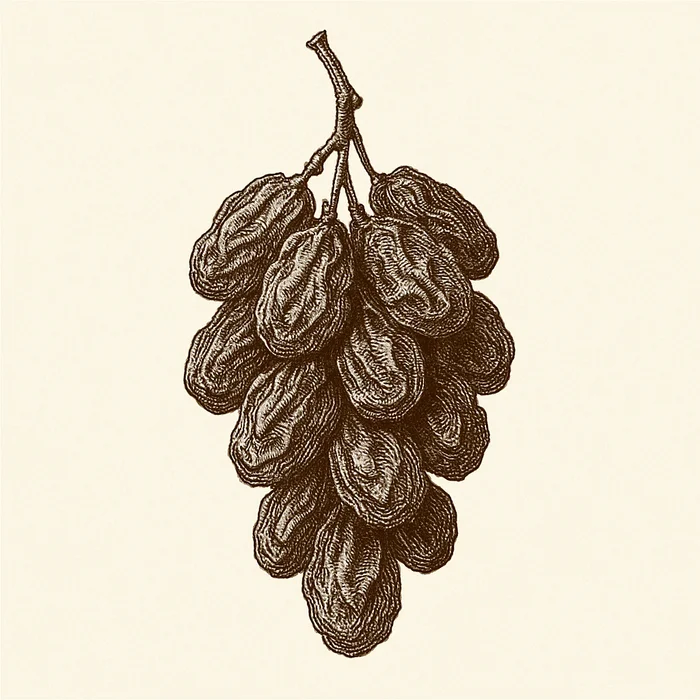
Raisins
Raisins are used in the Longevity Diet as a dish ingredient and in baked goods, recommended at approximately 9 g (1 tbsp) per use. They are listed as a source of iron (1 mg per 1/4 cup, ~6% DV) and magnesium (23 mg per 1/2 cup, ~6% DV). Drying concentrates polyphenols from grapes 4–5-fold, making raisins one of the most polyphenol-dense portable foods in the Western diet.
Why It Matters for Longevity
Raisins concentrate grape polyphenols including resveratrol, quercetin, catechins, and tartaric acid. Resveratrol and related stilbenes activate sirtuin pathways (SIRT1/AMPK) that mimic caloric restriction, representing a dietary-longevity mechanism supported by animal and human data. The polyphenols also favorably modulate gut microbiota composition.
A review of resveratrol and pterostilbene found that their activation of SIRT1 and AMPK pathways mimics key effects of caloric restriction, with evidence for cardiovascular, metabolic, and neurological benefits and a favorable safety profile in human studies (Li et al., 2018, Biofactors).
Red grape polyphenols (including those concentrated in raisins) favorably modulated gut microbiota ecology in human trials, increasing beneficial bacteria and supporting gut-mediated mechanisms of polyphenol health benefits (Queipo-Ortuño et al., 2012, Am J Clin Nutr).
Glycemic Index and Postprandial Glucose
Despite their concentrated sugar content (~59 g carbohydrate per 100 g), raisins have a measured glycemic index in the low range. An acute feeding study in healthy adults found that raisin meals produced significantly reduced postprandial glucose and insulin responses compared with white bread, classifying raisins as low-GI, low-glycemic load, and low-insulin index foods (Esfahani et al., 2014, J Nutr Sci). The fiber-polyphenol matrix of dried grapes slows both gastric emptying and intestinal glucose absorption.
A 12-week randomized controlled trial in 51 patients with type 2 diabetes compared daily dark raisin consumption with isocaloric processed snacks. The raisin group showed a 23% reduction in postprandial glucose (p=0.024) and a statistically significant 8.7 mmHg reduction in systolic blood pressure (p=0.035), while the control group showed no significant change in either measure (Bays et al., 2015, Phys Sportsmed). Mechanistically, raisin polyphenols — particularly quercetin — inhibit intestinal alpha-glucosidase (slowing glucose absorption) and tartaric acid may delay gastric emptying.
Quercetin and Blood Pressure
Quercetin is among the most abundant polyphenols in raisins, reaching concentrations of roughly 3–4 mg per 100 g in dried form. A systematic review and meta-analysis of 7 randomized controlled trials (587 patients) found that quercetin supplementation produced a statistically significant reduction of 3.04 mmHg in systolic blood pressure and 2.63 mmHg in diastolic blood pressure versus placebo (Serban et al., 2016, J Am Heart Assoc). The effect was dose-dependent: trials using ≥500 mg/day showed a systolic reduction of 4.45 mmHg, while those below that threshold showed no significant effect. Quercetin's hypotensive mechanism involves inhibition of the angiotensin-converting enzyme (ACE), endothelial nitric oxide enhancement, and suppression of vascular oxidative stress through Nrf2 activation.
A 3–4 mmHg reduction in systolic blood pressure, sustained at population level, is estimated to reduce stroke incidence by approximately 8% and coronary heart disease by approximately 5%, placing quercetin-containing foods like raisins in a meaningful range of cardiovascular risk modification.
Dental Health Caveat
Raisins' concentrated sugar and sticky texture are frequently cited as dental health concerns. The evidence on raisins and dental caries is less clear-cut than the folk assumption: raisins contain oleanolic acid, which inhibits Streptococcus mutans and Porphyromonas gingivalis in vitro. Nevertheless, the sticky physical form does create prolonged enamel acid exposure, and the Longevity Diet's guidance to use small amounts (~9 g) is appropriate. Rinsing with water after consumption mitigates this risk.
How to Use It
Use ~9 g (1 tbsp) in oatmeal, baked goods, or grain dishes per Longevity Diet guidance. Raisins' natural sweetness displaces added sugar while adding polyphenols and iron. Pair with oats — oat beta-glucan slows glucose release from raisin sugars, moderating postprandial glucose. Pair with vitamin C-rich foods to enhance non-heme iron absorption.
What to Pair It With
| Ingredient | Why | Tradition |
|---|---|---|
| Oats | Natural sweetness displaces added sugar; beta-glucan slows glucose release from raisin sugars | The Longevity Diet |
| Pistachios | Classic longevity dessert pairing; nut fat slows sugar absorption | Mediterranean |
| Peppers | Vitamin C from peppers enhances non-heme iron absorption from raisins | General |
| Mixed berries | Complementary polyphenol profiles; diverse anthocyanin coverage | The Longevity Diet |
Flavor Profile
Taste: intensely sweet, slightly tart, caramel notes, fruity. Aroma: sweet, grape-like, faintly winey. Texture: chewy, soft, concentrated. Category: dried fruit / natural sweetener.
The Science
- Li et al., 2018, Biofactors: Resveratrol and related stilbenes concentrated in grape-derived products activate SIRT1 and AMPK, mimicking caloric restriction with evidence for cardiovascular and metabolic longevity benefits.
- Queipo-Ortuño et al., 2012, Am J Clin Nutr: Red grape polyphenols favorably modulated gut microbiota, increasing beneficial bacteria — supporting gut-mediated mechanisms of raisin polyphenol health effects.
- Esfahani et al., 2014, J Nutr Sci: Acute feeding trial — raisins produced significantly lower postprandial glucose and insulin responses versus white bread; classified as low-GI, low-GL, and low-insulin-index foods.
- Bays et al., 2015, Phys Sportsmed: 12-week RCT (n=51, type 2 diabetes) — daily raisins reduced postprandial glucose by 23% (p=0.024) and systolic BP by 8.7 mmHg (p=0.035) versus processed snack controls.
- Serban et al., 2016, J Am Heart Assoc: Meta-analysis of 7 RCTs (n=587) — quercetin supplementation reduced systolic BP by 3.04 mmHg and diastolic BP by 2.63 mmHg; effect concentrated at ≥500 mg/day doses.
References
- Li YR, Li S, Lin CC. Effect of resveratrol and pterostilbene on aging and longevity. Biofactors. 2018;44(1):69-82. PMID: 29210129. doi:10.1002/biof.1400
- Queipo-Ortuño MI, Boto-Ordóñez M, Murri M, et al. Influence of red wine polyphenols and ethanol on the gut microbiota ecology and biochemical biomarkers. Am J Clin Nutr. 2012;95(6):1323-1334. PMID: 22552027. doi:10.3945/ajcn.111.027847
- Esfahani A, Lam J, Kendall CWC. Acute effects of raisin consumption on glucose and insulin responses in healthy individuals. J Nutr Sci. 2014;3:e52. PMID: 25191601.
- Bays HE, Weiter K, Anderson J. A randomized study of raisins versus alternative snacks on cardiovascular risk factors. Phys Sportsmed. 2015;43(1):37-43. PMID: 25609549.
- Serban MC, Sahebkar A, Zanchetti A, et al. Effects of quercetin on blood pressure: a systematic review and meta-analysis of randomized controlled trials. J Am Heart Assoc. 2016;5(7):e002713. PMID: 27405810.
Key Nutrients
| Nutrient | Per 100g | Notes |
|---|---|---|
| Polyphenols (resveratrol, quercetin, catechins) | ~1,000–3,600 mg gallic acid equivalents | Drying concentrates polyphenols 4–5-fold vs. fresh grapes; resveratrol metabolites retain biological activity |
| Iron (non-heme) | 1.9 mg | Absorption 2–10% depending on enhancers (vitamin C) and inhibitors (tannins) |
| Boron | ~2 mg | Among the richest dietary boron sources; modulates bone metabolism and steroid hormone activity |
| Potassium | 749 mg | Highly concentrated vs. fresh grapes; supports blood pressure and muscle function |
| Quercetin | ~3–4 mg | Flavonol inhibiting ACE and reducing vascular oxidative stress; low-GI effect via alpha-glucosidase inhibition |