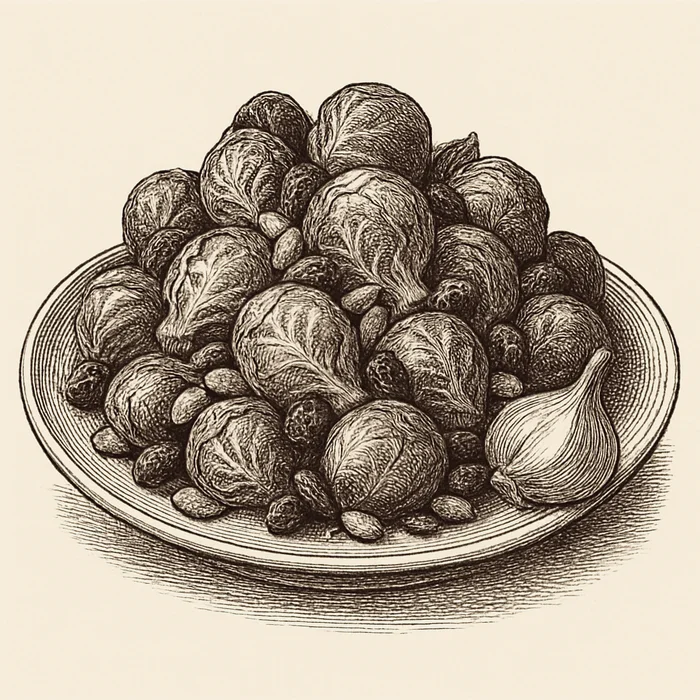
Brussels Sprouts with Pine Nuts, Raisins, and Garlic
A direct lift from the Longevity Diet meal plan: 250g of Brussels sprouts sautéed with garlic, pine nuts, and raisins. The sweet-savory balance is borrowed from Catalan and Italian cucina povera, and the nutritional logic is airtight.
Why These Ingredients Together
Brussels sprouts are the most nutrient-dense cruciferous vegetable by weight. They deliver 237mg of glucosinolates per 100g -- compounds that are converted by gut bacteria and cooking into isothiocyanates, including sulforaphane. These activate the Nrf2 transcription factor, which upregulates the body's own Phase II detoxification enzymes and antioxidant response genes. A single 250g serving covers 170% of daily vitamin C and a full day's vitamin K requirement.
The raisins are not there for sweetness alone. Their fructose and organic acids dramatically improve non-heme iron absorption from the Brussels sprouts -- studies show a 2-3x enhancement in iron uptake when dried fruit is eaten alongside iron-rich vegetables. Raisins also bring quercetin and resveratrol in meaningful quantities. Pine nuts provide the fat carrier that makes lutein and vitamin K fat-soluble and absorbable. Garlic's allicin and the sprouts' isothiocyanates both activate Nrf2, hitting the same longevity pathway through two distinct entry points for amplified effect.
Ingredients
- 500g Brussels sprouts, outer leaves removed, halved
- 4 tablespoons extra-virgin olive oil, divided
- 5 cloves garlic, thinly sliced -- rested 10 minutes
- 60g pine nuts
- 60g raisins
- 1 tablespoon sherry vinegar or lemon juice
- Salt and black pepper
- Optional: shaved Parmesan or Pecorino to finish
Instructions
-
Rest the garlic. Slice and leave for 10 minutes before using.
-
Par-cook the Brussels sprouts. Bring a large pot of salted water to a boil. Add the halved Brussels sprouts and blanch 4-5 minutes until just tender when pierced with a knife but still with some bite. Drain and spread on a towel to steam dry for 2 minutes. Dry sprouts brown better than wet ones.
-
Toast the pine nuts. In a large wide skillet, toast the pine nuts dry over medium heat for 2-3 minutes, tossing constantly, until golden. Tip them out immediately -- they go from golden to burnt in seconds. Set aside.
-
Sauté the sprouts. Add 3 tablespoons olive oil to the same skillet over medium-high heat. Add the sprouts cut-side down and cook without moving them for 3-4 minutes until the cut faces are deeply golden and slightly caramelized. The Maillard reaction produces new flavor compounds and also concentrates the glucosinolates. Toss and cook 2 more minutes.
-
Add garlic and raisins. Push the sprouts to the edges, add the remaining tablespoon of oil to the center, and add the rested garlic slices. Cook 1 minute until fragrant, then add the raisins and toss everything together for 2 minutes. The raisins will plump slightly in the heat.
-
Deglaze and season. Add the vinegar or lemon juice and toss. Season with salt and black pepper.
-
Plate with pine nuts. Transfer to a serving dish and scatter the toasted pine nuts. Add shaved Parmesan if using. Serve immediately -- Brussels sprouts become sulfurous if they sit too long in a covered pan.
What Can Go Wrong
- Wet sprouts in the pan. If they go into the pan without being properly dried after blanching, they steam instead of sear and you lose the caramelization that's responsible for most of the flavor. Dry them thoroughly.
- Skipping the blanch. You can skip blanching and roast the sprouts directly, but the texture is different -- denser and less yielding. The blanch-then-sear technique produces a better contrast between the slightly charred exterior and the creamy interior.
- Burning the pine nuts. They cook fast. Once you start smelling them, they are 30 seconds from done. Stay at the pan.
Science Notes
The Catalan origin of this combination (espinacs amb panses i pinyons, traditionally with spinach) is not coincidence -- it reflects centuries of nutritional wisdom about iron absorption. Dried fruit alongside iron-rich vegetables was documented in Mediterranean cooking long before anyone understood the chemistry. The fructose and organic acids in raisins form soluble iron complexes that resist the inhibitory effects of phytates and fiber, allowing 2-3x more non-heme iron to cross the intestinal wall. Combined with the vitamin C in the Brussels sprouts (which also enhances non-heme iron absorption), this dish delivers substantially more bioavailable iron than either component alone.
Nutrition Highlights
- Glucosinolates: ~237mg per 100g Brussels sprouts; converted to sulforaphane, activating Nrf2 antioxidant pathways
- Vitamin C: 85mg per 100g raw (less after cooking, but still significant); enhances iron absorption
- Vitamin K: ~220mcg per 100g; fat-soluble, absorbed with pine nut and olive oil fat
- Iron (enhanced): Non-heme iron from sprouts; 2-3x absorption improvement from raisins' fructose and organic acids
- Quercetin + Resveratrol: From raisins; anti-inflammatory, cardiovascular protective