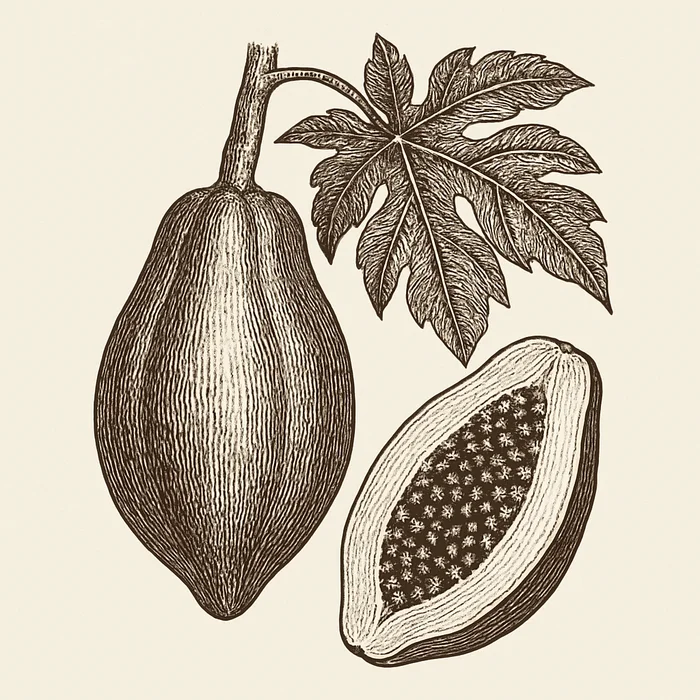
Papaya
Papaya is listed as a dietary source of folate (27 mcg per ½ cup raw cubed, 7% DV) in the Longevity Diet. It is also one of the richest food sources of lycopene and beta-cryptoxanthin among tropical fruits, contributing a broad carotenoid profile alongside vitamin C and papain.
Why It Matters for Longevity
Papaya provides natural folate to support DNA synthesis, methylation cycles, and homocysteine regulation — processes central to cellular longevity. Beyond folate, papaya's carotenoid profile (lycopene, beta-carotene, beta-cryptoxanthin) provides fat-soluble antioxidants that reduce oxidative DNA damage. Vitamin C at 62 mg per 100 g supports collagen synthesis, immune competence, and iron absorption from plant foods consumed in the same meal.
A placebo-controlled study of fermented papaya preparation (FPP) — a form produced by yeast fermentation of dried papaya — found significant reductions in oxidative stress markers including 8-hydroxydeoxyguanosine (8-OHdG), a direct marker of oxidative DNA damage, and in MAP kinase activation, suggesting that papaya bioactives modulate key age-related molecular stress pathways beyond simple antioxidant activity (Aruoma et al., 2006, Biofactors).
A dose-response meta-analysis of 95 prospective studies confirmed that fruit intake at recommended levels is associated with significant reductions in all-cause and cardiovascular mortality, with each additional serving per day providing independent protective benefit (Aune et al., 2017, Int J Epidemiol).
Carotenoid Bioavailability: Papaya Outperforms Other Sources
One of the most important but underappreciated facts about papaya's carotenoid profile is how efficiently the body absorbs it. A randomized crossover study in 16 healthy adults directly compared the bioavailability of carotenoids from papaya, tomato, and carrot. Beta-carotene absorption from papaya was approximately 3 times higher than from carrots or tomatoes; lycopene from papaya was approximately 2.6 times more bioavailable than lycopene from tomatoes; and beta-cryptoxanthin from papaya showed 2.9 times higher bioavailability relative to beta-carotene absorbed from the same food (Schweiggert et al., 2014, Br J Nutr). The mechanistic explanation: papaya chromoplasts store carotenoids in a liquid-crystalline matrix and in very small crystalloids, making them far more accessible to intestinal micellar incorporation than the rigid crystalline structures in carrots or the lycopene crystal lattice in raw tomato.
This has a practical implication for carotenoid-based antioxidant protection. Dietary beta-carotene from papaya is converted to retinol (vitamin A) in the intestinal wall via BCMO1 enzyme cleavage; the remainder circulates as intact beta-carotene, which in plasma is inversely associated with markers of oxidative stress and inflammation. Lycopene, a non-provitamin A carotenoid, accumulates in lipid-rich tissues including the prostate, skin, and liver, where it quenches singlet oxygen and inhibits NF-κB-driven inflammatory gene expression.
Carotenoids and Inflammatory Biomarkers
A systematic review and meta-analysis of 26 randomized controlled trials examined the effect of carotenoid supplementation on circulating inflammatory markers. Overall carotenoid supplementation produced a significant reduction in CRP of 0.54 mg/L and a reduction in IL-6 of 0.54 pg/mL. Among individual carotenoids, lycopene specifically reduced IL-6 by 1.08 pg/mL (statistically significant), and beta-cryptoxanthin significantly reduced CRP (Hajizadeh-Sharafabad et al., 2022, Crit Rev Food Sci Nutr). Both lycopene and beta-cryptoxanthin are present in meaningful quantities in red-fleshed papaya varieties, and the superior bioavailability of papaya carotenoids means that equivalent fresh-weight servings of papaya deliver more absorbed carotenoid per gram than most other common sources.
Papain: The Proteolytic Enzyme
Papain is a cysteine endopeptidase concentrated in the latex of unripe papaya, with trace activity remaining in ripe pulp after denaturation during ripening. In the context of digestive function, papain breaks down intact protein structures into shorter peptides and free amino acids, providing enzymatic support that complements gastric and pancreatic proteases. A double-blind placebo-controlled trial testing a standardized papaya preparation (Caricol®) over 40 days found statistically significant improvements in constipation and bloating symptoms compared to placebo; heartburn showed a trend toward improvement that fell short of significance due to small subgroup size (N=13). Benefits disappeared during the washout phase, suggesting the effect is preparation-dependent rather than lasting (Muss et al., 2013, Neuro Endocrinol Lett). The papain in ripe whole fruit is substantially lower than in standardized extracts, so digestive enzyme effects from culinary papaya are modest compared to pharmaceutical preparations.
Vitamin C and Iron Absorption Synergy
Papaya's 62 mg vitamin C per 100 g is one of the highest concentrations among tropical fruits (mango provides ~36 mg/100 g, fresh pineapple ~48 mg/100 g). Vitamin C enhances non-heme iron absorption through two mechanisms: it reduces ferric iron (Fe³⁺) to the more soluble ferrous form (Fe²⁺) in the acid environment of the stomach, and it forms soluble iron-ascorbate chelates that resist precipitation at higher intestinal pH. This makes papaya a practical companion food for iron-rich plant meals — lentils, chickpeas, dark leafy greens — particularly in plant-heavy longevity diets where non-heme iron is the primary source.
How to Use It
Eat 100 g fresh ripe papaya as dessert. Pair with lime (vitamin C + citric acid brightens flavor and further enhances iron absorption from accompanying foods). Add olive oil to a fruit salad that includes papaya to increase absorption of fat-soluble lycopene and beta-carotene. Prefer red-fleshed varieties (Hawaiian/solo papaya, Maradol) over yellow-fleshed Mexican varieties for higher lycopene content.
What to Pair It With
| Ingredient | Why | Tradition |
|---|---|---|
| Lime | Acid enhances flavor; vitamin C boosts iron absorption when served alongside iron-rich foods | Tropical / Latin American |
| Extra-virgin olive oil | Fat dramatically increases absorption of fat-soluble lycopene and beta-carotene | General |
| Mango | Together provide a broad carotenoid spectrum (lycopene, beta-carotene, lutein, cryptoxanthin) | Tropical |
| Mint | Aromatic complement; cooling contrast to papaya's musky sweetness | South Asian / Caribbean |
Flavor Profile
Sweet, musky, and tropical. Aroma is floral, musky, and sweet. Texture is buttery, soft, and juicy. Category: fresh tropical fruit.
The Science
- Aruoma et al., 2006, Biofactors: Fermented papaya preparation significantly reduced oxidative DNA damage markers (8-OHdG) and MAP kinase activation, demonstrating that papaya bioactives modulate age-related molecular oxidative stress pathways.
- Aune et al., 2017, Int J Epidemiol: Dose-response meta-analysis of 95 prospective studies — fruit consumption at recommended levels associated with significant reductions in all-cause and cardiovascular mortality.
- Schweiggert et al., 2014, Br J Nutr: Randomized crossover study (n=16): beta-carotene from papaya was 3× more bioavailable than from carrot or tomato; lycopene from papaya was 2.6× more bioavailable than from tomato, due to liquid-crystalline chromoplast matrix structure.
- Hajizadeh-Sharafabad et al., 2022, Crit Rev Food Sci Nutr: Meta-analysis of 26 RCTs: carotenoid supplementation reduced CRP by 0.54 mg/L and IL-6 by 0.54 pg/mL; lycopene specifically reduced IL-6 by 1.08 pg/mL; beta-cryptoxanthin significantly reduced CRP.
- Muss et al., 2013, Neuro Endocrinol Lett: Double-blind RCT of papaya preparation (Caricol®) over 40 days: statistically significant improvements in constipation and bloating; benefits did not persist after washout.
References
- Aruoma OI, Colognato R, Fontana I, et al. Molecular effects of fermented papaya preparation on oxidative damage, MAP kinase activation and modulation of the benzo[a]pyrene mediated genotoxicity. Biofactors. 2006;26(2):147-159. PMID: 16823100. doi:10.1002/biof.5520260204
- Aune D, Giovannucci E, Boffetta P, et al. Fruit and vegetable intake and the risk of cardiovascular disease, total cancer and all-cause mortality — a systematic review and dose-response meta-analysis of prospective studies. Int J Epidemiol. 2017;46(3):1029-1056. PMID: 28338764. doi:10.1093/ije/dyw319
- Schweiggert RM, Kopec RE, Villalobos-Gutierrez MG, et al. Carotenoids are more bioavailable from papaya than from tomato and carrot in humans: a randomised cross-over study. Br J Nutr. 2014;111(3):490-498. PMID: 23931131. doi:10.1017/S0007114513002596
- Hajizadeh-Sharafabad F, Sharifi Zahabi E, Malekahmadi M, Zarrin R, Alizadeh M. Carotenoids supplementation and inflammation: a systematic review and meta-analysis of randomized clinical trials. Crit Rev Food Sci Nutr. 2022;62(29):8161-8177. PMID: 33998846. doi:10.1080/10408398.2021.1918422
- Muss C, Mosgoeller W, Endler T. Papaya preparation (Caricol®) in digestive disorders. Neuro Endocrinol Lett. 2013;34(1):38-46. PMID: 23524622.
Key Nutrients
| Nutrient | Per 100g | Notes |
|---|---|---|
| Lycopene | ~1.8–5.3 mg (varies by variety) | Higher in red-fleshed varieties; 2.6× more bioavailable from papaya than from tomato; fat-soluble — absorption increases with dietary fat |
| Beta-carotene (pro-vitamin A) | ~47 mcg RAE | 3× more bioavailable from papaya than from carrot or tomato due to liquid-crystalline chromoplast matrix |
| Beta-cryptoxanthin | ~4–10 mcg | Provitamin A carotenoid; significantly reduces CRP in RCTs; largely absent from most Western produce |
| Papain (proteolytic enzyme) | High in unripe latex; trace in ripe pulp | Breaks down protein; substantially denatured in ripe fruit; standardized extracts show digestive symptom benefits in RCTs |
| Vitamin C | 62 mg | Among highest of tropical fruits; enhances non-heme iron absorption by reducing Fe³⁺ to Fe²⁺ |
| Folate | 37 mcg | Supports DNA methylation cycles and homocysteine metabolism |