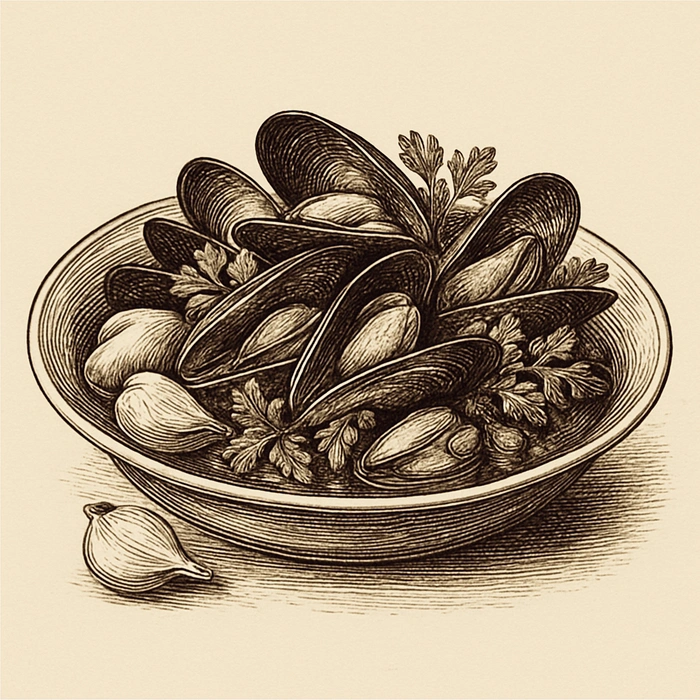
Mussels in White Wine and Garlic
The fastest, most affordable omega-3 delivery system in the Longevity Diet: mussels steam open in under 10 minutes and arrive with more selenium, zinc, and B12 than almost any other shellfish at a fraction of the cost.
Why These Ingredients Together
Mussels are nutritionally exceptional and chronically underused. Per 100g cooked, they provide 2g of EPA + DHA (comparable to salmon), 340% of the daily value for B12, 100% of selenium, and meaningful zinc -- all in a package that costs a few euros per kilo and takes less time to cook than pasta. Selenium is a cofactor for glutathione peroxidase, the body's primary antioxidant defense enzyme; adequate selenium status is directly associated with reduced oxidative stress and all-cause mortality in elderly populations.
The white wine serves two functions beyond flavor. Its acidity slightly denatures the mussel proteins, improving texture, and it enhances absorption of the shellfish's zinc and selenium by reducing the alkaline pH that inhibits mineral uptake. The wine's alcohol fully evaporates during cooking. Garlic's allicin -- generated by the 10-minute rest -- pairs with the omega-3 from the mussels to reduce platelet aggregation through complementary mechanisms. Parsley adds a meaningful dose of vitamin C and vitamin K, and its flat leaf enzymes bring a fresh brightness that cuts through the briny broth.
Ingredients
- 1kg fresh mussels (serves 2 as a main, 4 as a starter)
- 3 tablespoons extra-virgin olive oil
- 5 cloves garlic, thinly sliced -- rest 10 minutes
- 1/2 teaspoon chili flakes
- 150ml dry white wine
- Large handful flat-leaf parsley, roughly chopped
- Crusty whole-grain bread or rye crackers, to serve
- Black pepper
Instructions
-
Clean the mussels. Rinse under cold water. Pull off any beards (the stringy fibres protruding from the shell) with a sharp tug. Tap any open mussels on the counter -- they should close within 30 seconds. Discard any that stay open, have cracked shells, or feel unusually heavy (likely full of sand). This takes about 5 minutes; don't rush it.
-
Rest the garlic. Slice the garlic and leave it for 10 minutes before it touches heat. The allicin conversion requires this window.
-
Build the base. In a large pot with a tight-fitting lid (wide enough to hold all the mussels), heat the olive oil over medium heat. Add the rested garlic and chili flakes. Cook 1-2 minutes, stirring, until the garlic is fragrant and just beginning to turn golden at the edges -- not brown.
-
Add wine and bring to steam. Pour in the white wine and bring to a boil. Let it boil 1 minute to cook off the raw alcohol edge.
-
Steam the mussels. Add all the mussels at once and cover immediately. Cook on high heat for 3-4 minutes, shaking the pot once halfway through. Check at 3 minutes -- you want the shells to be open but the flesh still plump and just cooked. Mussels go from perfect to rubbery in under a minute.
-
Discard closed shells. Any mussel that hasn't opened after 5 minutes should be discarded. It was either dead before cooking or too tightly sealed to cook through safely.
-
Finish and serve immediately. Scatter the parsley over the pot, grind over black pepper, and bring the whole pot to the table. Provide a bowl for empty shells. Serve with the best whole-grain bread you have for absorbing the broth -- the cooking liquid is packed with concentrated marine minerals.
What Can Go Wrong
- Overcooked mussels. Mussels are done when the shell opens. Every extra minute makes the flesh tighter and more rubbery. Check at 3 minutes. When in doubt, take the pot off heat earlier.
- Buying mussels too far in advance. Buy them the day you cook them, or maximum one day ahead. Store in the fridge in a bowl covered with a damp cloth (not in water or sealed plastic -- they need to breathe). Live mussels should smell like the sea, not like fish.
- Not resting the garlic. By now this should be muscle memory.
Science Notes
Mussels are farmed entirely on ropes with no feed input -- they filter phytoplankton from the water. This makes them one of the most environmentally sustainable animal proteins available and explains why they bioaccumulate very little mercury or environmental toxins (unlike bottom-feeding shellfish). From a longevity standpoint, the selenium content is the hidden star: glutathione peroxidase requires selenium as a cofactor to neutralize hydrogen peroxide and lipid peroxides, and selenium deficiency is associated with elevated cardiovascular and cancer mortality in cohort studies. Most people in developed countries are borderline deficient. A single serving of mussels covers the daily requirement with room to spare.
Nutrition Highlights
- Omega-3 (EPA + DHA): ~2g per serving -- marine-form, highly bioavailable
- Vitamin B12: ~20mcg per 100g cooked -- 340% DV; prevents cognitive decline via homocysteine control
- Selenium: ~45mcg per 100g cooked -- ~80% DV; essential for glutathione peroxidase antioxidant function
- Zinc: ~2.4mg per 100g cooked; immune function, wound healing, testosterone production
- Iron: ~4mg per 100g cooked; well-absorbed heme iron