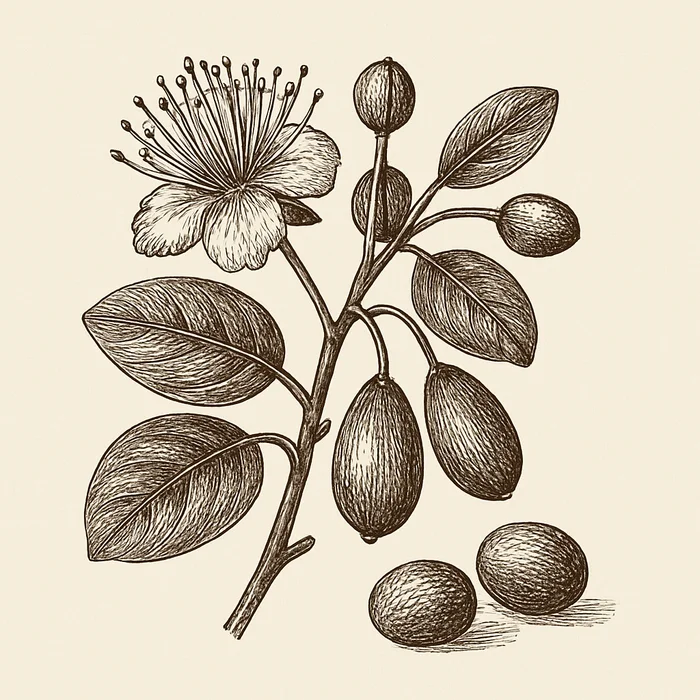
Capers
Gram for gram, capers contain more quercetin than any other common food -- up to 328 mg per 100g, dwarfing onions and apples by a factor of ten. That single fact makes these tiny flower buds one of the most polyphenol-dense ingredients you can add to a meal.
Why It Matters for Longevity
The longevity case for capers rests almost entirely on quercetin, a flavonoid that has attracted serious research attention for its anti-inflammatory, blood-pressure-lowering, and senolytic properties. Senolytic means it can selectively clear senescent cells -- the "zombie cells" that accumulate with age, spewing inflammatory signals that damage neighbouring tissue.
A clinical trial found that senolytic treatment including quercetin and dasatinib decreased markers of senescent cells in human adipose tissue biopsies -- the first human evidence that flavonoid-based compounds can reduce senescent cell burden (Hickson et al., 2019, EBioMedicine).
Pantelleria capers (Capparis spinosa) are confirmed as an exceptional source of quercetin glycosides, rutin, and kaempferol, providing total polyphenol concentrations among the highest of any Mediterranean condiment (Lo Bosco et al., 2019, J Food Sci). Beyond their polyphenol density, capers deliver these compounds in a food matrix that promotes gut fermentation into bioactive metabolites.
Quercetin modulates adipogenesis, reduces fasting glucose, and suppresses hepatic lipogenesis -- metabolic effects relevant to the prevention of obesity-associated chronic disease in aging (Nabavi et al., 2015, Food Chem).
Capers also deliver rutin (quercetin-3-rutinoside, up to 332 mg/100g), which gut bacteria convert into quercetin more gradually, creating sustained plasma levels. Add kaempferol (up to 131 mg/100g), and you have a food delivering over 654 mg total polyphenols per 100g.
Quercetin and Blood Pressure: Quantified
The blood pressure evidence for quercetin is more specific than most food-based claims. A systematic review and meta-analysis of 7 RCTs involving 587 patients found that quercetin supplementation reduced systolic blood pressure by −3.04 mmHg (95% CI: −5.75, −0.33; p=0.028) and diastolic by −2.63 mmHg (95% CI: −3.26, −2.01; p<0.001). At doses of ≥500 mg/day, the systolic reduction reached −4.45 mmHg -- a clinically meaningful effect (Serban et al., 2016, J Am Heart Assoc). The proposed mechanisms include reduced oxidative stress, interference with the renin-angiotensin system, and upregulation of endothelial nitric oxide synthase.
A dose of 500 mg quercetin from food would require roughly 200-300g of capers -- an impractical daily amount. But the relevance is in understanding the mechanism: regular moderate consumption, combined with other dietary quercetin sources (onions, apples, tea), can achieve additive effects across a day's eating. The capers contribution is meaningful because of the food matrix, not just the absolute dose per serving.
Flavonoids and Mortality: The Population Data
Quercetin consumed as part of a flavonoid-rich diet is associated with reduced mortality at the population level. A meta-analysis of 10 prospective cohort studies found that the highest versus lowest total flavonoid intake corresponded to an 18% reduction in all-cause mortality (RR: 0.82, 95% CI: 0.72-0.92), with a dose-response relationship showing lowest mortality at approximately 200 mg/day of total flavonoids (Liu et al., 2017, Mol Nutr Food Res). A separate meta-analysis of 15 prospective cohort studies found high flavonoid intake associated with reduced cardiovascular disease mortality (pooled RR: 0.86, 95% CI: 0.75, 0.98) (Kim and Je, 2017, Clin Nutr ESPEN). These are observational data, but the consistency across populations and study designs strengthens the inference.
Rutin: The Slow-Release Mechanism
Rutin is quercetin attached to a disaccharide (rutinose), which blocks intestinal absorption in the small intestine -- meaning most rutin arrives intact in the colon, where gut bacteria cleave it into quercetin. Research tracking this conversion found that Lachnospiraceae and Enterobacteriaceae are the primary bacterial taxa responsible, with approximately 27% of gut microbial cells active in rutin metabolism after 24 hours (Riva et al., 2020, Front Microbiol). The practical consequence: rutin in capers extends quercetin bioavailability over several hours rather than delivering it as a sharp spike. This is relevant for anyone aiming for sustained plasma quercetin levels throughout the day -- a single serving of capers at lunch keeps gut conversion active well into the afternoon.
There is, however, marked inter-individual variation in this conversion. People with less diverse gut microbiomes or reduced Lachnospiraceae abundance may extract less quercetin from rutin, underscoring why total dietary diversity supports polyphenol utilisation.
Caperberries vs. Capers
A practical distinction: capers are the unopened flower buds; caperberries are the mature fruit of the same plant. Both contain quercetin and rutin, but their polyphenol concentrations differ significantly. Capers (the buds) consistently show higher quercetin density, whereas caperberries are larger, lower in polyphenols per gram, and are typically served whole rather than as a condiment. For maximum quercetin intake per gram, the smaller nonpareil capers are the better choice -- smaller buds are harvested earlier and carry more concentrated polyphenol content.
How to Use It
Add capers to salads, pasta sauces, and fish dishes several times per week. Salt-packed capers generally have better flavour than brined; rinse briefly before use. For maximum quercetin absorption, pair with a fat source like extra-virgin olive oil -- quercetin is fat-soluble and a lipid carrier meaningfully improves bioavailability. Quercetin is heat-stable, so capers work equally well in hot dishes or raw. In a puttanesca or salsa verde, a 2-tablespoon serving (roughly 17g) delivers approximately 30-50 mg of quercetin and a comparable amount of rutin.
What to Pair It With
| Ingredient | Why | Tradition |
|---|---|---|
| Extra-virgin olive oil | Fat enhances quercetin absorption | Mediterranean |
| Tomatoes | Classic flavour base in puttanesca and caponata | Italian / Sicilian |
| Lemon | Acid brightens the brine; classic piccata combination | Mediterranean |
| Anchovies | Umami depth in pasta sauces; complementary flavours | Italian |
| Parsley | Freshness contrast in salsa verde | Mediterranean |
| Fish | Traditional garnish for grilled and baked fish | Mediterranean |
Flavor Profile
Briny, tangy, and piquant with a subtle floral note. Smaller capers (nonpareilles) are firmer and more intensely flavoured; larger ones (capotes) are softer and milder. Aroma is sharp and slightly vinegary when brined, more delicate when salt-packed. They add a burst of acidity and complexity without needing additional vinegar or citrus.
The Science
- Hickson et al., 2019, EBioMedicine: First human clinical trial of senolytics -- quercetin + dasatinib decreased senescent cell markers in human adipose tissue biopsies.
- Lo Bosco et al., 2019, J Food Sci: Pantelleria capers confirmed as exceptional sources of quercetin glycosides, rutin, and kaempferol -- among the highest polyphenol densities of any Mediterranean condiment.
- Nabavi et al., 2015, Food Chem: Quercetin modulates adipogenesis, reduces fasting glucose, and suppresses hepatic lipogenesis -- metabolic effects relevant to healthy aging.
- Serban et al., 2016, J Am Heart Assoc: Meta-analysis of 7 RCTs (n=587) — quercetin supplementation reduced systolic BP by −3.04 mmHg and diastolic by −2.63 mmHg; dose ≥500 mg/day produced −4.45 mmHg systolic reduction.
- Liu et al., 2017, Mol Nutr Food Res: Meta-analysis of 10 cohort studies — highest flavonoid intake associated with 18% lower all-cause mortality (RR: 0.82).
- Kim and Je, 2017, Clin Nutr ESPEN: Meta-analysis of 15 cohort studies — high flavonoid intake associated with reduced CVD mortality (RR: 0.86).
- Riva et al., 2020, Front Microbiol: Gut microbiota conversion of rutin to quercetin demonstrated — Lachnospiraceae and Enterobacteriaceae as key taxa; 27% microbial cells active after 24h, with marked inter-individual variation.
References
- Hickson LJ, Langhi Prata LGP, Bobart SA, et al. Senolytics decrease senescent cells in humans: preliminary report from a clinical trial of Dasatinib plus Quercetin in individuals with diabetic kidney disease. EBioMedicine. 2019;47:446-456. PMID: 31542391. doi:10.1016/j.ebiom.2019.08.069
- Lo Bosco F, Zafarana E, Guarrera G, et al. Nutraceutical value of Pantelleria capers (Capparis spinosa L.). J Food Sci. 2019;84(10):2926-2934. PMID: 31294468. doi:10.1111/1750-3841.14793
- Nabavi SF, Russo GL, Daglia M, et al. Role of quercetin as an alternative for obesity treatment: you are what you eat! Food Chem. 2015;179:305-310. PMID: 25722169. doi:10.1016/j.foodchem.2015.02.006
- Serban MC, Sahebkar A, Zanchetti A, et al. Effects of Quercetin on Blood Pressure: A Systematic Review and Meta-Analysis of Randomized Controlled Trials. J Am Heart Assoc. 2016;5(7):e002713. PMID: 27405810. doi:10.1161/JAHA.115.002713
- Liu XM, Liu YJ, Huang Y, et al. Dietary total flavonoids intake and risk of mortality from all causes and cardiovascular disease in the general population. Mol Nutr Food Res. 2017;61(6):1600620. PMID: 28054441. doi:10.1002/mnfr.201600620
- Kim Y, Je Y. Flavonoid intake and mortality from cardiovascular disease and all causes: A meta-analysis of prospective cohort studies. Clin Nutr ESPEN. 2017;20:68-77. PMID: 29072172. doi:10.1016/j.clnesp.2017.03.004
- Riva A, Kolimár D, Spittler A, et al. Conversion of Rutin, a Prevalent Dietary Flavonol, by the Human Gut Microbiota. Front Microbiol. 2020;11:585428. PMID: 33408702. doi:10.3389/fmicb.2020.585428
Key Nutrients
| Nutrient | Per 100g | Notes |
|---|---|---|
| Quercetin | 180-328 mg | Highest of any common food; fat-soluble; absorption enhanced by olive oil |
| Rutin | Up to 332 mg | Converted to quercetin by gut bacteria (Lachnospiraceae) for sustained plasma levels |
| Kaempferol | Up to 131 mg | Complementary anti-inflammatory flavonol |
| Total polyphenols | 654 mg | Among the highest polyphenol densities in any food |