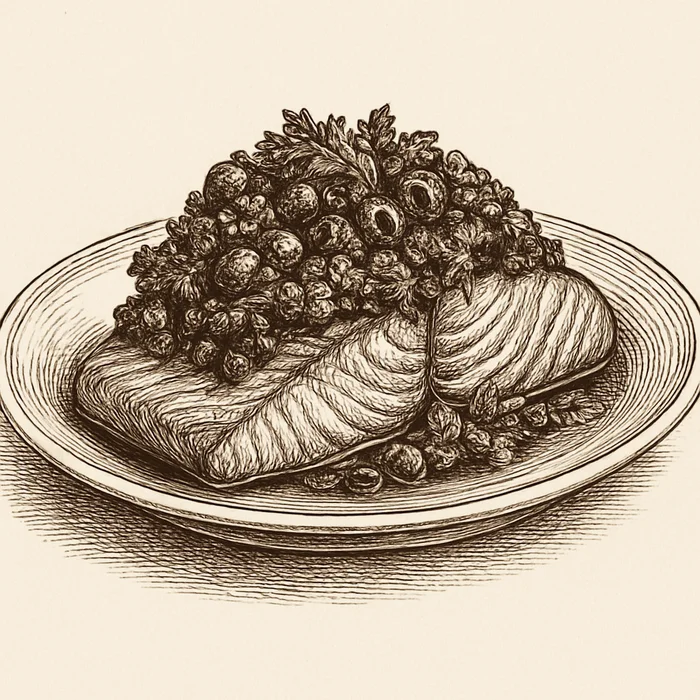
Baked Salmon with Green Olive and Caper Tapenade
A 25-minute Mediterranean weeknight dinner that pairs the most validated longevity fat (EPA/DHA from salmon) with the most quercetin-dense food on earth (capers) -- a combination that attacks inflammation through two completely independent molecular pathways.
Why These Ingredients Together
Salmon's EPA and DHA omega-3 fatty acids are the only dietary fats with Level A evidence for cardiovascular mortality reduction. They reduce triglycerides, lower resting heart rate, stabilize cardiac cell membranes against arrhythmia, and resolve inflammation through specialized pro-resolving mediators (resolvins and protectins) that actively shut down inflammatory cascades rather than merely suppressing them. Capers contain 180-328mg of quercetin per 100g -- more than any other common food by a wide margin. Quercetin is both a potent anti-inflammatory (it inhibits NF-kB and NLRP3 inflammasome activation) and an emerging senolytic: research shows quercetin combined with dasatinib selectively clears senescent cells in human tissue, reducing the "zombie cell" burden that drives aging-related chronic inflammation. The olive tapenade matrix dissolves quercetin into fat, dramatically improving its otherwise poor oral bioavailability. And the parsley is not garnish -- it delivers apigenin, a flavone that inhibits CYP1A2 and CYP3A4 enzymes, potentially slowing the hepatic metabolism of quercetin and extending its active time in the bloodstream.
Ingredients
- 4 skin-on salmon fillets (about 150g each), preferably wild-caught
- 1 tablespoon extra-virgin olive oil for the fish
- Salt and freshly ground black pepper
Green Olive and Caper Tapenade:
- 1 cup (150g) pitted green olives (Castelvetrano or Cerignola for sweetness)
- 3 tablespoons salt-packed capers, rinsed and soaked for 10 minutes
- 1/4 cup fresh flat-leaf parsley, packed
- 1 small clove garlic, minced and rested 10 minutes
- Zest of 1 lemon plus 1 tablespoon juice
- 3 tablespoons extra-virgin olive oil
- 1/4 teaspoon red pepper flakes
To serve:
- Lemon wedges
- Crusty bread or roasted vegetables
Instructions
-
Soak the capers. If using salt-packed capers (which have higher quercetin content than brined), rinse them under cold water and soak in fresh water for 10 minutes to remove excess salt while retaining the flavonoids. Drain and pat dry. (Brined capers work in a pinch, but salt-packed capers are dried and preserved whole, concentrating the quercetin rather than leaching it into brine liquid.)
-
Make the tapenade. Combine the olives, drained capers, parsley, rested garlic, lemon zest, lemon juice, olive oil, and red pepper flakes in a food processor. Pulse 8-10 times until you have a coarse, chunky paste -- not a smooth puree. (You want distinct pieces of olive and caper in each bite. The coarse texture also preserves more intact cell structures in the parsley, which means more apigenin survives to your plate.) Transfer to a bowl and set aside.
-
Bring the salmon to room temperature. Remove the fillets from the refrigerator 15 minutes before cooking. Pat completely dry with paper towels -- moisture on the surface will steam rather than sear. Season both sides with salt and pepper.
-
Bake the salmon. Preheat the oven to 220C (425F). Heat an oven-safe skillet over medium-high heat with 1 tablespoon olive oil. Place the salmon skin-side up and sear for 3 minutes until a golden crust forms on the flesh side. (Starting flesh-side down creates a Maillard crust that adds flavor and texture. The skin side will crisp in the oven.) Flip the fillets skin-side down, transfer the skillet to the oven, and bake for 8-10 minutes until the internal temperature reaches 50C (125F) for medium-rare or 55C (130F) for medium. (Salmon continues cooking for 2-3 minutes after leaving the oven. Pulling it at a lower temperature than your target prevents the dry, chalky texture of overcooked fish -- and preserves more of the heat-sensitive EPA/DHA, which begin to oxidize at higher temperatures.)
-
Serve immediately. Place each fillet on a plate and spoon a generous mound of tapenade directly on top. The residual heat from the fish will gently warm the tapenade without cooking it, releasing the olive and caper aromatics. Serve with lemon wedges. (Squeezing lemon over the fish at the table adds vitamin C, which both brightens the dish and protects the omega-3 fatty acids from oxidation on the plate.)
What Can Go Wrong
-
Overcooking the salmon. This is the most common failure. Salmon goes from silky and translucent-pink to dry and opaque in a 5-degree window. Use an instant-read thermometer and pull at 50-55C. If you do not own a thermometer, press the thickest part of the fillet: it should yield easily with a gentle press but not feel mushy. The moment it feels firm, it is overdone.
-
Making the tapenade too smooth. A smooth puree loses the textural contrast that makes this dish work. Pulse, check, pulse -- do not hold the processor button down. Each pulse should be about one second.
-
Using low-quality olive oil in the tapenade. The tapenade is served raw, so the olive oil's polyphenols arrive intact. A bland, refined olive oil contributes fat but none of the oleocanthal or hydroxytyrosol that make EVOO a longevity ingredient. Use the best oil you have for the tapenade, save the everyday oil for the pan.
Science Notes
The omega-3 plus quercetin combination in this dish targets inflammation from opposite directions. EPA and DHA are metabolized into resolvins and protectins -- specialized mediators that actively resolve inflammation rather than just suppressing it. This is a fundamentally different mechanism from NSAIDs or other inhibitors: rather than blocking inflammatory signals, resolvins signal immune cells to clean up debris and return tissue to homeostasis. Quercetin, meanwhile, prevents the inflammatory cascade from initiating in the first place by inhibiting NF-kB nuclear translocation and NLRP3 inflammasome assembly. The senolytic angle adds a second dimension to quercetin's longevity relevance: in combination with the drug dasatinib, quercetin has been shown to selectively clear senescent cells in human adipose tissue, reducing the secretion of inflammatory cytokines (the senescence-associated secretory phenotype, or SASP) that drive tissue aging. While the dietary dose from capers is lower than the supplemental doses used in senolytic research, regular consumption contributes to a quercetin-rich baseline that population studies associate with reduced cardiovascular and cancer mortality.
Nutrition Highlights
- EPA/DHA omega-3: ~2.5g per serving from salmon, exceeding the American Heart Association's recommendation and providing substrate for anti-inflammatory resolvin synthesis
- Quercetin: Capers deliver 50-100mg per serving, the highest dietary concentration available from any whole food, with bioavailability enhanced by the olive oil matrix
- Oleocanthal: Raw EVOO in the tapenade provides intact oleocanthal, a natural COX inhibitor with anti-inflammatory potency comparable to low-dose ibuprofen
- Selenium: Salmon provides ~40mcg per serving (over 70% of daily needs), an essential cofactor for glutathione peroxidase, the body's primary endogenous antioxidant enzyme