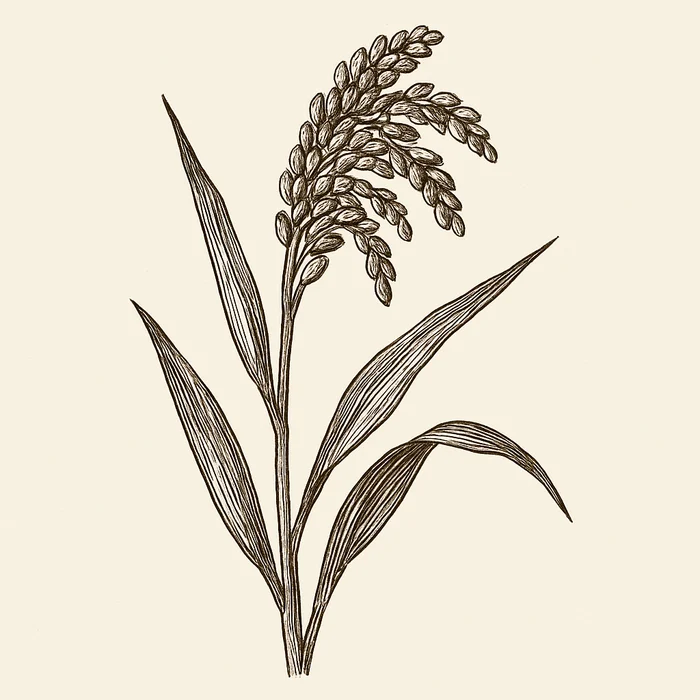
Brown Rice
Swapping just 50 grams of white rice for brown rice daily was associated with a 16% lower risk of type 2 diabetes in a study of nearly 200,000 people. The difference is a thin layer of bran -- and it changes everything about how your body processes the starch inside.
Why It Matters for Longevity
Brown rice is white rice before the refining. That bran layer contains three times the fiber (3g vs 1g per cup cooked), most of the B vitamins, nearly all the magnesium, and a compound called gamma-oryzanol that is unique to rice bran and has its own cholesterol-lowering properties.
The glycemic argument is straightforward. The intact bran forms a physical barrier around starch granules, slowing the rate at which pancreatic amylases can break them down. This translates to lower glucose spikes, lower insulin demand, and more sustained energy. A 2014 RCT (Mohan et al., 2014, Diabetes Technol Ther) confirmed that swapping white rice for brown rice significantly reduced postprandial blood glucose and insulin responses in overweight Asian adults.
At scale, the evidence is compelling. A 2010 Archives of Internal Medicine study (PMID 20548009) following nearly 200,000 adults found that replacing 50g/day of white rice with brown rice reduced type 2 diabetes risk by 16%. A systematic review (Boers et al., 2015, Br J Nutr) reinforced these findings across multiple trials, showing that rice processing and bran content significantly influence postprandial glycaemic and insulinaemic responses.
The book features brown rice as a cornerstone of a sample daily diet: 2 cups brown rice, 1 cup lentils, 20 almonds, vegetables, fruit, olive oil, and flax seeds. This combination delivers 73g of fiber and 76g of complete protein in only 1886 calories -- exceeding 100% of the RDA for nearly all nutrients except vitamin D and B12.
One critical caveat: overcooking matters. When rice is cooked too long, starch granules gelatinize and become rapidly accessible to digestive enzymes, erasing much of the glycemic advantage. Cook until just tender, not mushy.
Gamma-Oryzanol: Brown Rice's Unique Cholesterol-Lowering Compound
White rice has none of it. Brown rice bran contains 30–60 mg per 100 g of gamma-oryzanol — a ferulic acid ester of triterpene alcohols and phytosterols found only in the bran layer. Gamma-oryzanol inhibits cholesterol absorption in the intestine through two complementary mechanisms: it competes with dietary cholesterol at the micelle level in the small intestine (phytosterol moiety), and its ferulic acid component suppresses hepatic cholesterol synthesis via downregulation of HMG-CoA reductase. In the only human RCT specifically examining gamma-oryzanol concentration in rice bran oil, Bumrungpert et al. (2019, J Altern Complement Med) found dose-dependent LDL-C reductions in hyperlipidemic subjects of −8% to −12.2% (p = 0.012) compared to a −0.8% change in the control group, along with a 10.1% improvement in oxygen radical absorbance capacity. Masuzaki et al. (2019, J Diabetes Investig) further demonstrated that gamma-oryzanol acts as a molecular chaperone in the hypothalamus — attenuating endoplasmic reticulum stress, reducing preference for high-fat foods, and protecting pancreatic beta-cells from apoptosis, making it relevant not just for cholesterol but for obesity and diabetes prevention through a central nervous system pathway entirely distinct from dietary fiber mechanisms.
GABA in Germinated Brown Rice and Blood Pressure
When brown rice is soaked before cooking — particularly for 12–24 hours — its own enzymes (glutamate decarboxylase, activated by water) convert glutamic acid into gamma-aminobutyric acid (GABA). Germinated brown rice (GBR) can contain 3–10 times the GABA of ordinary brown rice. GABA is an inhibitory neurotransmitter that also acts directly on peripheral blood vessels: it activates GABA-B receptors on sympathetic nerve terminals, reducing noradrenaline release and thereby lowering vascular tone. Nishimura et al. (2015, J Tradit Complement Med) conducted a randomized, double-blind, placebo-controlled trial in 39 mildly hypertensive adults: participants consuming GABA-enriched rice (11.2 mg GABA/100 g) showed significantly improved morning blood pressure (p < 0.05) compared to control rice (2.7 mg GABA/100 g), with reduced plasma noradrenaline levels confirming the sympatholytic mechanism. Morning hypertension is a recognized independent risk factor for cardiovascular events, making this a clinically meaningful effect. Even without germination, regularly eating brown rice rather than white rice contributes meaningfully more GABA per meal.
Arsenic in Brown Rice: Context and Mitigation
Brown rice does contain measurably more inorganic arsenic than white rice because arsenic concentrates in the bran and germ layers that milling removes. The absolute amounts — typically 0.1–0.4 µg/g inorganic arsenic — are well within safe consumption ranges for most people eating 1–2 servings daily, and the longevity benefits far outweigh the risk at normal dietary frequencies. For those who eat rice as a major daily staple (3+ servings/day), simple preparation steps substantially reduce exposure. Gray et al. (2016, Food Addit Contam Part A) showed that cooking brown rice in excess water (6:1 water-to-rice ratio) and draining the cooking water reduced inorganic arsenic by approximately 50% in brown rice, compared to the absorption method. Unlike enriched white rice, where the same method also removes fortified B vitamins, brown rice retains most of its naturally occurring B vitamins and minerals because these are embedded in the bran rather than added to the surface. The practical recommendation: use more cooking water than the standard 2:1 ratio and drain any excess, particularly if rice is eaten daily.
How to Use It
Rinse well, then cook at a 1:2 ratio with water for about 40 minutes. Short-grain brown rice works for sushi-style bowls, long-grain for pilafs, and basmati for Indian dishes. Cooling cooked rice in the fridge increases resistant starch content, making day-old rice metabolically superior to freshly cooked. Pair with legumes at every opportunity for complete protein.
What to Pair It With
| Ingredient | Why | Tradition |
|---|---|---|
| Lentils | Complementary amino acids create complete protein | Indian (dal-chawal) / Middle Eastern (mujaddara) |
| Sesame oil | Nutty fat complements grain flavor; improves absorption | East Asian |
| Turmeric | Anti-inflammatory curcumin; traditional pilaf spice | Indian / Southeast Asian |
| Black beans | Complete protein; fiber synergy | Latin American |
| Extra-virgin olive oil | Healthy fat slows carbohydrate absorption | Mediterranean |
Flavor Profile
Nutty and mildly sweet with a chewy, firm texture that holds its shape in bowls and stir-fries. More substantial than white rice, with an earthy quality that pairs naturally with bold flavors. Short-grain varieties are stickier; long-grain stays more separate and fluffy.
The Science
- Sun et al., 2010, Arch Intern Med: Prospective cohort of ~197,000 US adults — replacing 50g/day white rice with brown rice associated with 16% lower type 2 diabetes risk.
- Mohan et al., 2014, Diabetes Technol Ther: RCT in overweight Asian Indians — brown rice significantly reduced postprandial blood glucose and insulin vs white rice.
- Boers et al., 2015, Br J Nutr: Systematic review — bran layer in brown rice consistently lowers postprandial glycaemic and insulinaemic responses across studies.
- Aune et al., 2016, BMJ: Whole grain consumption associated with dose-dependent reductions in CVD, cancer, and all-cause mortality.
- Bumrungpert et al., 2019, J Altern Complement Med: RCT in hyperlipidemic subjects — gamma-oryzanol in rice bran oil reduced LDL-C by up to −12.2% (p = 0.012) vs −0.8% in controls, via phytosterol-mediated cholesterol micelle competition and HMG-CoA reductase inhibition.
- Masuzaki et al., 2019, J Diabetes Investig: Brown rice-specific gamma-oryzanol attenuates hypothalamic ER stress, reduces fat preference, and protects pancreatic beta-cells from apoptosis in preclinical models; daily brown rice intake ameliorates impaired glucose tolerance in obese prediabetes men.
- Nishimura et al., 2015, J Tradit Complement Med: Double-blind RCT (n=39) — GABA-enriched rice (11.2 mg/100 g) significantly improved morning blood pressure vs control rice (2.7 mg/100 g, p < 0.05) via reduced noradrenaline; germinated brown rice delivers 3–10× higher GABA than ungerminated.
- Gray et al., 2016, Food Addit Contam Part A: Cooking brown rice in excess water (6:1 ratio) reduces inorganic arsenic by ~50%; B vitamins in brown rice are largely retained because they are intrinsic to the bran, unlike fortified white rice.
References
- Sun Q, Spiegelman D, van Dam RM, et al. White rice, brown rice, and risk of type 2 diabetes in US men and women. Arch Intern Med. 2010;170(11):961-969. PMID: 20548009. doi:10.1001/archinternmed.2010.109
- Mohan V, Spiegelman D, Sudha V, et al. Effect of brown rice, white rice, and brown rice with legumes on blood glucose and insulin responses in overweight Asian Indians: a randomized controlled trial. Diabetes Technol Ther. 2014;16(5):317-325. PMID: 24447043. doi:10.1089/dia.2013.0259
- Boers HM, Seijen Ten Hoorn J, Mela DJ. A systematic review of the influence of rice characteristics and processing methods on postprandial glycaemic and insulinaemic responses. Br J Nutr. 2015;114(7):1035-1045. PMID: 26310311. doi:10.1017/S0007114515001841
- Aune D, Keum N, Giovannucci E, et al. Whole grain consumption and risk of cardiovascular disease, cancer, and all cause and cause specific mortality: systematic review and dose-response meta-analysis of prospective studies. BMJ. 2016;353:i2716. PMID: 27301975. doi:10.1136/bmj.i2716
- Bumrungpert A, Chongsuwat R, Phosat C, Butacnum A. Rice bran oil containing gamma-oryzanol improves lipid profiles and antioxidant status in hyperlipidemic subjects: a randomized double-blind controlled trial. J Altern Complement Med. 2019;25(3):353-358. PMID: 30265563. doi:10.1089/acm.2018.0212
- Masuzaki H, Kozuka C, Okamoto S, et al. Brown rice-specific γ-oryzanol as a promising prophylactic avenue to protect against diabetes mellitus and obesity in humans. J Diabetes Investig. 2019;10(1):18-25. PMID: 29978570. doi:10.1111/jdi.12892
- Nishimura M, Yoshida S, Haramoto M, et al. Effects of white rice containing enriched gamma-aminobutyric acid on blood pressure. J Tradit Complement Med. 2015;6(2):195-202. PMID: 26870683. doi:10.1016/j.jtcme.2014.11.032
- Gray PJ, Conklin SD, Todorov TI, Kasko SM. Cooking rice in excess water reduces both arsenic and enriched vitamins in the cooked grain. Food Addit Contam Part A. 2016;33(1):78-85. PMID: 26515534. doi:10.1080/19440049.2015.1109084
Key Nutrients
| Nutrient | Per 100g | Notes |
|---|---|---|
| Dietary fiber | 3.5 g (cooked) | 3x more than white rice; supports gut microbiome |
| Gamma-oryzanol | 30-60 mg (in bran) | Unique to rice bran; cholesterol-lowering; absent in white rice |
| Manganese | 1.97 mg (86% RDA, raw) | Cofactor for antioxidant enzymes |
| Magnesium | 143 mg (34% RDA, raw) | Important for insulin sensitivity; lost in milling |
| B vitamins | B1: 0.40 mg, B3: 5.1 mg, B6: 0.51 mg | 80% more than white rice |