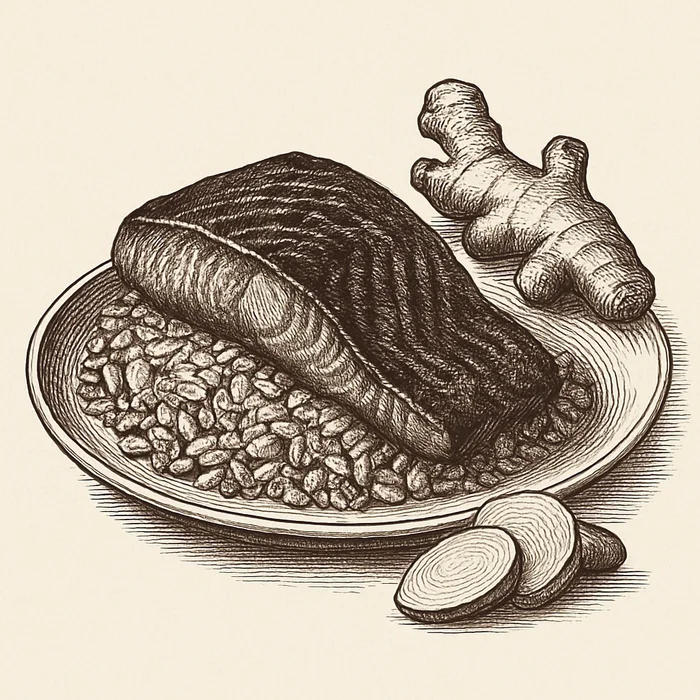
Miso-Glazed Salmon with Ginger and Brown Rice
A Japanese-inspired plate that stacks two of the strongest evidence-backed anti-inflammatory compounds -- marine omega-3s and gingerol -- through entirely different biochemical pathways.
Why These Ingredients Together
Salmon delivers EPA and DHA, the long-chain omega-3 fatty acids that resolve inflammation by generating specialized pro-resolving mediators (resolvins and protectins). Ginger's gingerol attacks the same problem from a different angle: it directly inhibits COX-2, the enzyme responsible for producing inflammatory prostaglandins. This dual-pathway approach mirrors the logic of combination therapy in medicine -- two agents hitting different nodes in the inflammatory network are more effective than doubling down on one. White miso adds fermented soy isoflavones (genistein and daidzein), which have shown independent anti-inflammatory and cardioprotective effects in population studies. Brown rice contributes spermidine, a polyamine linked to autophagy activation -- the cellular recycling process that declines with age. The sesame seeds are not a garnish: they provide sesamin, a lignan that enhances the anti-inflammatory effect of DHA.
Ingredients
- 4 skin-on salmon fillets (about 150g each)
- 3 tablespoons white (shiro) miso paste
- 1 tablespoon mirin
- 1 teaspoon toasted sesame oil
- 1 tablespoon rice vinegar
- 3cm piece fresh ginger, finely grated (including juice)
- 2 cloves garlic, finely grated
- 1 1/2 cups (300g) short-grain brown rice
- 2 tablespoons sesame seeds
- 3 spring onions, thinly sliced
- Steamed broccoli or bok choy, for serving (optional)
Instructions
-
Start the brown rice first. Rinse the rice in several changes of water until the water runs mostly clear. Combine with 3 cups of water in a saucepan, bring to a boil, then reduce to the lowest possible simmer, cover, and cook for 40-45 minutes. (Brown rice takes substantially longer than white because the bran layer is intact -- that bran is where the fiber and spermidine live, so do not be tempted to swap in white rice.)
-
Make the miso glaze. In a small bowl, whisk together the miso paste, mirin, sesame oil, rice vinegar, grated ginger (squeeze in the juice too -- that is where much of the gingerol concentrates), and garlic. The consistency should be like thick paint. If too stiff, add a teaspoon of water.
-
Marinate the salmon. Pat the fillets dry with paper towels and coat the flesh side (not the skin) generously with the miso glaze. Let it sit at room temperature for 15-20 minutes while the rice cooks. (Miso's enzymes begin gently denaturing the surface proteins during this rest, which improves browning and creates a more cohesive crust.)
-
Toast the sesame seeds. In a dry skillet over medium heat, toast the sesame seeds, shaking constantly, for 2-3 minutes until golden and fragrant. Remove immediately to a plate. (Toasting develops flavor but keep the heat moderate -- overheating degrades the sesamin lignans.)
-
Cook the salmon. Preheat the broiler to high and position a rack about 15cm from the element. Place the salmon fillets skin-side down on a foil-lined baking sheet. Broil for 6-8 minutes until the miso glaze is deeply caramelized and blistered in spots, and the fish is just cooked through -- it should still be slightly translucent in the very center. (The sugars in the miso caramelize rapidly under the broiler, creating a savory-sweet crust. Watch carefully; the line between caramelized and burnt is about 60 seconds.)
-
Serve. Fluff the brown rice and divide among plates. Place the salmon alongside, scatter with toasted sesame seeds and spring onions. Serve with steamed greens if using.
What Can Go Wrong
-
The miso glaze burns before the salmon cooks. Miso contains sugars that caramelize aggressively. If your broiler runs hot, move the rack down a notch. You can also start the salmon skin-side up for 3 minutes, then flip for the final 4-5 minutes of broiling to give the glaze less total exposure.
-
Dry, overcooked salmon. Wild salmon is leaner than farmed and cooks faster. Pull it when the center is still slightly translucent -- carryover heat finishes the job. Overcooked salmon is not just unpleasant to eat; it also degrades the omega-3 fatty acids, which are sensitive to prolonged high heat.
-
Gummy brown rice. If your rice comes out sticky and wet, you used too much water or lifted the lid during cooking. The ratio is 1:2 (rice to water) and the lid stays on. If all else fails, spread the cooked rice on a sheet pan for a few minutes to let excess moisture evaporate.
Science Notes
The omega-3 content of salmon is not just about reducing inflammation -- EPA and DHA are structural components of cell membranes throughout the body, and adequate intake is linked to reduced cardiovascular mortality in large meta-analyses. The gingerol in the ginger has been shown in multiple RCTs to reduce CRP and TNF-alpha, two key inflammatory biomarkers, through COX-2 inhibition that is mechanistically distinct from the omega-3 pathway. Fermented soy (miso) delivers isoflavones in their aglycone form, which is more bioavailable than the glycoside form found in unfermented soy -- the fermentation process has already done part of the digestive work. This meal is essentially a multi-target anti-inflammatory protocol disguised as dinner.
Nutrition Highlights
- EPA + DHA: ~2g per serving from salmon, exceeding the dose shown in clinical trials to reduce triglycerides and cardiovascular risk
- Gingerol: Meaningful dose from fresh ginger, with anti-inflammatory effects demonstrated at roughly this intake level in RCTs
- Fiber: ~5g per serving from brown rice, including resistant starch that feeds beneficial gut bacteria
- Spermidine: Present in brown rice; this polyamine is associated with autophagy induction and has shown lifespan-extending effects in model organisms