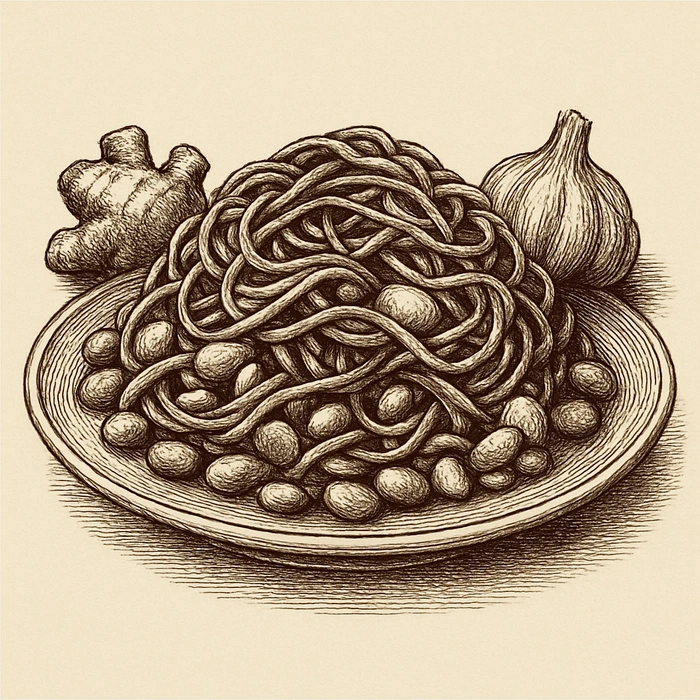
Sesame-Ginger Soba Noodles with Edamame
A 20-minute noodle bowl that pairs buckwheat's rutin with soy isoflavones and ginger's gingerol -- three vascular-protective compounds from three different plant families, unified by Japanese pantry logic.
Why These Ingredients Together
Buckwheat soba noodles are not wheat -- they are a pseudocereal rich in rutin, a flavonoid glycoside that strengthens capillary walls and reduces vascular permeability. Rutin also inhibits platelet aggregation through a mechanism distinct from aspirin, making it a complementary (not redundant) anti-thrombotic agent. Edamame contributes soy isoflavones -- genistein and daidzein -- which bind to estrogen receptor beta and have been associated with reduced cardiovascular mortality in populations consuming them regularly. The meta-analysis evidence is strongest in East Asian cohorts, where lifelong soy consumption shapes a gut microbiota capable of converting daidzein into equol, a more potent metabolite. Ginger's gingerol suppresses COX-2 and reduces CRP and TNF-alpha in meta-analyses of 12 randomized controlled trials, while garlic's organosulfur compounds attack vascular inflammation through the hydrogen sulfide signaling pathway. The sesame oil ties it together -- sesamin and sesamolin, the lignans unique to sesame, inhibit delta-5 desaturase (a key enzyme in inflammatory omega-6 metabolism) and potentiate vitamin E recycling, extending its antioxidant lifespan in the body.
Ingredients
- 250g dried soba noodles (look for 100% buckwheat or at least 80% buckwheat flour)
- 1 1/2 cups (225g) shelled edamame, fresh or frozen
- 3 baby bok choy, quartered lengthwise
- 4 cloves garlic, minced and rested 10 minutes
- 2-inch piece fresh ginger, peeled and finely grated
- 2 spring onions, thinly sliced (white and green parts separated)
Sauce:
- 2 tablespoons toasted sesame oil
- 2 tablespoons low-sodium soy sauce or tamari
- 1 tablespoon rice vinegar
- 1 tablespoon lime juice
- 1 teaspoon honey or maple syrup
- 1/2 teaspoon red pepper flakes
To finish:
- 1 tablespoon sesame seeds (unhulled)
- Fresh cilantro or shiso leaves
- Lime wedges
Instructions
-
Boil the soba noodles. Bring a large pot of unsalted water to a rolling boil. (Unlike Italian pasta, soba does not benefit from salted water -- the salt competes with the delicate buckwheat flavor.) Add the noodles and cook for exactly the time on the package, usually 4-5 minutes. In the last 2 minutes, add the edamame and bok choy quarters to the same pot. (Blanching the bok choy briefly preserves its glucosinolate content -- prolonged boiling leaches these water-soluble sulforaphane precursors into the cooking water.)
-
Drain and shock. Drain everything in a colander and immediately rinse under cold running water for 30 seconds. (This is essential for soba. The cold rinse stops the cooking, removes surface starch that would make the noodles gummy, and firms up the buckwheat proteins into that characteristic chewy bite. Skipping this step is the difference between good soba and a sticky clump.)
-
Make the sauce while the water boils. Whisk together the sesame oil, soy sauce, rice vinegar, lime juice, honey, and red pepper flakes. Grate the ginger directly into the sauce -- use a Microplane or ceramic grater to get a fine pulp rather than fibrous chunks. Add the rested garlic. (The gingerol in raw ginger is at maximum potency when uncooked. Cooking converts gingerol to zingerone, which has different -- still beneficial, but less anti-inflammatory -- properties. Keeping the ginger raw in a cold sauce preserves the primary bioactive.)
-
Toss everything together. Transfer the drained noodles, edamame, and bok choy to a large bowl. Pour the sauce over and toss thoroughly, using tongs or chopsticks to separate and coat every strand. Add the white parts of the spring onion and toss again.
-
Plate and finish. Divide among bowls. Top with sesame seeds, the green parts of the spring onion, cilantro or shiso, and a lime wedge. Serve at room temperature or slightly chilled. (Cold or room-temperature soba is traditional in Japanese cuisine and has a practical benefit: the retrograded starch in cooled buckwheat noodles has a lower glycemic index than hot noodles, as the starch recrystallizes into a form that resists enzymatic digestion.)
What Can Go Wrong
-
Buying cheap soba made mostly from wheat. Many supermarket soba noodles contain 60-80% wheat flour with only a small percentage of buckwheat. The rutin and other flavonoids are in the buckwheat, not the wheat. Check the ingredient list: buckwheat flour should be listed first, or look for packages labeled "juwari soba" (100% buckwheat).
-
Skipping the cold rinse. Without rinsing, the residual starch glues the noodles together into a block and the texture goes from pleasantly chewy to unpleasantly gummy. This is not optional -- it is a fundamental step in soba technique.
-
Cooking the ginger. If you add ginger to a hot pan, you convert gingerol (the primary anti-inflammatory compound, the one validated in the meta-analyses) into zingerone and shogaols. These are not bad -- shogaol is actually more potent as an antioxidant -- but gingerol's specific COX-2 inhibition is what makes raw ginger anti-inflammatory in the way the research describes. Keep it raw in the sauce.
Science Notes
Buckwheat is an underappreciated longevity food. It is not a grass (not related to wheat at all) but a relative of rhubarb and sorrel, and it accumulates flavonoids -- particularly rutin -- that grains do not produce. Populations with high buckwheat consumption (certain regions of Japan, Korea, and northern China) show lower rates of hypertension in epidemiological surveys, and interventional studies have confirmed rutin's ability to reduce capillary fragility and improve microcirculation. Soy isoflavones from edamame are most effective when consumed regularly over time, as the gut microbiota needs repeated exposure to build equol-producing bacterial populations. About 30-50% of Western adults are equol producers (versus 60-70% of Asian adults), but regular soy consumption can shift this ratio.
Nutrition Highlights
- Rutin: Buckwheat soba provides 30-70mg rutin per serving (depending on buckwheat percentage), a flavonoid with demonstrated anti-hypertensive and capillary-strengthening effects
- Soy isoflavones: Edamame delivers ~35mg total isoflavones per serving, predominantly genistein, associated with reduced cardiovascular mortality in regular consumers
- Gingerol: Raw ginger in the sauce preserves maximum gingerol content, the compound shown to reduce CRP and TNF-alpha in clinical trials
- Sesame lignans: Sesamin from sesame oil inhibits inflammatory omega-6 metabolism and extends vitamin E antioxidant activity in the body