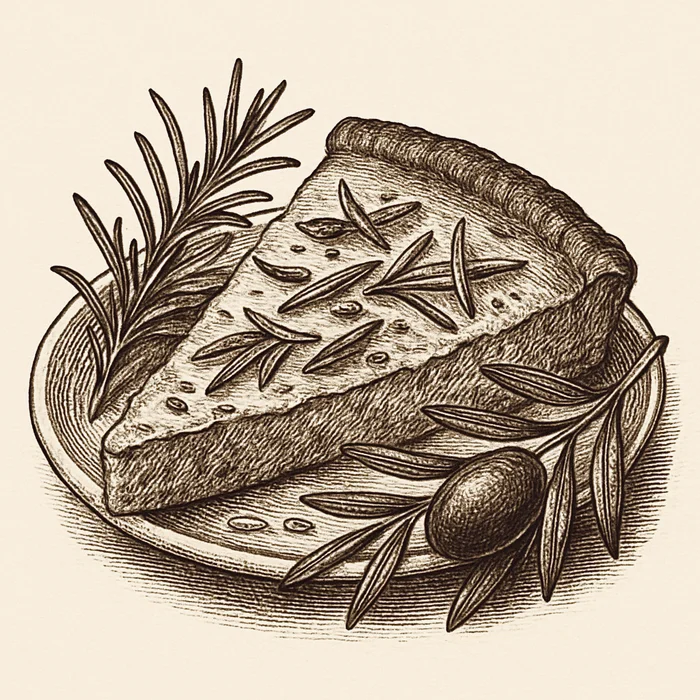
Ligurian Farinata with Rosemary and Olive Oil
A crisp-edged, custardy chickpea flatbread from the Ligurian coast -- gluten-free, high in plant protein, and one of the oldest street foods in Italy. The Longevity Diet uses it as a snack and side in place of wheat bread.
Why These Ingredients Together
Chickpea flour is nutritionally serious: 22g of plant protein per 100g, a glycemic index of ~35 (compared to ~70 for white bread), and resistant starch that feeds butyrate-producing bacteria in the colon. The batter gets rested for at least two hours, which partially breaks down the phytic acid that would otherwise bind zinc and iron -- the same mechanism as soaking legumes.
Rosemary contributes carnosic acid and rosmarinic acid, two diterpene polyphenols with demonstrated Nrf2 activation (the master antioxidant transcription factor). They also happen to survive high-heat cooking better than most herbs. And the generous pour of olive oil -- both in the batter and on the pan -- isn't for richness alone. Chickpea's phytosterols are fat-soluble; the olive oil carries them into a bioavailable form while adding oleocanthal and hydroxytyrosol from the EVOO itself.
Ingredients
- 200g chickpea flour (garbanzo bean flour)
- 500ml cold water
- 60ml extra-virgin olive oil, divided
- 1 teaspoon fine sea salt
- 1/4 teaspoon black pepper
- 2 tablespoons fresh rosemary, leaves stripped and roughly chopped
- Flaky sea salt for finishing
Instructions
-
Make the batter and rest it. Whisk chickpea flour into the cold water gradually to prevent lumps -- add the water to the flour, not the other way around. Add 2 tablespoons of the olive oil, the fine salt, and pepper. Whisk until smooth. Cover and rest at room temperature for at least 2 hours (overnight in the fridge is even better). The rest hydrates the flour fully and the batter will become slightly foamy on top -- that is normal and a sign the starch is activating.
-
Preheat aggressively. Set your oven to its highest temperature (240-260°C / 475°F). Place a 30cm (12-inch) cast iron skillet or heavy oven-safe pan inside to preheat. You want the pan screaming hot when the batter hits it -- this is what creates the crisp bottom and slightly charred edges that define good farinata.
-
Skim the foam, add rosemary. Before cooking, skim any foam from the batter surface (it can cause blistering). Stir in the chopped rosemary.
-
Cook in the hot pan. Carefully remove the hot pan from the oven. Pour in the remaining 4 tablespoons olive oil -- it should sizzle immediately. Quickly pour in the batter. It should spread to about 1cm depth. Return immediately to the top rack of the oven.
-
Bake until set and spotted. Bake 15-20 minutes until the surface is set, slightly golden, and has small brown spots. The center should have a very slight wobble -- it firms as it cools. Do not overbake: farinata should have a creamy, almost custardy interior under the crisp surface.
-
Finish and serve immediately. Scatter flaky salt over the top and crack on generous black pepper. Slice into wedges and serve within 5 minutes -- farinata softens as it sits and loses its textural contrast. It is a street food for a reason: made hot, eaten fast.
What Can Go Wrong
- Skipping the rest. Unrested batter produces a gummy interior. Two hours minimum; the full overnight rest in the fridge produces the best texture.
- Pan not hot enough. If the batter goes into a cold pan, you get a pale, soft flatbread without the characteristic crisp bottom. The pan should be so hot it's almost smoking before the batter hits it.
- Too thick a layer. Farinata should be about 1cm deep. If your pan is smaller, either use less batter or divide into two batches. A thick farinata cooks unevenly and the center stays raw.
Science Notes
The two-hour rest does more than hydrate the flour -- it gives chickpea's native enzymes time to begin breaking down phytic acid, the compound that chelates minerals like zinc, iron, and calcium and prevents absorption. It's the same principle as soaking dry beans. The resistant starch in chickpea flour largely survives the baking temperature and reaches the colon intact, where it feeds Bifidobacterium and generates short-chain fatty acids that reduce inflammation.
Nutrition Highlights
- Plant protein: ~11g per serving (¼ of the flatbread)
- Fiber: ~4g per serving, including resistant starch for gut microbiome support
- Glycemic index: ~35, significantly lower than wheat-based bread
- Phytosterols: Fat-soluble; bioavailability enhanced by the generous olive oil in batter and pan