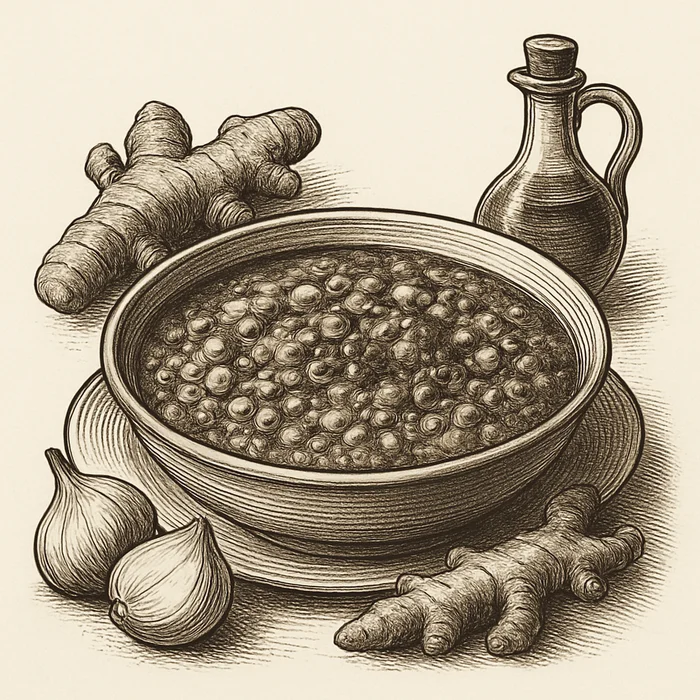
Golden Turmeric Lentil Soup
A deeply spiced, creamy red lentil soup that bridges Indian dahl technique with Mediterranean finishing -- and happens to be one of the most bioavailable anti-inflammatory meals you can build from pantry staples.
Why These Ingredients Together
This soup stacks three distinct anti-inflammatory mechanisms into a single bowl. Curcumin from turmeric inhibits the NF-kB inflammatory master switch, while gingerol from ginger suppresses the COX-2 enzyme through a separate pathway -- together, they cover more inflammatory signaling than either alone. Black pepper's piperine increases curcumin absorption by roughly 2000% (from nearly zero usable curcumin to meaningful blood levels), and blooming the turmeric in olive oil ensures the fat-soluble curcuminoids actually dissolve into a lipid matrix your gut can absorb. The lentils bring 8g of fiber per 100g cooked, feeding gut bacteria that produce butyrate -- a short-chain fatty acid that itself reduces intestinal inflammation. And crushed garlic, rested before cooking, generates stable organosulfur compounds (diallyl disulfide) that support cardiovascular health through independent mechanisms.
Ingredients
- 1 1/2 cups (300g) red lentils, rinsed until water runs clear
- 3 tablespoons extra-virgin olive oil, plus more for finishing
- 1 large yellow onion, finely diced
- 6 cloves garlic, minced and set aside for 10 minutes before cooking
- 2-inch piece fresh ginger, peeled and finely grated
- 2 tablespoons ground turmeric (or 3-inch piece fresh turmeric, grated)
- 1 teaspoon freshly ground black pepper
- 1 teaspoon ground cumin
- 1/2 teaspoon ground coriander
- 1/4 teaspoon cayenne pepper (optional)
- 1 can (400g) crushed tomatoes
- 5 cups (1.2L) vegetable stock or water
- 1 tablespoon lemon juice (about half a lemon)
- 1 teaspoon flaky sea salt, plus more to taste
- Fresh cilantro leaves, for serving
- Plain yogurt or coconut yogurt, for serving (optional)
Instructions
-
Rinse the lentils in a fine-mesh strainer under cold water until the water runs clear. This removes surface starch that would make the soup gluey rather than creamy. Set aside.
-
Crush and rest the garlic. Mince the garlic and leave it on the cutting board for a full 10 minutes before it goes anywhere near heat. (When you crush garlic, the enzyme alliinase converts alliin into allicin. This reaction needs time. If you throw garlic straight into hot oil, you denature the enzyme before the conversion finishes, and you lose most of the bioactive organosulfur compounds.)
-
Bloom the turmeric in oil. Heat the olive oil in a large Dutch oven or heavy-bottomed pot over medium heat. Add the ground turmeric and black pepper, stirring constantly for 60 seconds until fragrant and the oil turns a deep gold. (Curcumin is fat-soluble with less than 1% oral bioavailability on its own. Dissolving it in hot oil creates a lipid solution your intestines can actually absorb. The piperine in the black pepper further blocks liver enzymes that would otherwise break down curcumin before it reaches your bloodstream.)
-
Build the aromatic base. Add the diced onion and a pinch of salt. Cook, stirring occasionally, for 5-6 minutes until the onion is soft and translucent. Add the grated ginger and cook for another minute until fragrant. Add the rested garlic, cumin, coriander, and cayenne. Stir for 30 seconds. (Adding the garlic after the onion has softened means the garlic hits a slightly cooled pan, reducing the chance of burning and preserving more of the heat-stable organosulfur compounds like diallyl disulfide.)
-
Add the lentils and liquid. Stir in the red lentils, crushed tomatoes, and vegetable stock. Bring to a boil, then immediately reduce heat to a gentle simmer. Partially cover and cook for 25-30 minutes, stirring occasionally to prevent sticking, until the lentils have completely broken down into a thick, porridge-like consistency.
-
Adjust the texture. Red lentils will naturally disintegrate -- that is what you want here. If the soup is too thick, add stock or water in 1/4 cup increments. If too thin, let it simmer uncovered for a few more minutes. You are looking for the consistency of a thick bisque.
-
Season and finish. Remove from heat. Stir in the lemon juice and salt. (The vitamin C in the lemon juice increases absorption of the non-heme iron in the lentils by 2-6x, and the acid brightens all the earthy spice flavors.) Taste and adjust salt and lemon. Ladle into bowls, drizzle generously with fresh extra-virgin olive oil, add a dollop of yogurt if using, scatter cilantro leaves on top, and crack on a bit more black pepper.
What Can Go Wrong
-
Burning the turmeric bloom. You have about 60-90 seconds before ground turmeric goes from fragrant to acrid. Keep the heat at medium, stir constantly, and have the onion ready to add the moment you smell it getting toasty. If you see the turmeric darken from gold to brown, pull the pot off heat and add the onion immediately.
-
Skipping the garlic rest. It is tempting to mince and toss. But allicin formation genuinely takes 10 minutes. Crush the garlic first, before you do anything else, and it will be ready by the time you need it. This is the single easiest step people skip and the one with the most measurable impact on the garlic's bioactivity.
-
Underseasoning at the end. Lentils absorb salt as they sit. If the soup tastes perfect in the pot, it will taste flat in the bowl. Season slightly more aggressively than you think is right, and always add the lemon -- the acid does structural work here, lifting the heavy earthy flavors into something bright and alive.
Science Notes
A generic lentil soup is already a solid longevity food: high fiber, plant protein, low glycemic load. What makes this version different is the deliberate bioavailability engineering. Most turmeric consumed without fat and black pepper passes through you doing essentially nothing -- the curcumin bioavailability is under 1%. The oil bloom and piperine pairing converts this from a symbolic garnish into a meaningful dose. The dual anti-inflammatory strategy (curcumin targeting NF-kB, gingerol targeting COX-2) mirrors the logic of combination drug therapy -- hitting two nodes in the same network is more effective than hitting one node harder. And the 10-minute garlic rest is borrowed directly from food chemistry research showing allicin yield depends on enzyme contact time before heat denaturation. This is not health food theater; each technique choice has a specific mechanistic reason.
Nutrition Highlights
- Fiber: ~12g per serving from red lentils, supporting gut microbiome diversity and butyrate production
- Plant protein: ~16g per serving from lentils, providing roughly 45% of the essential amino acids (pair with bread or rice for complete protein)
- Curcuminoids: Meaningful dose from 2 tablespoons turmeric, with bioavailability dramatically enhanced by piperine and olive oil co-ingestion
- Oleic acid and polyphenols: The finishing drizzle of EVOO adds oleocanthal (a natural COX inhibitor with anti-inflammatory potency comparable to low-dose ibuprofen) and hydroxytyrosol, one of the most potent natural antioxidants measured by ORAC