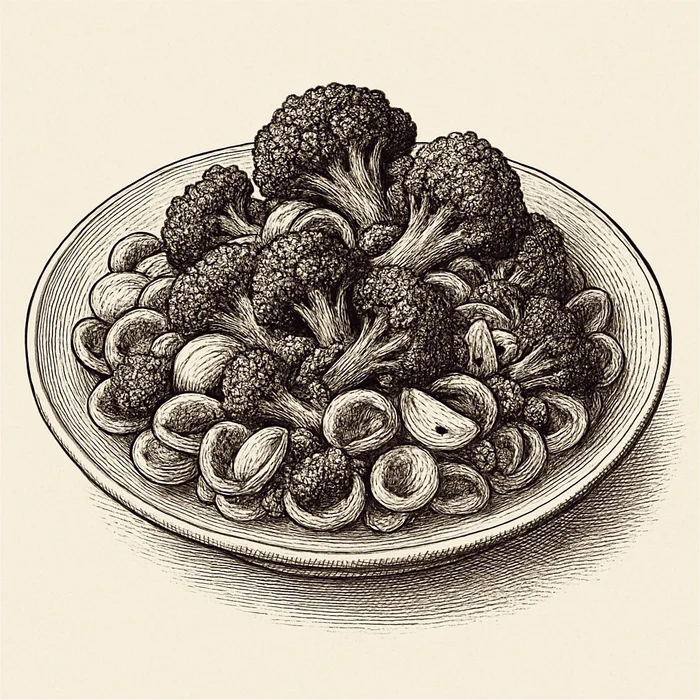
Orecchiette with Broccoli, Garlic and Chilli
A Pugliese classic that gets the broccoli cooking technique exactly right -- soft enough to break down and sauce the pasta, but not so blasted that you destroy the sulforaphane that makes this more than just a tasty bowl of carbs.
Why These Ingredients Together
Broccoli is the most accessible dietary source of glucoraphanin, the precursor to sulforaphane -- the most potent naturally occurring activator of the Nrf2 detoxification pathway, which upregulates your body's own antioxidant and anti-cancer defenses. But sulforaphane formation depends on the enzyme myrosinase, which is progressively destroyed by heat. The technique here -- cooking the broccoli until just tender, not to mush -- preserves enough myrosinase activity for meaningful sulforaphane production. The garlic adds a second layer of chemoprotection through organosulfur compounds (allicin, diallyl disulfide) that operate through independent anti-cancer mechanisms including histone deacetylase inhibition. Capsaicin from the chilli is not just heat: it has demonstrated anti-inflammatory and thermogenic effects, and the olive oil provides the lipid medium that improves absorption of both the fat-soluble isothiocyanates from broccoli and the capsaicin itself. The lemon finish adds vitamin C, which stabilizes some of the reactive compounds and brightens the entire dish.
Ingredients
- 400g orecchiette (whole wheat if available)
- 1 large head broccoli (about 400g), cut into small florets, stems peeled and sliced
- 5 tablespoons extra-virgin olive oil
- 6 cloves garlic, thinly sliced (crushed and rested 10 minutes)
- 1 teaspoon red chilli flakes (or 1-2 whole dried peperoncini, crumbled)
- Zest and juice of 1 lemon
- 1/2 teaspoon flaky sea salt, plus more to taste
- Freshly ground black pepper
- Toasted breadcrumbs for serving (optional, traditional in Puglia as a "poor man's Parmesan")
Instructions
-
Crush and rest the garlic. Smash the cloves, slice thinly, and leave on the board for 10 minutes. Start this first. (The alliinase enzyme needs this uninterrupted time to convert alliin to allicin. Once heat hits the garlic, the enzyme denatures and the conversion stops. This 10-minute window is the difference between garlic that is bioactive and garlic that is merely flavoring.)
-
Cook the broccoli in the pasta water. Bring a large pot of well-salted water to a boil. Add the broccoli florets and stems first and cook for 3-4 minutes until they are tender enough to crush easily between your fingers but still bright green. Fish them out with a spider or slotted spoon and set aside -- do not drain the water. (Cooking the broccoli in the pasta water is the Pugliese trick: it infuses the water with flavor, and you use the same water for the pasta. The brief cooking time is a deliberate compromise -- enough heat to tenderize, but not so much that you completely destroy myrosinase. Some sulforaphane will still form, especially once you chew the broccoli and your oral and gut bacteria contribute their own myrosinase.)
-
Cook the pasta in the same water. Add the orecchiette to the broccoli water and cook until 1 minute short of the package time. Reserve a cup of pasta water before draining.
-
Build the garlic-chilli oil while the pasta cooks. In a large, cold skillet, combine the olive oil, rested garlic slices, and chilli flakes. Set over medium-low heat and warm slowly for 3-4 minutes until the garlic is barely golden and the chilli has infused the oil. (Cold-start garlic in oil gives you much more control. The capsaicin from the chilli dissolves readily into fat, so this gentle infusion creates a uniformly spicy oil rather than biting into a stray chilli flake.)
-
Combine everything. Add the cooked broccoli to the garlic-chilli oil and press about half of the florets with the back of a wooden spoon so they break apart into a rough paste. Add the drained pasta and a generous splash of pasta water. Toss vigorously over medium heat for 1-2 minutes until the broken broccoli, oil, and starchy water form a cohesive sauce that coats the orecchiette. (The orecchiette shape is the right tool here -- those little ear-shaped cups catch the broccoli bits and pool the sauce. Penne or spaghetti would not work as well.)
-
Finish. Remove from heat. Add the lemon zest, lemon juice, salt, and pepper. Toss once more. Serve in warm bowls with toasted breadcrumbs scattered on top if using, and an extra drizzle of raw olive oil.
What Can Go Wrong
-
Overcooking the broccoli to mush. If the broccoli falls apart when you look at it, you have gone too far. At that point myrosinase is fully denatured and you have maximized sulforaphane loss. Tender but still slightly firm is the target. Use a timer.
-
Burning the garlic. Same as every garlic-in-oil recipe: medium-low heat, cold start, constant attention. Brown garlic is bitter garlic. If you see the slices darkening past pale gold, pull the pan off the heat immediately and add the broccoli to cool things down.
-
Dry, clumpy pasta. The starchy pasta water is the entire sauce mechanism here. If you do not reserve it, or do not add enough, you get dry orecchiette with oily broccoli bits stuck to them. Be generous with the pasta water and toss aggressively -- the emulsion happens through mechanical action.
Science Notes
Broccoli's sulforaphane is the most studied dietary activator of the Nrf2 pathway, which controls the expression of over 200 cytoprotective genes including those for glutathione synthesis, the body's master antioxidant. The cooking dilemma is real: boiling broccoli for 10+ minutes destroys over 50% of its sulforaphane potential, while steaming or brief cooking preserves 80-90%. This recipe splits the difference -- enough cooking to break down cell walls and release the glucoraphanin, with short enough heat exposure that residual myrosinase and gut bacterial myrosinase can still generate sulforaphane during digestion. The garlic's diallyl disulfide has independently shown 74% reduction in bowel cancer incidence in rodent models. And the calcium in broccoli (with 40-60% bioavailability, better than milk's 31-32%) gets a quiet absorption assist from the vitamin D you are hopefully getting from time outdoors.
Nutrition Highlights
- Sulforaphane precursors: Significant dose from broccoli, preserved by the brief cooking technique that maintains partial myrosinase activity
- Allicin + diallyl disulfide: From rested garlic, providing cardiovascular and anti-cancer protection through organosulfur pathways
- Calcium: ~60mg per serving from broccoli with 40-60% bioavailability (higher than dairy), contributing to bone mineral density
- Fiber: ~8g per serving from whole wheat pasta and broccoli, supporting gut microbiome diversity and cholesterol management