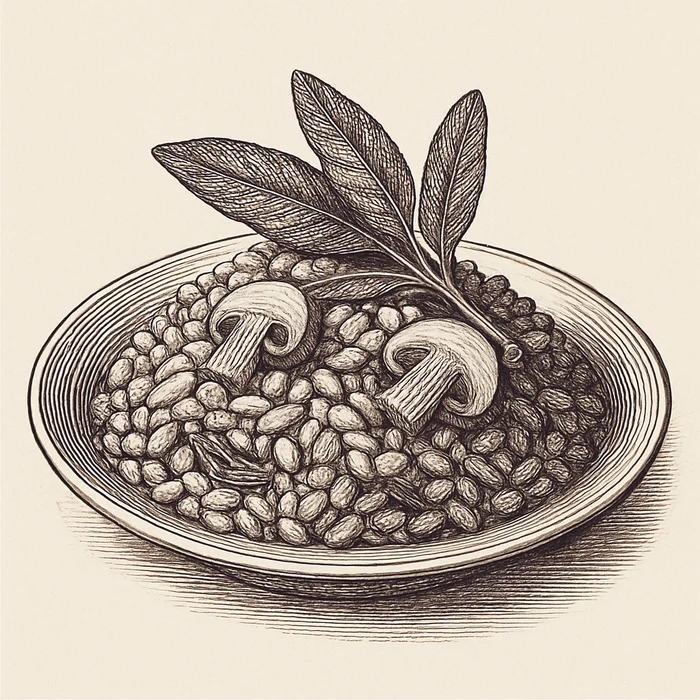
Hulled Barley Risotto with Mushrooms and Sage
A slow-stirred risotto that replaces refined arborio rice with hulled barley -- trading the starchy creaminess of white rice for beta-glucan fiber that actively lowers cholesterol with every serving.
Why These Ingredients Together
Hulled barley is one of only two significant food sources of beta-glucan (the other being oats), a soluble fiber that blocks reabsorption of cholesterol and bile acids in the small intestine. Clinical trials have demonstrated that 3g of beta-glucan per day significantly reduces LDL cholesterol, and a generous serving of this risotto delivers roughly that amount. Mushrooms bring ergothioneine, an amino acid antioxidant that humans cannot synthesize and must obtain from food -- it accumulates in cells under high oxidative stress (brain, liver, eyes) and is the subject of growing research as a longevity biomarker. If you use mushrooms that have been UV-exposed, they also contribute meaningful vitamin D2. Sage is not just an aromatic choice: it contains compounds that inhibit acetylcholinesterase, the same mechanism used by pharmaceutical Alzheimer's drugs like donepezil. RCTs have shown sage extract improves cognitive function in both healthy adults and Alzheimer's patients. The garlic, crushed and rested, adds allicin-derived organosulfur compounds for cardiovascular protection.
Ingredients
- 250g hulled barley (not pearled -- check the package)
- 300g mixed mushrooms (cremini, shiitake, or a mix), sliced
- 1.2L vegetable stock, kept warm in a separate pot
- 3 tablespoons extra-virgin olive oil
- 1 medium onion, finely diced
- 4 cloves garlic, minced and rested 10 minutes
- 12-15 fresh sage leaves
- Zest of 1 lemon
- 1 tablespoon lemon juice
- 1/2 teaspoon flaky sea salt, plus more to taste
- Freshly ground black pepper
- Nutritional yeast or Parmesan for serving (optional)
Instructions
-
Soak the barley if you have time. Soaking hulled barley for 1-2 hours (or overnight) cuts the cooking time from 50 minutes to about 35. If you are short on time, skip it -- the risotto just takes longer. Drain and rinse before using.
-
Cook the mushrooms hard. Heat 1 tablespoon of the olive oil in a large, heavy-bottomed pan or Dutch oven over high heat until nearly smoking. Add the mushrooms in a single layer -- do this in batches if needed. Let them sit without stirring for 2-3 minutes until deeply browned on the underside, then flip and brown the other side. Season with a pinch of salt and remove to a plate. (Mushrooms are 90% water. If you crowd them or stir too early, they steam instead of searing. The Maillard browning develops the deep umami flavor and concentrates the ergothioneine.)
-
Fry the sage leaves. In the same pan, reduce heat to medium. Add 1 tablespoon of olive oil and the sage leaves. Fry for about 60 seconds until they darken slightly, crisp up, and stop sizzling. Remove immediately to a paper towel. (Crispy sage shatters into fragrant shards on top. The brief frying in oil also extracts fat-soluble polyphenols from the leaves into the cooking oil.)
-
Build the risotto base. Add the remaining tablespoon of olive oil to the pan. Add the diced onion and cook for 4-5 minutes until soft. Add the rested garlic and stir for 30 seconds. Add the drained barley and stir for 1-2 minutes until the grains are coated in oil and slightly toasty.
-
Add stock gradually. Add a ladleful of warm stock to the barley. Stir frequently until the liquid is mostly absorbed, then add another ladleful. Repeat this process for 40-50 minutes (or 25-35 if you soaked the barley). The barley is done when it is tender but still has a pleasant chew -- it will never become as soft as arborio rice, and that is the point. (The gradual addition of liquid and constant stirring releases some starch from the barley surface, creating a creamy consistency. Hulled barley will not become as creamy as rice risotto; embrace the chewier, nuttier texture.)
-
Finish and serve. When the barley is tender, fold in the seared mushrooms, lemon zest, and lemon juice. Remove from heat, season with salt and pepper, and stir in a drizzle of fresh olive oil. Divide into bowls, crumble the crispy sage leaves over the top, and add nutritional yeast or Parmesan if using.
What Can Go Wrong
-
Using pearled barley instead of hulled. Pearled barley has had the bran removed, which strips most of the beta-glucan fiber -- the entire nutritional premise of this recipe. Check the package: hulled (or "whole") barley still has its bran intact and looks rougher and darker than the smooth, pale pearled version.
-
Soggy mushrooms. This is the most common failure. The pan must be ripping hot, the mushrooms must be in a single layer, and you must resist the urge to stir for the first 2-3 minutes. Patience here is the difference between meaty, caramelized mushrooms and sad, grey, watery ones.
-
Running out of patience with the stirring. Barley risotto takes longer than rice risotto. It is 40-50 minutes of gradual stock additions. This is meditative cooking, not weeknight speed cooking. If you walk away, the bottom scorches. Commit to the process or choose a different recipe.
Science Notes
Barley's beta-glucan has earned both FDA and EFSA health claims for cholesterol reduction at 3g per day -- one of very few food components to clear that regulatory bar. The mechanism is well understood: beta-glucan forms a viscous gel in the small intestine that traps bile acids and prevents their reabsorption, forcing the liver to pull LDL cholesterol from the blood to synthesize new bile acids. Ergothioneine from mushrooms is generating significant research interest as a potential longevity compound -- it is the only known amino acid with its own dedicated cellular transporter (OCTN1), suggesting the body considers it important enough to have evolved specialized absorption machinery. Sage's acetylcholinesterase inhibition is dose-dependent and has been demonstrated in human trials at roughly the amount you would consume in a generous portion of this risotto.
Nutrition Highlights
- Beta-glucan: ~3g per serving from hulled barley, meeting the dose shown in clinical trials to reduce LDL cholesterol
- Ergothioneine: Meaningful dose from mushrooms, a cellular antioxidant under active longevity research
- Fiber: ~10g per serving from hulled barley, contributing to cholesterol reduction and gut microbiome health
- Sage polyphenols: Rosmarinic acid and carnosic acid, with demonstrated cognitive-enhancing effects via acetylcholinesterase inhibition