Vitamin D
50–90% of US adults are deficient in vitamin D. Deficiency is associated with increased risk of diabetes, autoimmune diseases, cardiovascular disease, and cognitive decline. The Longevity Diet recommends supplementation every 2–3 days via multivitamin.
Why It Matters for Longevity
Vitamin D functions as a steroid hormone, with receptors in virtually every tissue. Its effects extend well beyond calcium and bone: immune cell regulation, insulin sensitivity, neurodevelopment, and inflammation modulation all depend on adequate 25(OH)D status.
The supplementation evidence is mixed but meaningful. Zhang et al.'s 2019 BMJ meta-analysis of 52 RCTs (75,454 participants) found vitamin D supplementation significantly reduced cancer mortality by 16% (RR 0.84, 95% CI 0.74–0.95), even without significant all-cause mortality reduction overall. The cancer mortality finding was robust across sensitivity analyses.
A 2023 meta-analysis of 80 RCTs involving 163,131 participants found vitamin D supplementation was associated with a statistically significant reduction in all-cause mortality (OR 0.95, 95% CI 0.91–0.99). The survival signal was concentrated in fair- and good-quality trials; lower-quality studies showed no effect. Cardiovascular mortality did not reach significance (Ruiz-García et al., 2023, Nutrients).
The largest single trial, VITAL (25,871 US men and women, 2,000 IU/day vitamin D3, median 5.3 years), found no significant reduction in incident invasive cancer (HR 0.96) or major cardiovascular events (HR 0.97) compared to placebo. Yet updated meta-analyses that incorporate VITAL's data with other recent D3 trials do show a consistent, significant reduction in cancer mortality — suggesting vitamin D3 reduces cancer progression after diagnosis more than it prevents initial tumor formation (Manson et al., 2019, NEJM).
For cognitive health, the evidence for deficiency as a risk factor is stronger than for supplementation as a treatment. Littlejohns et al. (2014) followed 1,658 adults aged ≥65 and found that those with severely deficient 25(OH)D levels (<25 nmol/L) had more than double the risk of developing dementia and Alzheimer's disease compared to sufficient levels — a 122% increased risk for Alzheimer's.
The target serum level is 40–60 ng/mL (100–150 nmol/L). Most supplementation studies use 1,000–2,000 IU/day. The Longevity Diet protocol (multivitamin every 2–3 days) delivers a conservative maintenance dose.
D3 vs. D2: Which Form Matters
The form of vitamin D in supplements is not trivial. Vitamin D3 (cholecalciferol), derived from animal sources and synthesized in human skin under UV-B exposure, raises serum 25(OH)D more effectively than vitamin D2 (ergocalciferol, plant-derived).
A 2012 systematic review and meta-analysis of direct comparison RCTs found that vitamin D3 outperformed D2 overall, with a mean difference of 15.23 ng/mL in serum 25(OH)D (95% CI 6.12–24.34; P=0.001). When administered as bolus (intermittent high) doses the advantage grew to 34.10 ng/mL (95% CI 16.38–51.83; P=0.0002). With daily supplementation, the difference was smaller and did not reach significance in this analysis, though most experts recommend D3 as the default form (Tripkovic et al., 2012, Am J Clin Nutr). A subsequent 2024 meta-analysis of 20 trials clarified that at higher doses and with measurement more than two weeks after the last dose, D3 raises total 25(OH)D roughly 40% more than equivalent D2 doses.
The mechanism: after ingestion, both forms undergo 25-hydroxylation in the liver to form the serum marker 25(OH)D. D2 supplementation has been observed to suppress endogenous 25(OH)D3 levels, which partially offsets its contribution to total 25(OH)D — explaining the apparent efficacy gap.
Immune Mechanism: VDR, Cathelicidin, and Innate Defense
Beyond bone and metabolism, vitamin D3 is a direct regulator of innate immunity. Immune cells — including macrophages and dendritic cells — express both the vitamin D receptor (VDR) and the activating enzyme CYP27B1 (1α-hydroxylase), allowing them to convert circulating 25(OH)D into the active hormone 1,25-dihydroxyvitamin D3 locally at sites of infection or inflammation.
When pattern recognition receptors (TLR2/1, TLR8) are activated by pathogen components, macrophages upregulate CYP27B1 and VDR expression, triggering transcription of the antimicrobial peptide cathelicidin. Cathelicidin disrupts bacterial and mycobacterial membranes directly, and also activates autophagy via the mTOR/AMPK pathway, the intracellular calcium cascade, and downstream TLR signaling. VDR signaling simultaneously suppresses Th1 and Th17 cell differentiation — reducing pro-inflammatory cytokine output — while expanding regulatory T cell populations through FoxP3 upregulation. The net effect is enhanced pathogen clearance alongside reduced collateral inflammatory damage (Chung et al., 2020, Immune Netw).
This VDR-cathelicidin axis explains why vitamin D deficiency is consistently associated with susceptibility to respiratory infections and autoimmune disease: deficient individuals have attenuated innate antimicrobial capacity and dysregulated adaptive immune balance simultaneously.
How to Use It
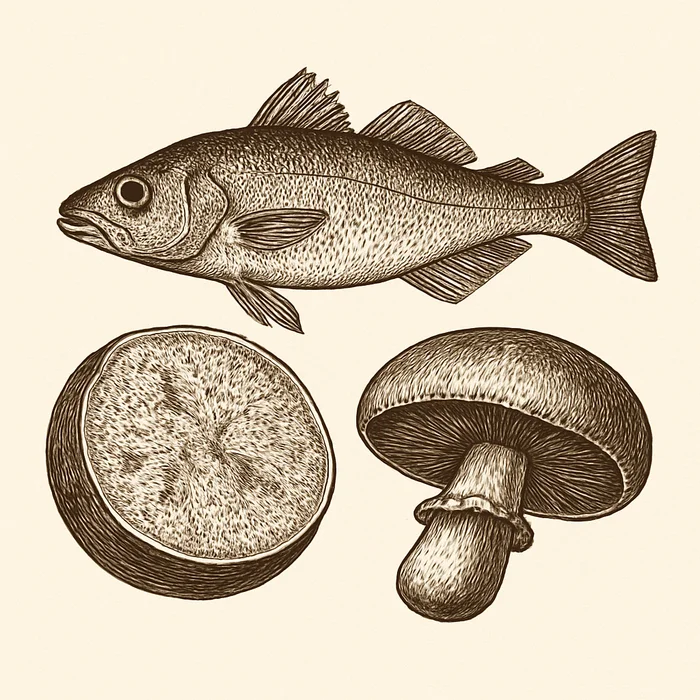
Pairs well with fatty fish, egg yolk, fortified plant milk. Dietary sources: trout (635 IU/100g), salmon (~600 IU), egg yolk (~40 IU/yolk), UV-treated mushrooms (variable). Supplementation is often necessary in northern latitudes or with limited sun exposure. Take with a fat-containing meal for optimal absorption. Prefer D3 (cholecalciferol) over D2 (ergocalciferol) when selecting a supplement.
What to Pair It With
| Ingredient | Why | Tradition |
|---|---|---|
| fatty fish | See synergies | nutritional |
| egg yolk | See synergies | nutritional |
| fortified plant milk | See synergies | nutritional |
Synergies
- Calcium (synergy): Vitamin D is required for intestinal calcium absorption; deficiency nullifies calcium supplementation.
- Vitamin K2 (synergy): Vitamin D promotes osteocalcin synthesis; vitamin K2 activates it via carboxylation, directing calcium to bone not arteries. Co-supplementation is widely recommended.
- Multivitamin (complement): Book recommends taking vitamin D within a multivitamin every 2–3 days to ensure consistent intake without risk of toxicity.
Flavor Profile
Category: supplement.
The Science
- Zhang et al., 2019, BMJ: Meta-analysis of 52 RCTs (75,454 participants): vitamin D supplementation significantly reduced cancer mortality by 16% (RR 0.84); no significant effect on all-cause mortality overall.
- Littlejohns et al., 2014, Neurology: Prospective cohort (n=1,658, ≥65 years): severely vitamin D deficient individuals had 122% higher risk of Alzheimer's disease and 125% higher risk of dementia vs. sufficient levels.
- Manson et al., 2019, NEJM: VITAL trial — 25,871 participants, 2,000 IU/day D3 vs. placebo, median 5.3 years: no significant reduction in invasive cancer incidence (HR 0.96) or cardiovascular events (HR 0.97); subsequent meta-analyses including VITAL data show consistent cancer mortality reduction.
- Tripkovic et al., 2012, Am J Clin Nutr: Meta-analysis of direct D2 vs. D3 RCTs: D3 raised serum 25(OH)D by a mean of 15.23 ng/mL more than D2 overall; bolus dosing gap was 34.10 ng/mL; supports D3 as the preferred supplemental form.
- Ruiz-García et al., 2023, Nutrients: Meta-analysis of 80 RCTs (163,131 participants): vitamin D supplementation associated with lower all-cause mortality (OR 0.95, 95% CI 0.91–0.99); benefit concentrated in higher-quality trials.
- Chung et al., 2020, Immune Netw: Review of VDR-cathelicidin signaling: VDR activation in macrophages via TLR2/1 and TLR8 upregulates cathelicidin, activates autophagy via mTOR/AMPK pathway, suppresses Th1/Th17 differentiation, and expands FoxP3+ Tregs.
References
- Zhang Y, Fang F, Tang J, et al. Association between vitamin D supplementation and mortality: systematic review and meta-analysis. BMJ. 2019;366:l4673. PMID: 31405892. doi:10.1136/bmj.l4673
- Littlejohns TJ, Henley WE, Lang IA, et al. Vitamin D and the risk of dementia and Alzheimer disease. Neurology. 2014;83(10):920-8. PMID: 25028498. doi:10.1212/WNL.0000000000000755
- Manson JE, Cook NR, Lee IM, et al. Vitamin D supplements and prevention of cancer and cardiovascular disease. N Engl J Med. 2019;380(1):33-44. PMID: 30415629. doi:10.1056/NEJMoa1809944
- Tripkovic L, Lambert H, Hart K, et al. Comparison of vitamin D2 and vitamin D3 supplementation in raising serum 25-hydroxyvitamin D status: a systematic review and meta-analysis. Am J Clin Nutr. 2012;95(6):1357-64. PMID: 22552031. doi:10.3945/ajcn.111.031070
- Ruiz-García A, Pallarés-Carratalá V, Turégano-Yedro M, et al. Vitamin D supplementation and its impact on mortality and cardiovascular outcomes: systematic review and meta-analysis of 80 randomized clinical trials. Nutrients. 2023;15(8):1810. PMID: 37111028. doi:10.3390/nu15081810
- Chung C, Silwal P, Kim I, Modlin RL, Jo EK. Vitamin D-cathelicidin axis: at the crossroads between protective immunity and pathological inflammation during infection. Immune Netw. 2020;20(2):e12. PMID: 32395364. doi:10.4110/in.2020.20.e12
Key Nutrients
| Nutrient | Per 100g | Notes |
|---|---|---|
| Vitamin D3 (cholecalciferol) | supplement form | Fat-soluble; take with a meal containing fat for optimal absorption; preferred over D2 for raising 25(OH)D |
| Calcidiol (25-OH-D) | serum marker | Optimal serum level 40–60 ng/mL; conversion depends on sun exposure and liver function |