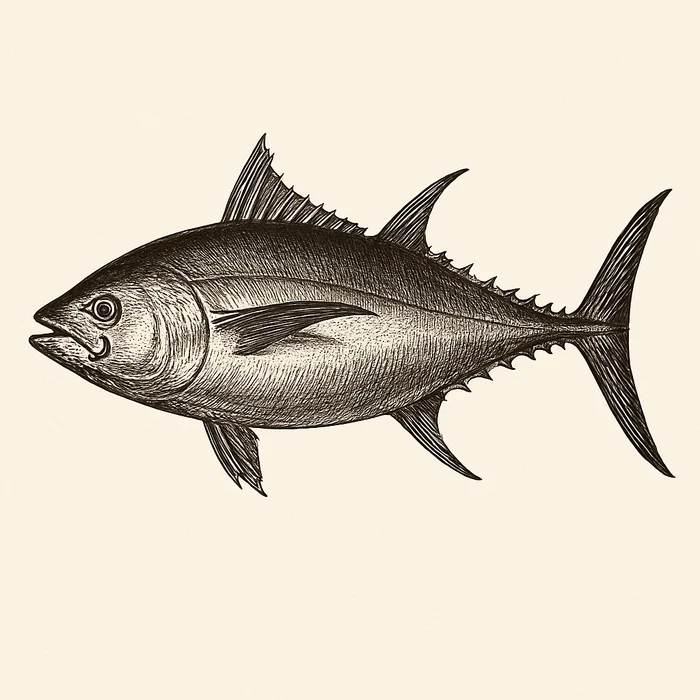
Tuna
Tuna should be avoided or minimized due to high mercury content — a large predatory fish that bioaccumulates methylmercury through the food chain, with neurotoxic effects at sustained exposure levels.
Why It Matters for Longevity
Tuna is nutritionally rich — top B12 source, lean complete protein, some omega-3 — but its mercury burden complicates regular consumption. The mercury problem is real but graduated: light canned tuna (~0.12 ppm) is substantially safer than albacore (~0.35 ppm) or bluefin (~1.0 ppm average).
Mozaffarian & Rimm's (2006) comprehensive analysis found that for some fish species, omega-3 benefits outweigh mercury risks, while the opposite is true for species like swordfish and shark. Tuna sits in the middle — canned light tuna was associated with a small net benefit in most analyses, while canned white (albacore) was associated with small net risk at frequent consumption. The Longevity Diet's preference is to substitute with smaller oily fish (sardines, mackerel, anchovies) which deliver comparable B12 and omega-3 with negligible mercury.
For methylmercury risk specifically: sub-clinical neurobehavioral abnormalities have been documented in adults with elevated mercury exposure from frequent tuna consumption — reaction time, digit symbol processing, and finger tapping speed were all worse in regular tuna consumers compared to matched controls (Carta et al., 2003).
Mercury, Selenium, and the Molar Ratio
The relationship between mercury and selenium in tuna is more complex than a simple risk-benefit tradeoff. Selenium binds to methylmercury in a 1:1 molar ratio, forming an insoluble complex that reduces the bioavailability of both the mercury and the selenium. Tuna is naturally high in selenium — typically 85–90 mcg per 100 g cooked — and the molar ratio of selenium to methylmercury in most tuna is well above 1:1, meaning selenium is present in excess of mercury even in fresh bluefin.
A bioaccessibility study using in vitro digestion measured the selenium:methylmercury ratio in the bioaccessible fraction of raw, cooked, and canned tuna across multiple species. All preparations showed ratios of 10:1 to 74:1, meaning far more selenium than mercury was available for absorption regardless of format. Mercury bioaccessibility was lowest in canned tuna (under 20%) compared to raw or cooked forms (39–48%), while selenium bioaccessibility remained relatively stable across preparations (Afonso et al., 2015, Environ Res). This suggests canned light tuna carries a substantially lower effective mercury exposure than raw or grilled bluefin, and the selenium excess may offer partial protection against the mercury that is absorbed.
However, the degree to which selenium actually counteracts methylmercury toxicity in humans at typical dietary exposures remains unresolved. A review by Park and Mozaffarian (2010, Curr Atheroscler Rep) concluded that quantitative risk-benefit analyses for individual fish species cannot yet be performed because the cardiovascular effects of both methylmercury and selenium remain scientifically inconclusive. Selenium's protective effect is established at high-dose mercury poisoning, but its relevance at the low exposures from occasional tuna meals is a different question.
Mercury and Cardiovascular Risk
The neurotoxicity of methylmercury at high doses is well established, but the cardiovascular risk at typical dietary exposures is less clear. A prospective case-control study nested within two large U.S. cohorts — 3,427 cardiovascular disease cases among 173,229 total participants — measured mercury via toenail analysis and found no evidence of clinically relevant adverse effects on coronary heart disease, stroke, or total cardiovascular disease across exposure quintiles (RR 0.85 for CHD, 95% CI 0.69–1.04, comparing highest to lowest quintile) (Mozaffarian et al., 2011, N Engl J Med). This finding remained consistent even in subgroups with low selenium intake or minimal fish consumption.
The same authors note that this does not fully exonerate tuna: the cohort participants had modest mercury exposure by global standards, and the power to detect small adverse effects at very high exposures was limited. The neurological toxicity data from occupational and Faroe Islands exposures represent a different risk profile than the typical American tuna consumer.
Omega-3 Content by Format
The EPA + DHA content of tuna varies considerably by species and preparation:
- Light canned tuna (skipjack): approximately 0.23–0.27 g EPA + DHA per 100 g
- Albacore canned in water: approximately 0.71–0.86 g per 100 g
- Bluefin raw: approximately 1.3–1.6 g per 100 g
The processing that reduces mercury bioaccessibility in canned tuna also modestly reduces omega-3 content, but canned albacore still delivers a meaningful dose. The tradeoff is that albacore carries roughly three times the mercury of light canned tuna — so the higher omega-3 delivery comes with higher mercury co-exposure.
Species-Specific Risk-Benefit Framework
Not all tuna is the same risk-benefit proposition, and generic advice to "eat more fish" or "avoid tuna" misses this distinction. A quantitative species-specific framework, which modeled methylmercury neurotoxicity against omega-3 cardiovascular benefit using probabilistic dose-response methods, placed canned light tuna (primarily skipjack) in a net-benefit category and canned white albacore in a small-net-risk category, while recommending avoidance for species like king mackerel, shark, and swordfish (Ginsberg & Toal, 2009, Environ Health Perspect). The framework also distinguished between neurodevelopmental risk — where methylmercury effects on fetal brain development are most clearly documented — and cardiovascular benefit, which operates on different dose-response kinetics. For adults without neurological vulnerability, canned light tuna's mercury load falls well below the threshold where cognitive harm has been demonstrated; the omega-3 and niacin contribution is therefore the dominant effect.
This framework informs the FDA/EPA 2024 fish consumption guidance, which lists canned light tuna as a "best choice" for up to three servings per week, and albacore as a "good choice" at one serving per week — an explicit acknowledgment that the mercury-to-omega-3 ratio, not mercury alone, determines whether a given tuna product is beneficial or harmful for a typical adult consumer.
Omega-3s and Muscle Preservation
The protein content of tuna (approximately 30 g per 100 g cooked, all complete amino acids) combines with its omega-3 fatty acids to support an anti-sarcopenic effect that neither nutrient achieves as efficiently in isolation. EPA and DHA sensitize skeletal muscle to anabolic stimuli — particularly insulin and leucine — by modifying sarcolemmal phospholipid composition and improving mTORC1 activation efficiency. A meta-analysis of 10 RCTs in elderly participants found omega-3 supplementation at doses above 2 g/day increased muscle mass by 0.67 kg (95% CI: 0.16–1.18 kg) and improved functional performance metrics, with greater effects at longer intervention durations (Huang et al., 2020, Nutrients). The combination of high lean protein and meaningful EPA + DHA in canned albacore tuna provides a mechanistically coherent anti-sarcopenia food, though the mercury co-exposure limits how frequently it should be consumed compared to lower-mercury alternatives.
Niacin and NAD+ Synthesis
Tuna is among the richest dietary sources of niacin (vitamin B3), providing approximately 18.8 mg per 100 g cooked, covering over 100% of the daily requirement in a single serving. Niacin is a precursor to NAD+ (nicotinamide adenine dinucleotide), a coenzyme central to mitochondrial energy production, DNA repair via PARP enzymes, and sirtuin-mediated longevity pathways. NAD+ levels decline with age, and dietary niacin from tuna directly supports the substrate pool for NAD+ synthesis — a mechanism distinct from omega-3 pathways but relevant to cellular energy maintenance.
A large observational analysis of 26,746 US adults followed for a median 9.17 years (NHANES 2003–2018) found that those in the highest quartile of dietary niacin intake had a 26% lower risk of all-cause mortality (HR 0.74, 95% CI: 0.63–0.86) and a 27% lower risk of cardiovascular mortality (HR 0.73, 95% CI: 0.57–0.95) compared to those in the lowest quartile, with a statistically significant dose-response relationship (Lin et al., 2024, Sci Rep). This association operated independently of total caloric intake and other dietary variables. The interaction with diabetes status (P = 0.046) suggests some of niacin's protective effect on all-cause mortality is mediated through metabolic pathways — consistent with NAD+'s role in mitochondrial efficiency and insulin sensitivity. Tuna's niacin content positions it as one of the most efficient dietary sources for maintaining the NAD+ substrate pool through food alone.
B12 Content
Bluefin tuna is one of the highest B12 sources among all foods: 10.9 mcg per 100 g raw, which is approximately 455% of the daily value. B12 functions as a cofactor in homocysteine remethylation; dietary B12 from tuna lowers plasma homocysteine, reducing cardiovascular and cognitive risk associated with B12 insufficiency. Light canned tuna delivers less B12 (approximately 2.2–3.0 mcg per 100 g) but still makes a meaningful contribution toward the daily requirement.
Practical Guidance
The evidence supports canned light tuna at 1–2 servings per week as a net-positive food for most adults, with the caveat that children and pregnant women should follow FDA advisory limits more conservatively. Albacore warrants more caution — the higher mercury burden without proportionally higher omega-3 delivery compared to alternatives like mackerel or sardines means the risk-benefit calculus is less favorable. Fresh bluefin should be treated as an occasional food, not a weekly staple.
How to Use It
Pairs well with pasta, olives, capers. If consuming tuna, prefer light canned tuna (not albacore) and limit to 1–2 servings per week. Use it in pasta al tonno, salads, or niçoise. Consider sardines or mackerel as lower-mercury alternatives with comparable nutrition.
What to Pair It With
| Ingredient | Why | Tradition |
|---|---|---|
| pasta | See synergies | The Longevity Diet |
| olives | See synergies | The Longevity Diet |
| capers | See synergies | The Longevity Diet |
| tomatoes | See synergies | culinary tradition |
| lemon | See synergies | culinary tradition |
Synergies
- Tomatoes (complement): Tomato lycopene and tuna protein form a Mediterranean combination; vitamin C in tomatoes aids iron absorption.
- Capers (complement): Classic Italian pairing; quercetin in capers adds antioxidant activity; flavors balance well.
- Salmon (antagonism): Salmon is the preferred low-mercury alternative for omega-3 intake; tuna should be used only occasionally per the Longevity Diet.
Flavor Profile
Taste: savory, meaty, mild umami, rich. Aroma: oceanic, mild fish, neutral when canned. Texture: firm, meaty, flaky when cooked, dense. Category: large pelagic fish.
The Science
- Mozaffarian & Rimm, 2006, JAMA: Species-specific risk-benefit analysis: light canned tuna associated with small net benefit; albacore with small net risk; benefits clearly favor lower-mercury fish for regular consumption.
- Carta et al., 2003, Occup Environ Med: Sub-clinical neurobehavioral abnormalities (reaction time, processing speed) in adults with elevated mercury from regular tuna consumption, supporting caution about frequent intake.
- Afonso et al., 2015, Environ Res: In vitro digestion study showing selenium:methylmercury bioaccessible ratios of 10:1 to 74:1 in all tuna formats; canned tuna mercury bioaccessibility <20% vs. 39–48% in cooked forms.
- Mozaffarian et al., 2011, N Engl J Med: Prospective study in 173,229 participants — no clinically significant cardiovascular harm from mercury at typical U.S. dietary exposure levels (RR 0.85 for CHD, highest vs. lowest quintile).
- Park & Mozaffarian, 2010, Curr Atheroscler Rep: Review concluding that selenium's protective effect against methylmercury cardiovascular toxicity remains inconclusive at dietary exposure levels — quantitative species-specific risk-benefit calculations cannot yet be made.
- Ginsberg & Toal, 2009, Environ Health Perspect: Quantitative species-specific risk-benefit framework — canned light tuna in net-benefit category; canned albacore small net-risk; distinguishes neurodevelopmental (mercury dominant) from cardiovascular (omega-3 dominant) risk-benefit curves.
- Huang et al., 2020, Nutrients: Meta-analysis of 10 RCTs in elderly — omega-3 at >2 g/day increased muscle mass 0.67 kg (95% CI 0.16–1.18); functional performance improved with >6-month supplementation; supports anti-sarcopenic argument for regular tuna + lean protein intake.
- Lin et al., 2024, Sci Rep: NHANES 2003–2018, 26,746 adults, 9.17-year follow-up — highest dietary niacin intake quartile associated with 26% lower all-cause mortality (HR 0.74) and 27% lower cardiovascular mortality (HR 0.73) in dose-response analysis.
References
- Mozaffarian D, Rimm EB. Fish intake, contaminants, and human health: evaluating the risks and the benefits. JAMA. 2006;296(15):1885-99. PMID: 17047219. doi:10.1001/jama.296.15.1885
- Carta P, Flore C, Alinovi R, et al. Sub-clinical neurobehavioral abnormalities associated with low level of mercury exposure through fish consumption. Neurotoxicology. 2003;24(4-5):617-23. PMID: 12900074. doi:10.1016/S0161-813X(03)00014-2
- Afonso C, Costa S, Cardoso C, et al. Benefits and risks associated with consumption of raw, cooked, and canned tuna (Thunnus spp.) based on the bioaccessibility of selenium and methylmercury. Environ Res. 2015;141:58-63. PMID: 25962922. doi:10.1016/j.envres.2015.04.019
- Mozaffarian D, Shi P, Morris JS, et al. Mercury exposure and risk of cardiovascular disease in two U.S. cohorts. N Engl J Med. 2011;364(12):1116-1125. PMID: 21428767. doi:10.1056/NEJMoa1006876
- Park K, Mozaffarian D. Omega-3 fatty acids, mercury, and selenium in fish and the risk of cardiovascular diseases. Curr Atheroscler Rep. 2010;12(6):414-22. PMID: 20820953. doi:10.1007/s11883-010-0138-z
- Ginsberg GL, Toal BF. Quantitative approach for incorporating methylmercury risks and omega-3 fatty acid benefits in developing species-specific fish consumption advice. Environ Health Perspect. 2009;117(2):267-275. PMID: 19270798. doi:10.1289/ehp.11368
- Huang YH, Chiu WC, Hsu YP, Lo YL, Wang YH. Effects of Omega-3 Fatty Acids on Muscle Mass, Muscle Strength and Muscle Performance among the Elderly: A Meta-Analysis. Nutrients. 2020;12(12):3739. PMID: 33291698. doi:10.3390/nu12123739
- Lin L, Chen S, Zhang C, et al. Association of dietary niacin intake with all-cause and cardiovascular mortality: National Health and Nutrition Examination Survey (NHANES) 2003–2018. Sci Rep. 2024;14(1):28008. PMID: 39550522. doi:10.1038/s41598-024-79986-9
Key Nutrients
| Nutrient | Per 100g | Notes |
|---|---|---|
| Vitamin B12 | 10.9 mcg (bluefin, raw) | Animal-sourced; highly bioavailable; among the highest B12 concentrations of any food |
| Protein | 30 g (cooked) | Complete protein; very low in saturated fat |
| EPA + DHA (omega-3) | 0.27 g (light canned) | Lower than fatty fish; mercury co-exposure diminishes net benefit of regular consumption |
| Selenium | 90 mcg (cooked) | Selenium may partially counteract methylmercury toxicity but should not justify increased intake |
| Niacin (B3) | 18.8 mg (cooked) | Highly bioavailable; supports NAD+ synthesis important for cellular energy and longevity |