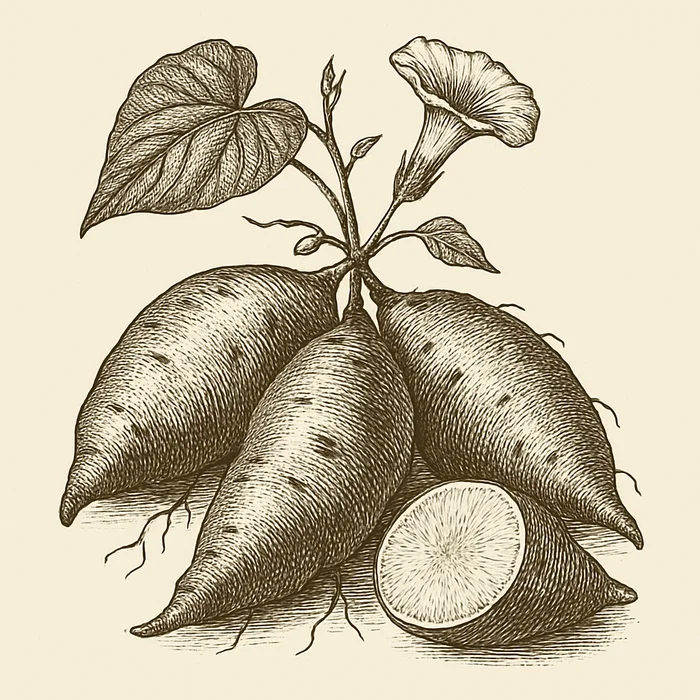
Sweet Potatoes
The cornerstone of the world's longest-lived population. Traditional Okinawans derived roughly 67% of their calories from sweet potato — and had exceptional longevity with low rates of cancer and heart disease.
Why It Matters for Longevity
Sweet potatoes contain the highest beta-carotene concentration among common vegetables (up to 31,000 mcg/100g when cooked). A single medium sweet potato exceeds 100% of the RDA for vitamin A. Cooking breaks cell walls and increases carotenoid bioavailability 3–6x, but fat co-ingestion is essential — without it, you absorb very little.
The Okinawan longevity connection is the strongest population-level evidence for any single food. Willcox et al. (2009) documented that the traditional Okinawan diet — anchored by sweet potato, green and yellow vegetables, soybean foods, and caloric restriction — was associated with among the lowest rates of age-associated chronic disease ever recorded. Sweet potato provided the bulk of calories as a low-glycemic, antioxidant-rich, nutrient-dense staple (Willcox et al., 2009, J Am Coll Nutr).
Van Jaarsveld et al. (2005) conducted an RCT demonstrating that orange-fleshed sweet potato significantly improved vitamin A status in African school children — confirming that sweet potato's beta-carotene is bioavailable and effective at correcting deficiency (Van Jaarsveld et al., 2005, Am J Clin Nutr). Ludvik et al. (2004) showed that white-skinned sweet potato extract (Caiapo) improved insulin sensitivity and glycemic control in type 2 diabetes patients in a randomized trial — an effect attributed to unique glycoproteins in the Caiapo variety that modulate insulin receptor signalling (Ludvik et al., 2004, Diabetes Care).
Boiling produces a lower glycemic index than baking. Purple-fleshed varieties add anthocyanins with anti-inflammatory and neuroprotective properties distinct from the carotenoids of orange types.
Glycemic Index: Preparation Matters
The glycemic index (GI) of sweet potato varies substantially with cooking method. Boiled sweet potato has a measured GI of approximately 44–61 (medium GI), while baked sweet potato rises to 76–94 (high GI) due to greater starch gelatinisation at dry heat temperatures. Cooling after cooking converts a portion of digestible starch to retrograded resistant starch, further lowering the glycaemic response of the following meal. For people managing blood glucose, boiling and cooling is the preferred preparation. Nurdjanah et al. (2022) found that purple sweet potato products processed through partial gelatinisation and retrogradation had GI values as low as 58.7 versus 83.7 for conventionally prepared noodles, confirming that processing technique significantly modulates the glycaemic impact of sweet potato products (Nurdjanah et al., 2022, Int J Food Sci).
Anthocyanins in Purple Varieties
Purple sweet potato flesh gets its colour from acylated anthocyanins — primarily cyanidin- and peonidin-based glycosides — that are more stable to heat, light, and pH than the anthocyanins in most berries. These compounds act as antioxidants by scavenging reactive oxygen species and activating Nrf2-mediated endogenous antioxidant enzyme induction. In cell and animal studies, purple sweet potato anthocyanins inhibit NF-κB signalling (reducing inflammatory cytokine production), suppress α-glucosidase activity (slowing post-meal glucose absorption), and have been shown to increase insulin sensitivity through AMPK activation. Human bioavailability data are limited to pharmacokinetic studies, but anthocyanins from purple sweet potato are detectable in plasma and urine within hours of consumption, confirming gut absorption.
Chlorogenic Acid and Vascular Health
Sweet potatoes are among the richer dietary sources of chlorogenic acid, a hydroxycinnamic acid ester found in both orange and purple varieties. Chlorogenic acid inhibits glucose-6-phosphatase (slowing hepatic glucose release), reduces LDL oxidation, and acts on vascular endothelium. A meta-analysis of 5 RCTs (364 participants) found that chlorogenic acid supplementation reduced systolic blood pressure by approximately 4.3 mm Hg and diastolic blood pressure by approximately 3.7 mm Hg compared to control — a moderate but clinically meaningful effect (Onakpoya et al., 2015, J Hum Hypertens). While those trials used green coffee bean extract as the chlorogenic acid source, the mechanism is the same compound present in sweet potato, and the finding contextualises why diets high in chlorogenic acid-containing foods are associated with lower hypertension risk in epidemiological data.
Potassium and Cardiovascular Function
A medium baked sweet potato (130–150 g) delivers approximately 540–700 mg of potassium — substantially more per serving than a banana. Potassium lowers blood pressure by promoting renal sodium excretion and directly relaxing arterial smooth muscle through hyperpolarisation of the vascular wall. Higher dietary potassium intake is associated with a 15–20% lower stroke risk in meta-analyses of cohort data. Sweet potato's combination of potassium, fibre, and chlorogenic acid makes it a multi-mechanism food for vascular health in the context of a typical diet deficient in potassium.
How to Use It
Roast with olive oil for maximum carotenoid absorption. Boil for lower glycemic impact. Cook and cool to increase resistant starch content. Mash with tahini for a Middle Eastern twist. Cube into curries with ginger for anti-inflammatory synergy.
What to Pair It With
| Ingredient | Why | Tradition |
|---|---|---|
| Extra-virgin olive oil | Essential for beta-carotene absorption | Mediterranean / Modern |
| Black beans | Complementary amino acids and flavors | Latin American |
| Ginger | Cuts sweetness; anti-inflammatory synergy | Asian / African |
| Cumin | Warm spice complements natural sweetness | North African / Middle Eastern |
| Tahini | Creamy fat source aids carotenoid absorption | Middle Eastern |
| Kale | Complementary nutrients: beta-carotene + vitamin K | Modern health cuisine |
Flavor Profile
Sweet, earthy, with nutty and caramel notes when roasted. Warm, honey-like aroma when baked. Dense and creamy baked, fluffy steamed, crispy at high heat.
The Science
- Willcox et al., 2009, J Am Coll Nutr: The traditional Okinawan diet — with sweet potato as the primary calorie source — is associated with exceptionally low rates of age-associated chronic disease and high numbers of centenarians.
- Van Jaarsveld et al., 2005, Am J Clin Nutr: Orange-fleshed sweet potato significantly improved vitamin A status in primary school children assessed with the modified-relative-dose-response test.
- Ludvik et al., 2004, Diabetes Care: White-skinned sweet potato extract (Caiapo) improved insulin sensitivity and glycemic control in a randomized trial in type 2 diabetes patients; mechanism involves glycoprotein modulation of insulin receptor signalling.
- Nurdjanah et al., 2022, Int J Food Sci: Purple sweet potato products processed by retrogradation had GI values as low as 58.7 versus 83.7 for conventionally processed noodles; resistant starch formation accounts for the difference.
- Onakpoya et al., 2015, J Hum Hypertens: Meta-analysis of 5 RCTs (364 participants) — chlorogenic acid reduced systolic blood pressure by ~4.3 mm Hg and diastolic by ~3.7 mm Hg; the same compound is present in sweet potato.
References
- Willcox DC, Willcox BJ, Todoriki H, Suzuki M. The Okinawan diet: health implications of a low-calorie, nutrient-dense, antioxidant-rich dietary pattern low in glycemic load. J Am Coll Nutr. 2009;28 Suppl:500S-516S. PMID: 20234038. doi:10.1080/07315724.2009.10718117
- Van Jaarsveld PJ, Faber M, Tanumihardjo SA, Nestel P, Lombard CJ, Benade AJ. Beta-carotene-rich orange-fleshed sweet potato improves the vitamin A status of primary school children assessed with the modified-relative-dose-response test. Am J Clin Nutr. 2005;81(5):1080-7. PMID: 15883432. doi:10.1093/ajcn/81.5.1080
- Ludvik B, Neuffer B, Pacini G. Efficacy of Ipomoea batatas (Caiapo) on diabetes control in type 2 diabetic subjects treated with diet. Diabetes Care. 2004;27(2):436-40. PMID: 14747225. doi:10.2337/diacare.27.2.436
- Nurdjanah S, Nurdin SU, Astuti S, Manik VE. Chemical Components, Antioxidant Activity, and Glycemic Response Values of Purple Sweet Potato Products. Int J Food Sci. 2022;2022:3974818. PMID: 35465219. doi:10.1155/2022/3974818
- Onakpoya IJ, Spencer EA, Thompson MJ, Heneghan CJ. The effect of chlorogenic acid on blood pressure: a systematic review and meta-analysis of randomized clinical trials. J Hum Hypertens. 2015;29(2):77-81. PMID: 24943289. doi:10.1038/jhh.2014.46
Key Nutrients
| Nutrient | Per 100g | Notes |
|---|---|---|
| Beta-carotene | 8509 mcg (raw), ~31,000 mcg (cooked) | Highest of any common vegetable; needs fat for absorption; bioavailability 3–6x higher when cooked |
| Vitamin A (RAE) | 709 mcg | One medium sweet potato >100% RDA |
| Fiber | 3.0 g | Resistant starch increases when cooked and cooled; retrograded starch lowers GI of subsequent serving |
| Potassium | 337 mg raw (540–700 mg per medium baked potato) | More per serving than bananas; promotes renal sodium excretion and vascular relaxation |
| Chlorogenic acid | 3–20 mg per 100g (varies by variety) | Inhibits glucose-6-phosphatase; reduces LDL oxidation; moderate blood pressure-lowering effect in meta-analyses |
| Anthocyanins | Significant (purple varieties only) | Acylated cyanidin/peonidin glycosides; more heat-stable than berry anthocyanins; inhibit NF-κB and α-glucosidase |