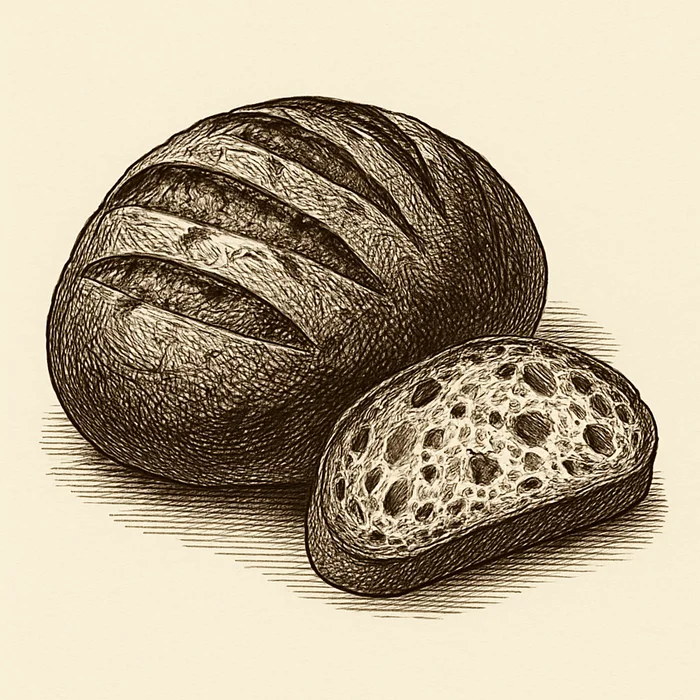
Sourdough Bread
Slow fermentation by lactic acid bacteria degrades 50–90% of the phytic acid that locks up iron, zinc, and magnesium in conventional bread — and simultaneously lowers the glycemic response, reduces gut-irritating FODMAPs, and modulates the colonic microbiome in ways that yeast-risen bread cannot.
Why It Matters for Longevity
What Sourdough Fermentation Actually Does
Sourdough is not simply bread with a sour taste. It is a living ecosystem of lactic acid bacteria (LAB) — primarily Lactobacillus species — and wild yeasts that co-exist in a flour-and-water starter culture. During the 12–24 hours of slow fermentation typical of traditional sourdough, these microorganisms do three distinct things that change the nutritional character of the bread entirely.
First, LAB produce lactic and acetic acids, driving dough pH from a neutral ~6.0 down to approximately 4.5–5.5. This acidification is not merely cosmetic. It activates cereal phytases — enzymes naturally encoded in the wheat grain itself — which at pH 5.5 become highly active against phytic acid. A controlled study by Leenhardt et al. demonstrated that acidifying whole wheat dough to pH 5.5 (whether via sourdough or direct lactic acid addition) reduces phytate by 70% of the initial flour content, compared to only 40% reduction without acidification (Leenhardt et al., 2005, Journal of Agricultural and Food Chemistry). The key finding was that endogenous wheat phytase, not microbial phytase, is the primary driver — the LAB's role is to create the acidic pH at which the grain's own enzyme becomes catalytically effective.
Second, LAB produce exopolysaccharides and modify the starch-gluten matrix, creating a bread structure that resists rapid amylase digestion. The organic acids slow gastric emptying and reduce starch gelatinization, both of which attenuate the postprandial glucose curve. Third, yeasts produce CO₂ that creates the open, irregular crumb structure characteristic of authentic sourdough — a physical structure that differs from commercial bread even apart from the biochemical changes.
Phytate Reduction and Mineral Bioavailability
Phytic acid (myo-inositol hexaphosphate) is an anti-nutrient in whole grains. It chelates iron, zinc, and magnesium with high affinity, forming insoluble complexes that pass through the gut largely unabsorbed. In conventional whole-wheat bread, most of the iron and zinc on the nutrition label is effectively unavailable.
Sourdough fermentation breaks this lock. A comparison study by Lopez et al. found that prolonged whole-wheat sourdough fermentation reduced phytate content by 62% compared to 38% for standard yeast fermentation — and this phytate reduction translated directly into increased soluble magnesium in the bread (Lopez et al., 2001, Journal of Agricultural and Food Chemistry). When bran was pre-fermented with sourdough microorganisms before incorporation, phytate breakdown reached approximately 90%. The mechanistic chain is direct: lower phytate → less mineral chelation → more iron, zinc, and magnesium available for intestinal absorption. For populations eating whole grain bread as a dietary staple, the difference between sourdough and yeast-leavened bread in mineral supply can be clinically meaningful.
A systematic review by Dimidi et al. (2019) confirmed that across the available evidence, sourdough fermentation degrades 24–70% of phytate, with the wide range reflecting differences in fermentation time, inoculation level, flour type, and dough hydration. Longer fermentations at higher temperatures with well-established starters consistently achieve the upper end of that range.
Glycemic Response: Lower GI Through Organic Acids
The glycemic index (GI) of bread is largely determined by how fast gut amylases access and hydrolyze starch. Sourdough fermentation slows this process through two overlapping mechanisms: (1) the organic acids (lactic and acetic acid) lower intestinal pH, which directly inhibits pancreatic amylase activity and slows starch hydrolysis; and (2) the structural changes in the starch-protein matrix during fermentation create a denser substrate that amylase must penetrate before it can act.
The clinical evidence is consistent. In a crossover trial in 16 subjects with impaired glucose tolerance — a group for whom postprandial spikes have direct cardiovascular relevance — sourdough bread produced significantly lower plasma glucose at 30 minutes (p = 0.048) and a smaller incremental area under the glucose curve at both 30 minutes (p = 0.020) and 60 minutes (p = 0.018), compared to baker's yeast bread made from identical flour (Maioli et al., 2008, Acta Diabetologica). Insulin response at 30 minutes was also significantly lower (p = 0.045). The authors attributed the effect to lactic acid produced during fermentation reducing carbohydrate availability, not to differences in fiber content.
A systematic review of 18 clinical trials confirmed the direction of this effect: sourdough consumption produced lower blood glucose increments at both 60 minutes (MD = −0.29) and 120 minutes (MD = −0.21) compared to industrially fermented bread or glucose controls, with the benefit most pronounced when sourdough was made from whole wheat flour (Rolim et al., 2024, Critical Reviews in Food Science and Nutrition). A separate RCT in gestational diabetes patients and healthy pregnant controls found white wheat bread produced 45.5% more insulin secretion and 9.6% higher first-hour postprandial glucose than sourdough whole-grain wheat bread (both p < 0.05), with the effect holding in both the metabolically compromised and healthy groups (Özer et al., 2023, Wiener Klinische Wochenschrift).
The practical upshot: sourdough bread from whole wheat flour behaves like a substantially different carbohydrate source from the same flour baked with commercial yeast. The postprandial glucose spike — and with it the downstream insulin burden — is measurably attenuated.
Lactic Acid Bacteria and Gut Microbiota
The gut-health case for sourdough is not primarily about live bacteria surviving bread baking — baking temperatures kill most LAB. The mechanism is metabolite-mediated. LAB produce a range of bioactive compounds during fermentation — organic acids, bacteriocins, gamma-aminobutyric acid (GABA), and exopolysaccharides — that are present in the finished bread and interact with the colonic environment after ingestion.
A comprehensive review by Bartkiene et al. characterized sourdough LAB as technological, antimicrobial, immune-modulating, and faecal microbiota-modelling agents, noting that specific strains act as postbiotic-like components that influence the composition and metabolic activity of the gut microbiota even in the absence of live bacteria (Bartkiene et al., 2022, Foods). Separately, Gobbetti et al. (2019) showed that sourdough lactobacilli partially degrade gluten epitopes during fermentation and produce exopolysaccharides that appear to shift gut microbiome composition toward greater diversity.
The exopolysaccharides produced by sourdough LAB function as soluble fiber fractions that colonic bacteria can ferment, yielding short-chain fatty acids including butyrate. Butyrate is the primary energy substrate for colonocytes, suppresses NF-κB-driven inflammatory signaling in the gut epithelium, and is mechanistically linked to reduced colorectal cancer risk and improved gut barrier function. This pathway is distinct from the arabinoxylan-butyrate pathway described for whole wheat generally — it is fermentation-specific.
FODMAP Reduction and Wheat Tolerance
FODMAPs (fermentable oligosaccharides, disaccharides, monosaccharides, and polyols) in wheat include fructans — fructose polymers that are poorly absorbed in the small intestine and rapidly fermented in the proximal colon, generating gas, osmotic shifts, and symptoms in individuals with irritable bowel syndrome (IBS). Standard low-FODMAP dietary protocols require eliminating wheat entirely, at the cost of significant dietary fiber reduction.
Sourdough fermentation offers a mechanistic bypass. Specific LAB strains — particularly those in the Lactobacillus delbrueckii and L. reuteri groups — carry fructan hydrolase activity and convert fructose released from fructan degradation to mannitol, effectively consuming the FODMAP fraction during fermentation. A review of the low-FODMAP sourdough literature found that extended fermentation with appropriate LAB strains can reduce fructan content by up to 90%, while preserving the slowly fermented dietary fiber that is well-tolerated and beneficial (Loponen & Gänzle, 2018, Foods). The resulting bread retains ~10 g/100 g dietary fiber while reaching FODMAP levels one-third of conventional bread — a profile that is both IBS-compatible and nutritionally adequate.
Clinical relevance: a randomized double-blind crossover study in IBS patients found that low-FODMAP rye sourdough bread caused significantly less flatulence, abdominal pain, cramping, and bowel rumbling than regular rye bread, with measurable reduction in colonic hydrogen generation. For the approximately 10–15% of adults with IBS who avoid wheat, genuine long-fermented sourdough represents a physiologically distinct product — not merely a different-tasting bread.
Folate and B-Vitamin Synthesis
Fermentation also increases folate content 2–3-fold through microbial biosynthesis. Several Lactobacillus strains are folate producers, and extended fermentation in a starter culture can double or triple the folate content of the final bread relative to the unfermented dough. Folate deficiency elevates homocysteine, an independent cardiovascular risk factor, making this fermentation-derived synthesis a secondary but real nutritional benefit.
What Makes Real Sourdough
The commercial bread market has created a "sourdough" labeling problem. Many supermarket loaves labeled sourdough contain added vinegar, citric acid, or "sourdough flavor" to mimic the taste, but are leavened entirely with commercial baker's yeast on a 1–3 hour timescale. These breads do not undergo prolonged fermentation and produce none of the biochemical changes described above: phytate remains intact, glycemic response is identical to standard white or wheat bread, and FODMAP content is unaltered.
Genuine sourdough can be identified by several criteria:
Ingredient list. Real sourdough contains only flour, water, salt, and starter (sometimes listed as "sourdough culture" or "levain"). Any appearance of commercial yeast (Saccharomyces cerevisiae), vinegar, citric acid, or "sourdough flavor" indicates a simulated product.
Fermentation time. A 12–24 hour total fermentation (including bulk ferment and proof) is the minimum needed for meaningful phytate reduction. Breads produced at industrial scale typically ferment for 1–3 hours — insufficient for phytase activation. Artisan bakers and quality commercial bakeries state fermentation times on packaging; if absent, the duration is likely short.
pH. Authentic sourdough crumb pH is typically 4.0–4.5 for white flour and 4.5–5.0 for whole wheat — measurably acidic. Commercial yeast bread crumb pH is ~5.5–6.0. A simple pH strip test on crumb moistened with water distinguishes them, though this is rarely practical for consumers.
Source. Bakeries with visible starter cultures, open fermentation vessels, and staff who can describe their process are reliable signals. Mass-market "artisan" sourdough from large supermarket chains is frequently commercial yeast bread with acidulants.
Texture. Authentic long-fermented sourdough has an irregular, open crumb with pronounced large air pockets from wild yeast CO₂. Commercial bread with added sourdough flavor typically has a uniform, tighter crumb. This is not definitive — some authentic sourdoughs are dense — but a perfectly uniform crumb in a product labeled sourdough is a red flag.
How to Use It
Choose genuine slow-fermented sourdough made from whole grain flour where possible. Whole grain sourdough maximizes both fiber content and the phytate reduction benefit, since phytic acid is concentrated in the bran. Slice thickness matters: thicker slices served alongside fat (olive oil) or protein (legumes) further flatten the glycemic curve. Avoid using sourdough as a vehicle for high-sugar toppings, which override its inherently lower glycemic profile.
What to Pair It With
| Ingredient | Why | Tradition |
|---|---|---|
| Extra-virgin olive oil | Oleic acid slows gastric emptying; EVOO polyphenols add anti-inflammatory activity | Mediterranean |
| Tomatoes | Vitamin C boosts iron absorption from the now-bioavailable iron in sourdough | Italian (bruschetta) |
| Legumes | Complete amino acid profile; bean prebiotic fiber complements sourdough LAB metabolites | Mediterranean |
| Aged cheese | Calcium and fermented food synergy; protein slows carbohydrate absorption | European |
| Garlic | Allicin on toasted bread (fettunta); cardiovascular complement | Italian |
Flavor Profile
Tangy and complex with a lactic sourness that varies by fermentation time, flour type, and culture composition. White flour sourdoughs tend toward clean lactic acidity; whole wheat and rye sourdoughs develop more pronounced acetic (vinegar-like) notes with longer fermentations. The crust develops nutty, caramelized Maillard products during high-temperature baking. Texture: chewy, open crumb with irregular holes and a crackly, thick crust. Longer fermentation produces more pronounced tang. The organic acid profile — not added vinegar — creates a multidimensional sourness that commercial acidified breads do not replicate.
The Science
- Sourdough fermentation reduces phytate by 62% vs. 38% for yeast fermentation; prolonged pre-fermentation of bran can achieve ~90% phytate breakdown (Lopez et al., 2001, J Agric Food Chem)
- pH reduction to 5.5 through sourdough or lactic acid acidification reduces phytate by 70% via endogenous wheat phytase — the grain's own enzyme, activated by LAB-produced acid (Leenhardt et al., 2005, J Agric Food Chem)
- Crossover RCT in impaired glucose tolerance: sourdough bread produced significantly lower plasma glucose at 30 min (p = 0.048) and lower insulin at 30 min (p = 0.045) vs. yeast bread from identical flour (Maioli et al., 2008, Acta Diabetol)
- Systematic review of 18 trials: sourdough lowers postprandial glucose increment at 60 min (MD −0.29) and 120 min (MD −0.21) vs. conventional bread; effect strongest with whole wheat flour (Rolim et al., 2024, Crit Rev Food Sci Nutr)
- Sourdough LAB function as faecal microbiota-modelling agents through postbiotic-like compounds (organic acids, exopolysaccharides, bacteriocins) that persist in baked bread and act on the colonic environment (Bartkiene et al., 2022, Foods)
- Extended sourdough fermentation with fructan-degrading LAB strains (L. delbrueckii, L. reuteri groups) reduces fructan content by up to 90% while preserving dietary fiber — enabling IBS-compatible wheat consumption (Loponen & Gänzle, 2018, Foods)
- Sourdough fermentation increases folate content 2–3x through microbial biosynthesis by folate-producing Lactobacillus strains
Key Nutrients
| Nutrient | Per 100g | Notes |
|---|---|---|
| Iron (bioavailable) | 2.5–3.5 mg | 2–3x more absorbable than conventional bread; phytate reduction of 50–90% removes the primary chelation barrier |
| Zinc | 1.5–2.5 mg | Significantly improved bioavailability vs. yeast-leavened bread; phytate-zinc complex largely eliminated in long-fermented sourdough |
| Magnesium | 25–35 mg | Solubility increases directly as phytate is degraded; sourdough acidification enhances Mg²⁺ ionic availability (Lopez et al., 2001) |
| B vitamins (folate) | varies by flour | 2–3x more folate from microbial synthesis during fermentation; relevant for homocysteine regulation |
References
- Lopez HW, Krespine V, Guy C, Messager A, Demigne C, Remesy C. Prolonged fermentation of whole wheat sourdough reduces phytate level and increases soluble magnesium. J Agric Food Chem. 2001;49(5):2657–2662. PMID: 11368651. doi:10.1021/jf001255z
- Leenhardt F, Levrat-Verny MA, Chanliaud E, Rémésy C. Moderate decrease of pH by sourdough fermentation is sufficient to reduce phytate content of whole wheat flour through endogenous phytase activity. J Agric Food Chem. 2005;53(1):98–102. PMID: 15631515. doi:10.1021/jf049193q
- Maioli M, Pes GM, Sanna M, et al. Sourdough-leavened bread improves postprandial glucose and insulin plasma levels in subjects with impaired glucose tolerance. Acta Diabetol. 2008;45(2):91–96. PMID: 18317680. doi:10.1007/s00592-008-0029-8
- Loponen J, Gänzle MG. Use of sourdough in low FODMAP baking. Foods. 2018;7(7):96. PMID: 29932101.
- Bartkiene E, Özogul F, Rocha JM. Bread sourdough lactic acid bacteria — technological, antimicrobial, toxin-degrading, immune system-, and faecal microbiota-modelling biological agents for the preparation of food, nutraceuticals and feed. Foods. 2022;11(3):452. PMID: 35159602.
- Özer YE, Cengiz H, Demirci T, Kızılgül M, Varim C, Tamer A. Glycemic responses to whole grain sourdough bread versus refined white bread in patients with gestational diabetes. Wien Klin Wochenschr. 2023;135(13–14):363–369. PMID: 37106088.
- Rolim ME, Fortes MI, Von Frankenberg A, Duarte CK. Consumption of sourdough bread and changes in the glycemic control and satiety: A systematic review. Crit Rev Food Sci Nutr. 2024;64(3):801–816. PMID: 35943419.