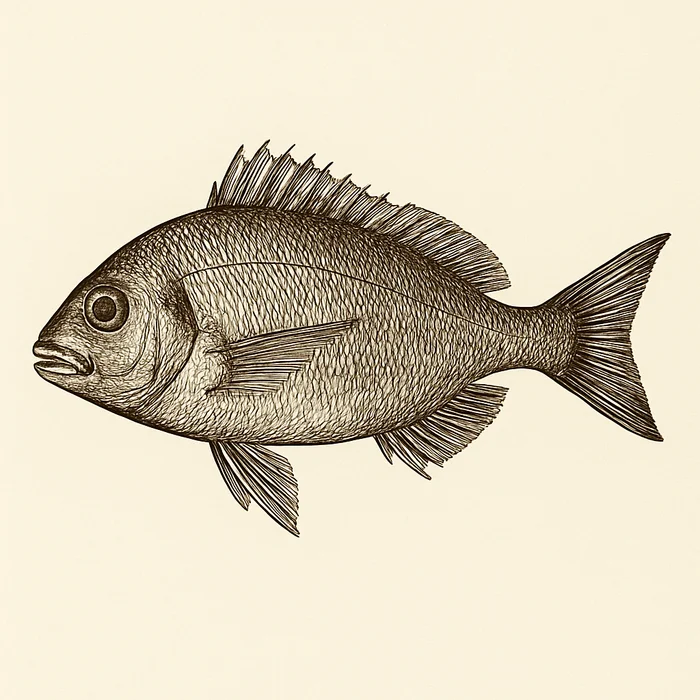
Sea Bream
Sea bream is recommended as a high omega-3, omega-6, and vitamin B12 fish for the Longevity Diet, suitable as one of 2–3 fish servings per week, with low mercury content making it safe for regular consumption.
Why It Matters for Longevity
Sea bream provides a beneficial balance of omega-3 and omega-6 fatty acids alongside essential micronutrients — B12, selenium, iodine — with a low mercury burden, supporting cardiovascular health, cognitive function, and metabolic longevity.
Simopoulos (2016) established that Mediterranean fish like sea bream have omega-6:omega-3 ratios close to 1:1, consistent with ancestral human dietary ratios associated with reduced chronic disease. Modern Western diets skew toward ratios of 15:1 or higher, contributing to chronic inflammation; Mediterranean fish consumption helps restore balance.
Lund (2013) reviewed the broader nutrient case for seafood beyond fatty acids, noting that EPA/DHA, iodine, selenium, vitamin B12, and vitamin D together explain much of seafood's health benefit — and sea bream delivers all of them. Iodine supports thyroid function; selenium feeds glutathione peroxidase and thioredoxin reductase; B12 supports homocysteine clearance and neurological maintenance.
Omega-3 Fatty Acids and Cardiovascular Outcomes
Sea bream's EPA and DHA content is the most studied mechanism connecting regular fish consumption to longevity. A meta-analysis of 38 randomized controlled trials enrolling 149,051 participants found that omega-3 supplementation reduced cardiovascular mortality (RR 0.93, 95% CI 0.88–0.98), non-fatal myocardial infarction (RR 0.87, 95% CI 0.81–0.93), and coronary heart disease events (RR 0.91, 95% CI 0.87–0.96) (Khan et al., 2021, EClinicalMedicine). At prescription doses of 4 g/day EPA+DHA, the American Heart Association has confirmed that omega-3 agents reduce triglycerides by ≥30%, with EPA monotherapy producing a 25% reduction in major adverse cardiovascular events in the REDUCE-IT trial (Skulas-Ray et al., 2019, Circulation). The ~0.9–1.2 g EPA+DHA per 100g in cooked sea bream (farmed) provides a meaningful contribution to this threshold when consumed as part of the recommended 2–3 weekly fish servings.
EPA and DHA exert these effects through several converging pathways: they reduce hepatic triglyceride synthesis, compete with arachidonic acid for cyclooxygenase and lipoxygenase enzymes thereby reducing pro-inflammatory prostaglandin and leukotriene production, and increase production of pro-resolving lipid mediators (resolvins, protectins) that actively terminate inflammation. In vascular tissue, they also stabilize cardiac electrophysiology by modulating sodium and calcium channel gating, explaining the inverse association with arrhythmia.
Selenium and Selenoprotein Function
Sea bream provides approximately 25–36 mcg selenium per 100g, predominantly as selenomethionine — the form with highest bioavailability in animal foods. Selenium's longevity relevance goes beyond its role as a cofactor for glutathione peroxidases (GPx1–4) that neutralize hydrogen peroxide and lipid hydroperoxides. Selenoprotein P (SELENOP), synthesized primarily in the liver and distributed throughout the body, functions as the main plasma selenium transport protein and is now recognized as an independent predictor of mortality.
A prospective cohort of 7,186 adults in the ESTHER study, followed for 17.3 years, found that participants in the bottom SELENOP tertile had 35% higher all-cause mortality (HR 1.35, 95% CI 1.21–1.50) and 24% higher cardiovascular mortality (HR 1.24, 95% CI 1.04–1.49) compared to the top tertile, with an L-shaped dose-response relationship below 4.1 mg/L (Schöttker et al., 2024, Eur J Epidemiol). Regular consumption of selenium-rich foods like sea bream helps maintain plasma selenium above this threshold — particularly relevant in Northern and Central Europe where background dietary selenium is low.
Fish Protein and Sarcopenia Prevention
Sea bream's ~20g complete protein per 100g cooked, with a high DIAAS score (all essential amino acids present in good proportions), supports one of the most actionable longevity mechanisms: prevention of sarcopenia. Skeletal muscle mass loss accelerates after age 60 and is independently associated with frailty, hospitalization, and mortality.
A controlled intervention in adults aged 50–85 found that consuming fish twice weekly (150–170g per serving) for 10 weeks significantly increased skeletal muscle mass, appendicular lean mass (ALM/h²), handgrip strength, and gait speed in participants with initially slow gait (p < 0.01 for all) (Alhussain & ALshammari, 2021, Front Nutr). A review of the mechanisms identifies fish omega-3 fatty acids — which activate the mTOR-p70s6k anabolic signalling pathway in skeletal muscle — along with high-quality protein, vitamin D, and magnesium as the bioactive compounds responsible (Rondanelli et al., 2020, Nutrients). For elderly individuals with or at risk of sarcopenia, recommendations suggest at least three fish servings per week to achieve 4–4.59g daily omega-3, which also provides ~50% of the RDA for vitamins D and E from fish alone.
How to Use It
Pairs well with extra-virgin olive oil, lemon, fennel. Bake whole with herbs and a splash of white wine at 200°C for 25–30 minutes, or cook fillets in a pan skin-side down for most of the time. Simple preparations let the quality of the fish speak.
What to Pair It With
| Ingredient | Why | Tradition |
|---|---|---|
| extra-virgin olive oil | See synergies | General culinary |
| lemon | See synergies | General culinary |
| fennel | See synergies | General culinary |
| capers | See synergies | General culinary |
| cherry tomatoes | See synergies | General culinary |
| white wine | See synergies | General culinary |
Synergies
- Extra-Virgin Olive Oil (synergy): Oleic acid in olive oil and EPA/DHA in sea bream both reduce inflammatory eicosanoid production via complementary mechanisms; fat also enhances absorption of fat-soluble vitamins (A, D) in the fish.
- Fennel (complement): Fennel's phytochemicals (anethole, quercetin) provide antioxidant support that complements the anti-inflammatory omega-3s; the pairing is traditional in Mediterranean cuisine and nutritionally complementary.
Flavor Profile
Taste: mild, slightly sweet, clean, delicately briny. Aroma: fresh ocean, neutral, light mineral. Texture: firm white flesh, fine flake, moist when cooked properly. Category: lean-to-medium-fat white fish.
The Science
- Simopoulos, 2016, Nutrients: Higher omega-6:omega-3 ratios increase risk for obesity and chronic disease; Mediterranean fish like sea bream help restore the ancestral 1:1 ratio.
- Lund, 2013, Food Chem: Seafood's health benefits extend well beyond fatty acids to include iodine, selenium, B12, and vitamin D — a complete micronutrient package that sea bream delivers.
- Mozaffarian & Rimm, 2006, JAMA: Benefits of regular fish consumption for cardiovascular mortality substantially outweigh contaminant risks, particularly for low-mercury species like sea bream.
- Khan et al., 2021, EClinicalMedicine: Meta-analysis of 38 RCTs (149,051 participants) — omega-3 EPA/DHA reduces cardiovascular mortality (RR 0.93), non-fatal MI (RR 0.87), and coronary heart disease events (RR 0.91).
- Skulas-Ray et al., 2019, Circulation: AHA advisory — 4 g/day EPA+DHA reduces triglycerides by ≥30%; EPA-only formulation cut major adverse cardiovascular events by 25% in REDUCE-IT.
- Schöttker et al., 2024, Eur J Epidemiol: 17.3-year prospective cohort — low selenoprotein P associated with 35% higher all-cause mortality and 24% higher cardiovascular mortality; L-shaped threshold below 4.1 mg/L.
- Alhussain & ALshammari, 2021, Front Nutr: 10-week intervention (age 50–85) — fish twice weekly significantly increased skeletal muscle mass, appendicular lean mass, handgrip strength, and gait speed.
- Rondanelli et al., 2020, Nutrients: Fish omega-3s activate mTOR-p70s6k muscle anabolic signalling; ≥3 servings/week recommended for sarcopenia prevention providing 4–4.59 g/day omega-3.
References
- Simopoulos AP. An Increase in the Omega-6/Omega-3 Fatty Acid Ratio Increases the Risk for Obesity. Nutrients. 2016;8(3):128. PMID: 26950145. doi:10.3390/nu8030128
- Lund EK. Health benefits of seafood; is it just the fatty acids? Food Chem. 2013;140(3):413-420. PMID: 23601384. doi:10.1016/j.foodchem.2013.03.062
- Mozaffarian D, Rimm EB. Fish intake, contaminants, and human health: evaluating the risks and the benefits. JAMA. 2006;296(15):1885-99. PMID: 17047219. doi:10.1001/jama.296.15.1885
- Khan SU, Lone AN, Khan MS, et al. Effect of omega-3 fatty acids on cardiovascular outcomes: A systematic review and meta-analysis. EClinicalMedicine. 2021;38:100997. PMID: 34505026. doi:10.1016/j.eclinm.2021.100997
- Skulas-Ray AC, Wilson PWF, Harris WS, et al. Omega-3 Fatty Acids for the Management of Hypertriglyceridemia: A Science Advisory From the American Heart Association. Circulation. 2019;140(12):e673-e691. PMID: 31422671. doi:10.1161/CIR.0000000000000709
- Schöttker B, Holleczek B, Hybsier S, et al. Strong associations of serum selenoprotein P with all-cause mortality and mortality due to cancer, cardiovascular, respiratory and gastrointestinal diseases in older German adults. Eur J Epidemiol. 2024;39(2):209-220. PMID: 38198038. doi:10.1007/s10654-023-01078-3
- Alhussain MH, ALshammari MM. Association Between Fish Consumption and Muscle Mass and Function in Middle-Age and Older Adults. Front Nutr. 2021;8:769809. PMID: 34966766. doi:10.3389/fnut.2021.769809
- Rondanelli M, Rigon C, Perna S, et al. Novel Insights on Intake of Fish and Prevention of Sarcopenia: All Reasons for an Adequate Consumption. Nutrients. 2020;12(2):307. PMID: 31991560. doi:10.3390/nu12020307
Key Nutrients
| Nutrient | Per 100g | Notes |
|---|---|---|
| Omega-3 fatty acids (EPA + DHA) | ~0.9–1.2 g (farmed, cooked) | Higher omega-3 in farmed versus wild due to enriched feed; triglyceride-bound form with good bioavailability; critical for resolving inflammation and supporting synaptic plasticity. |
| Vitamin B12 | ~1.4–2.5 mcg (cooked) | Highly bioavailable methylcobalamin; supports homocysteine metabolism and neurological maintenance — deficiency is a major driver of accelerated cognitive aging. |
| Selenium | ~25–36 mcg | Organic selenomethionine form; key cofactor for glutathione peroxidase and thioredoxin reductase; protective against thyroid and cardiovascular aging. |
| Protein | ~20 g (cooked) | Complete amino acid profile; high DIAAS score; essential for maintaining lean muscle mass and preventing sarcopenia — a longevity-critical outcome. |