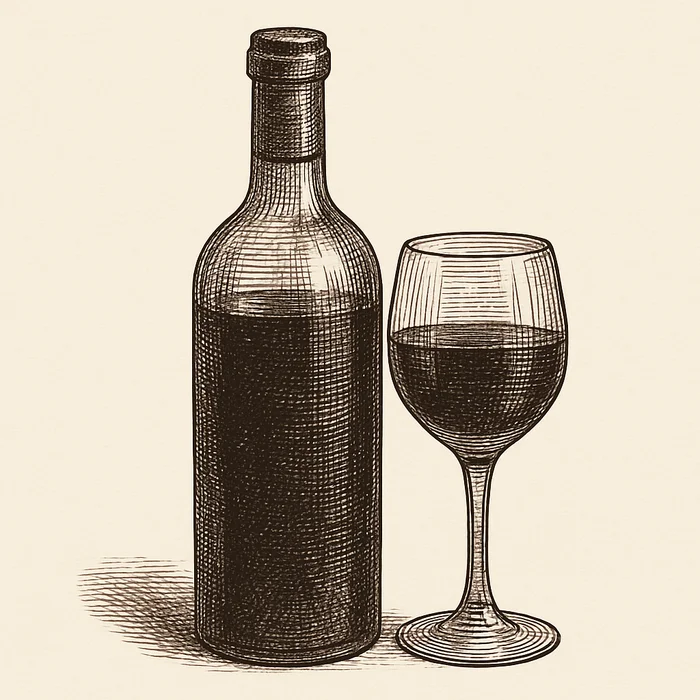
Red Wine
The most contested ingredient in longevity nutrition. Traditional Mediterranean populations drank red wine with meals and lived long. But a 2018 Global Burden of Disease analysis found the safest level of alcohol consumption is zero, and a 2023 meta-analysis of 107 cohort studies found the apparent protective J-curve largely disappears after correcting for abstainer bias. The truth depends on what you are comparing — and on being honest about what the polyphenols can and cannot do.
Why It Matters for Longevity
Red wine's longevity case rests on a specific set of polyphenols that are largely absent from white wine: procyanidins (oligomeric proanthocyanidins), anthocyanins, resveratrol, and quercetin. These compounds operate through distinct mechanisms — endothelin-1 suppression, SIRT1 activation, and gut microbiota modulation — that have real biological support, even if the clinical translation is incomplete. The counterargument is that ethanol is a Group 1 IARC carcinogen and the net health effect depends on individual cancer risk profiles and what you compare red wine against.
Procyanidins and Endothelin-1: The Vascular Mechanism
The most compelling mechanistic evidence for red wine's cardiovascular effects centers not on resveratrol — the compound that attracts the most popular attention — but on procyanidins, a class of condensed tannins found at high concentrations in the grape skin and seeds.
A landmark paper in Nature by Roger Corder and colleagues identified procyanidins as the principal vasoactive polyphenols in red wine and provided the first geographical explanation for the French Paradox (Corder et al., 2006, Nature). The mechanism: procyanidins potently inhibit the synthesis of endothelin-1, a vasoconstrictor peptide produced by vascular endothelial cells. Elevated endothelin-1 is an independent predictor of coronary atherosclerosis and heart failure. Wines from southwestern France (Tannat-based appellations: Madiran, Cahors) and from Sardinia contain substantially higher procyanidin concentrations than most commercially popular reds — a consequence of traditional production methods involving extended maceration with grape seeds, which extract more tannins. Corder et al. noted that these high-procyanidin wine regions correspond to areas of documented population longevity. A clinical follow-up found that a grape-wine polyphenol extract at achievable concentrations reduced plasma endothelin-1 by approximately 10% in mildly hypertensive subjects (Consumption of a polyphenol-rich grape-wine extract lowers ambulatory blood pressure in mildly hypertensive subjects, 2015, J Hypertens).
The practical implication: procyanidin content varies dramatically by grape variety and winemaking. A glass of Madiran or Cannonau (Sardinian Grenache) may deliver 5–10 times the procyanidin content of a light Pinot Grigio or commercial Merlot. If you drink red wine for the polyphenol benefit, variety and origin matter.
Resveratrol and SIRT1: Real Mechanism, Uncertain Dietary Dose
Resveratrol is a stilbene polyphenol concentrated in grape skins (and therefore present at 5–10 times higher levels in red wine than white, due to skin-contact fermentation). Its molecular mechanism is well-established: resveratrol directly activates SIRT1, a NAD⁺-dependent deacetylase that regulates stress response, inflammation, DNA repair, and mitochondrial biogenesis. SIRT1 overexpression extends lifespan in multiple model organisms, and resveratrol has been called a "caloric restriction mimetic" — meaning it partially recapitulates the metabolic signatures of caloric restriction without requiring food reduction.
A 2024 review of the evidence (Rogina & Tissenbaum, 2024, Front Genet) summarized: SIRT1 overexpression consistently extends lifespan in yeast, worms, flies, and mice; caloric restriction correlates with heightened sirtuin activity; and resveratrol recapitulates some of these effects in animal models. In rhesus monkeys on a high-fat diet, resveratrol reduced adipose tissue inflammation and metabolic markers associated with aging.
The honest limitation is translation to humans at dietary doses. A 2023 randomized clinical trial in 48 healthy adults aged 55–65 compared resveratrol supplementation to energy restriction over 30 days: both interventions increased circulating SIRT1 (p < 0.001), and post-treatment SIRT1 correlated with nitrate-mediated vasodilation (r = 0.433; p < 0.01), but SIRT1 only independently predicted vascular function in the energy restriction group, not the resveratrol group (Gonçalinho et al., 2023, Nutrients). This result illustrates both the potential and the limitation: resveratrol can raise SIRT1 levels in humans, but functional vascular benefit at supplemental doses remains inconsistent.
At dietary doses from wine — roughly 0.1–1.5 mg per 125 mL glass, with bioavailability of 1–5% — the SIRT1 activation is almost certainly sub-threshold for pharmacological effect. The wine matrix may compensate partially by combining resveratrol with quercetin, anthocyanins, and procyanidins that collectively support the same pathways; but direct evidence for SIRT1-mediated longevity benefit from dietary wine consumption in humans does not yet exist. Resveratrol supplements at 500–2,000 mg/day are a different matter pharmacologically — and a different risk profile.
Gut Microbiota Diversity: The Polyphenol Prebiotic Effect
Red wine polyphenols are incompletely absorbed in the small intestine — the majority reach the colon intact, where they serve as substrates for microbial metabolism. This is not a side effect; it is a primary mechanism through which dietary polyphenols improve gut ecology.
A large-scale study using three independent UK cohorts (twins and unrelated individuals, total n = several thousand) found that red wine consumption was associated with significantly higher gut microbiota alpha-diversity compared to non-drinkers, beer, cider, and spirits — even after controlling for diet, BMI, and socioeconomic status (Le Roy et al., 2020, Gastroenterology). When the analysis compared red wine drinkers to white wine drinkers specifically, the alpha-diversity advantage persisted, implicating the polyphenol fraction (higher in red) rather than alcohol itself as the active variable.
Earlier controlled human work identified the specific bacteria involved. A crossover study in healthy volunteers showed that moderate red wine polyphenol intake significantly increased fecal populations of Bifidobacterium, Lactobacillus, and butyrate-producing bacteria (including Faecalibacterium prausnitzii and Roseburia) while reducing Lipopolysaccharide (LPS)-producing pathobionts (Queipo-Ortuño et al., 2012, Am J Clin Nutr). Increased gut microbiota diversity is associated with lower systemic inflammation, better metabolic regulation, and reduced risk of multiple chronic diseases. This pathway — polyphenol prebiotic effect → microbiota diversity → reduced inflammation — is now considered a primary mechanism through which the Mediterranean diet produces its benefits, with red wine polyphenols as one of several contributors alongside olive oil phenolics, legume fiber, and vegetable polyphenols.
Wine Within the Mediterranean Pattern: PREDIMED Evidence
The strongest human evidence for red wine's cardiovascular role comes from the PREDIMED cohort. A 2026 analysis of two Spanish cohorts — PREDIMED (7,447 high-risk participants followed 4.8 years for CVD and 17 years for mortality) and the SUN project (23,133 younger participants, 22-year follow-up) — found that among participants with good overall Mediterranean diet compliance, those who included wine had a hazard ratio of 0.55 (95% CI 0.36–0.83) for cardiovascular events and 0.67 (95% CI 0.57–0.78) for all-cause mortality compared to poor-diet participants who excluded wine (Martínez-González et al., 2026, Eur Heart J). Critically, the mortality protection disappeared in participants drinking three or more glasses per day, and was not present in the SUN cohort on its own — the benefit emerged from wine embedded in the full Mediterranean pattern, not wine alone.
An earlier PREDIMED sub-analysis of 5,801 participants confirmed that those drinking at least one glass of red wine daily had significantly lower prevalence of metabolic syndrome (OR 0.56, 95% CI 0.45–0.68, p < 0.001), with particularly strong associations for reduced blood pressure (OR 0.28) and improved HDL-cholesterol (OR 0.42), suggesting that vascular benefits are real within this dietary context (Tresserra-Rimbau et al., 2015, Br J Nutr).
What PREDIMED cannot tell us is whether those benefits are attributable to red wine specifically, or to the total polyphenol load of the diet in which red wine participates.
The Honest Risk Tradeoff
The cardiovascular and microbiota signals above are real. But they must be weighed against what the alcohol itself does.
Ethanol is a Group 1 IARC carcinogen. Even light drinking (under 12.5 g/day — roughly one standard drink) is associated with increased risk of breast, colorectal, esophageal, and oral cancers. The J-shaped mortality curve that made moderate drinking appear protective for decades has substantially collapsed under methodological scrutiny: a 2023 meta-analysis of 107 cohort studies covering 4.8 million participants found no statistically significant reduction in all-cause mortality for low-volume drinkers (1.3–24 g/day) compared to lifetime nondrinkers once studies corrected for "sick quitter" bias — the systematic error of classifying former heavy drinkers and people who quit due to illness as "abstainers," which artificially makes the abstainer reference group look sicker (Zhao et al., 2023, JAMA Netw Open). In fully adjusted models, the risk ratio for low-volume drinkers was 0.93 (95% CI 0.86–1.00) — not statistically significant. The Zhao finding is covered in more depth on the white-cooking-wine page.
The honest framing for red wine in a longevity context is this: the polyphenols (procyanidins, resveratrol, anthocyanins, quercetin) are biologically active through specific and well-characterized mechanisms. The evidence that these mechanisms produce real cardiovascular benefit in Mediterranean populations is suggestive, not conclusive. That benefit does not require alcohol — the same polyphenols are available from food sources. If you already drink, switching to red wine with meals is the lowest-harm alcohol choice. If you do not currently drink, the evidence does not justify starting.
Getting the Polyphenols Without the Alcohol
The entire polyphenol benefit case for red wine can be assembled through non-alcoholic foods, often at higher concentrations and without carcinogenic risk:
- Procyanidins: dark chocolate (70%+), apple skin, bilberries, cranberries, and grape seed extract all deliver oligomeric proanthocyanidins. A square of 85% dark chocolate contains more procyanidins than a glass of most commercial red wines.
- Resveratrol: red and purple grapes (skin), blueberries, pomegranate, and peanuts. Resveratrol-rich grape juice delivers the compound without ethanol.
- Anthocyanins: blueberries, blackberries, black currants, and Concord grapes provide 4–10 times the anthocyanin concentration of a typical glass of red wine.
- Quercetin: capers (the single richest dietary source at ~180 mg/100g), red onion, kale, and apples.
- Gut microbiota diversity: the prebiotic effect of wine polyphenols is replicated by any fiber-rich, polyphenol-dense diet — legumes, vegetables, olive oil, and mixed berries achieve the same microbiota endpoints without alcohol.
The Longevity Diet's inclusion of 1 glass of red wine with dinner reflects an honest recognition that moderate wine consumption is deeply embedded in the Mediterranean food cultures where the longest healthy lifespans have been documented — and that this cultural practice, within the full dietary pattern, appears not to impose net harm at one glass per day with food. It is not a prescription to drink, and it is not an endorsement of alcohol as a health food.
How to Use It
If you drink, drink only with meals. This is how traditional Mediterranean populations consumed wine — never as a pre-dinner aperitivo on an empty stomach. One glass for women, 1–2 for men, with food. Benefits disappear and harms increase rapidly beyond moderate intake. For procyanidin content, favor Tannat (Madiran, Cahors), Cannonau (Sardinia), or other full-maceration traditional reds over light commercial varieties. If you do not currently drink, do not start — get the polyphenols from food.
What to Pair It With
| Ingredient | Why | Tradition |
|---|---|---|
| Extra-virgin olive oil | Together ~25% of calories in traditional Neapolitan diet; olive oil enhances polyphenol absorption | Mediterranean |
| Dark chocolate | Shared procyanidin profiles; additive antioxidant and endothelin-1 suppression | European |
| Legumes | Traditional accompaniment to Mediterranean bean dishes; combined prebiotic effect on gut microbiota | Mediterranean |
| Walnuts | Complementary polyphenols; walnut ellagitannins + resveratrol combination | Mediterranean |
| Rosemary | Herb-forward marinades and braises; rosemary carnosic acid complements wine tannin antioxidant activity | Mediterranean |
Flavor Profile
Tannic, fruity, dry, acidic, complex. Berry and earthy aromas with oak and spice notes. Ranges from light to full-bodied with silky to astringent textures. High-procyanidin wines (Madiran, Cannonau, Sagrantino) tend toward greater astringency — the tannin structure associated with the endothelin-1 inhibition.
The Science
The four main mechanisms are mechanistically distinct and supported at different levels of evidence. Procyanidin-mediated endothelin-1 inhibition has the most direct human evidence and the strongest geographical correlate. Gut microbiota diversity effects are well-documented in humans. SIRT1 activation via resveratrol is robust in animal models but not yet confirmed at dietary wine doses in humans. The PREDIMED cardiovascular association is real but confounded by total diet quality. The cancer risk from ethanol is not hypothetical — it is Group 1 evidence, and it does not vanish at low consumption. The Zhao 2023 meta-analysis (107 cohorts, 4.8M participants) should weigh on any honest reading of this literature. The reasonable conclusion: moderate red wine with meals in the context of a Mediterranean diet is probably neutral to mildly protective for cardiovascular disease in populations already following that diet, but carries real cancer risk that is not eliminated by the polyphenol content. Non-alcoholic polyphenol sources provide the benefit without the risk.
Key Nutrients
| Nutrient | Per glass (125 ml) | Notes |
|---|---|---|
| Procyanidins (proanthocyanidins) | 25–100 mg | Highly variable by variety; Madiran/Cannonau may reach 200 mg+; primary endothelin-1 inhibitors |
| Resveratrol | 0.1–1.5 mg | Low bioavailability (~1–5%); SIRT1 activator in vitro and animal models; dietary-dose human evidence limited |
| Anthocyanins | 20–50 mg | Better absorbed in wine's acidic environment; contribute to microbiota diversity effects |
| Quercetin | 4–16 mg | SIRT1 activator; complements procyanidin vascular effects |
| Ethanol | ~12–15% ABV | Raises HDL; Group 1 IARC carcinogen; net mortality benefit in Zhao 2023 meta-analysis: not statistically significant |
References
-
Corder R, Mullen W, Khan NQ, Marks SC, Wood EG, Carrier MJ, Crozier A. Oenology: red wine procyanidins and vascular health. Nature. 2006;444(7119):566. PMID: 17136085. doi:10.1038/444566a
-
Le Roy CI, Wells PM, Si J, Raes J, Bell JT, Spector TD. Red Wine Consumption Associated With Increased Gut Microbiota α-Diversity in 3 Independent Cohorts. Gastroenterology. 2020;158(1):270–272.e2. PMID: 31472153. doi:10.1053/j.gastro.2019.08.024
-
Gonçalinho GHF, Kuwabara KL, Faria NFO, Goes MFDS, Roggerio A, Avakian SD, Strunz CMC, Mansur AP. Sirtuin 1 and Vascular Function in Healthy Women and Men: A Randomized Clinical Trial Comparing the Effects of Energy Restriction and Resveratrol. Nutrients. 2023;15(13):3009. PMID: 37447275. doi:10.3390/nu15133009
-
Tresserra-Rimbau A, Medina-Remón A, Lamuela-Raventós RM, et al. Moderate red wine consumption is associated with a lower prevalence of the metabolic syndrome in the PREDIMED population. Br J Nutr. 2015;113(Suppl 2):S121–30. PMID: 26148915. doi:10.1017/S0007114514003262
-
Martínez-González MA, Bes-Rastrollo M, Sayon-Orea C, Ruiz-Canela M, et al. Wine consumption, Mediterranean diet, and cardiovascular risk in two Spanish cohorts. Eur Heart J. 2026. PMID: 41667089.
-
Rogina B, Tissenbaum HA. SIRT1, resveratrol and aging. Front Genet. 2024;15:1393181. PMID: 38784035. doi:10.3389/fgene.2024.1393181
-
Queipo-Ortuño MI, Boto-Ordóñez M, Murri M, et al. Influence of red wine polyphenols and ethanol on the gut microbiota ecology and biochemical biomarkers. Am J Clin Nutr. 2012;95(6):1323–1334. PMID: 22552027. doi:10.3945/ajcn.111.027847
-
Zhao J, Stockwell T, Naimi T, Churchill S, Clay J, Sherk A. Association Between Daily Alcohol Intake and Risk of All-Cause Mortality: A Systematic Review and Meta-analyses. JAMA Netw Open. 2023;6(3):e236185. PMID: 37000449. doi:10.1001/jamanetworkopen.2023.6185