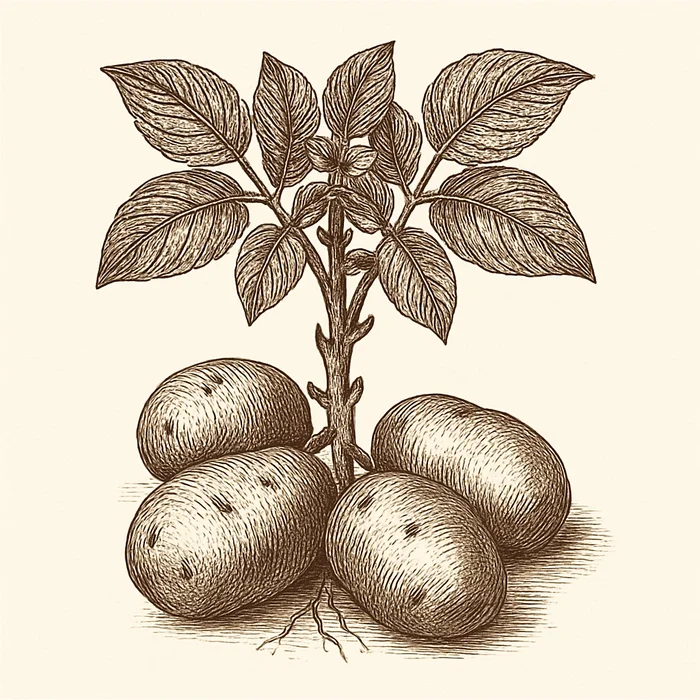
Potatoes
Used in several Longevity Diet soups and stews. Provides iron (2 mg per medium, 11% DV), magnesium (43 mg per 3.5 oz baked with skin, 11% DV), vitamin C (17 mg per medium baked, 28% DV), potassium (544 mg per 100 g baked, 12% DV), and calcium (62 mg per cup baked with salt, 6% DV). Sweet potato is a top vitamin A source (1,403 mcg RAE per whole baked, 561% DV).
Why It Matters for Longevity
Starchy vegetables providing key micronutrients and resistant starch. Regular potato cooked and cooled contains significant resistant starch (RS3 type) that functions as a prebiotic — it feeds beneficial gut bacteria and produces short-chain fatty acids with anti-inflammatory and insulin-sensitizing effects. Sweet potato's extraordinary beta-carotene content is linked to reduced mortality in large cohort data.
Dietary resistant starch from potato significantly altered gut microbiota composition and increased short-chain fatty acid production, confirming its role as a prebiotic that supports metabolic health (Baxter et al., 2019, mBio).
Higher serum carotenoid levels — achievable via sweet potato intake — were inversely associated with all-cause and cardiovascular mortality in a large prospective cohort, supporting beta-carotene-rich foods as longevity foods (Zhu et al., 2023, J Am Heart Assoc).
Resistant Starch: Cooking and Cooling Matters
The resistant starch content of potato changes substantially with preparation. A study measuring RS across three common potato varieties (Yukon Gold, Dark Red Norland, Russet Burbank) found that chilled cooked potatoes (4°C) contained significantly more resistant starch than the same potatoes served hot (65°C) or reheated, and that baked preparations retained more RS than boiled ones — with variety having no significant effect (Raatz et al., 2016, Food Chem). The mechanism is retrogradation: upon cooling, gelatinized amylose chains reassociate into tightly packed crystalline structures (RS3) that resist amylase digestion in the small intestine. Cooling a boiled potato overnight at refrigerator temperature can raise its RS content from roughly 1–2 g to 3–7 g per 100 g, shifting its effective glycemic impact downward.
Resistant Starch and Metabolic Syndrome
The RS delivered by cooked-and-cooled potato translates into clinically relevant metabolic effects. A systematic review and meta-analysis of 19 RCTs in patients with metabolic syndrome found that resistant starch supplementation reduced fasting plasma glucose by a mean of 4.28 mg/dL, insulin by 1.95 mIU/L, HbA1c by 0.60%, total cholesterol by 8.19 mg/dL, LDL cholesterol by 8.57 mg/dL, and the pro-inflammatory cytokine TNF-α by 2.02 pg/mL (Halajzadeh et al., 2020, Crit Rev Food Sci Nutr). The primary mechanisms are: (1) RS escapes small-intestinal digestion, reducing the glucose load delivered to the portal vein; (2) colonic fermentation of RS produces short-chain fatty acids, particularly butyrate, which improve insulin sensitivity via FFAR2/FFAR3 receptor signaling and suppress hepatic glucose output.
Potassium and Cardiovascular Function
White and sweet potatoes are among the highest-potassium common foods (544 mg per 100 g baked with skin), which is relevant independent of starch effects. A systematic review and meta-analysis of 22 RCTs (1,606 participants) and 11 cohort studies (127,038 participants) found that increased potassium intake was associated with a 3.49 mmHg reduction in systolic blood pressure in adults with hypertension (95% CI: 1.82–5.15 mmHg) and a 24% lower risk of stroke (risk ratio 0.76) (Aburto et al., 2013, BMJ). At higher intake levels (90–120 mmol/day), systolic reductions reached 7.16 mmHg. No adverse effects on renal function, blood lipids, or catecholamine levels were observed at dietary intake levels. The mechanism involves potassium-mediated natriuresis: higher intracellular potassium in vascular smooth muscle lowers vascular resistance by hyperpolarizing cell membranes and reducing calcium-dependent vasoconstriction.
Vitamin C Stability
Potato is one of the few starchy foods that contributes meaningfully to vitamin C intake: a medium baked potato with skin provides approximately 17 mg (28% DV). Vitamin C from potato is water-soluble and heat-sensitive — boiling in water can reduce content by 30–50%, while baking or steaming retains more. Vitamin C supports collagen synthesis (prolyl hydroxylase cofactor), regenerates oxidized vitamin E in cell membranes, and enhances non-heme iron absorption from co-consumed legumes, which matters given that potato is often paired with beans in Longevity Diet soups.
How to Use It
Use as a base in Longevity Diet soups and stews. Cook and cool white potato before serving to maximize resistant starch. Pair sweet potato with olive oil to enhance fat-soluble beta-carotene absorption. Keep the skin on for fiber and potassium. Potato salad served at room temperature or chilled retains substantially more resistant starch than freshly mashed or roasted potatoes.
What to Pair It With
| Ingredient | Why | Tradition |
|---|---|---|
| Olive oil | Fat improves beta-carotene absorption; also lowers glycemic response | The Longevity Diet |
| Legumes | Potatoes add carbohydrates and potassium; legumes add protein; traditional blue-zone soup base | Blue Zones |
| Vegetables | Book uses potatoes as starchy base in soups and stews | The Longevity Diet |
Flavor Profile
Taste: starchy, earthy, mildly sweet (sweet potato). Aroma: earthy, neutral. Texture: fluffy when baked, waxy when boiled. Category: starchy vegetable.
The Science
- Baxter et al., 2019, mBio: Dietary resistant starch significantly altered gut microbiota and short-chain fatty acid production in humans, confirming potato resistant starch as a prebiotic.
- Zhu et al., 2023, J Am Heart Assoc: Higher serum carotenoid levels inversely associated with all-cause and cardiovascular mortality in a large US cohort.
- Raatz et al., 2016, Food Chem: RS content varies by cooking method and service temperature — chilled > hot, baked > boiled — but not by variety; supports cook-and-cool preparation strategy.
- Halajzadeh et al., 2020, Crit Rev Food Sci Nutr: Meta-analysis of 19 RCTs showing resistant starch reduces fasting glucose by 4.28 mg/dL, LDL by 8.57 mg/dL, and TNF-α by 2.02 pg/mL in metabolic syndrome patients.
- Aburto et al., 2013, BMJ: Meta-analysis of 22 RCTs and 11 cohort studies; increased potassium intake reduced systolic BP by 3.49 mmHg in hypertensives and stroke risk by 24%.
References
- Baxter NT, Schmidt AW, Venkataraman A, Kim KS, Waldron C, Martens EC, Martens JA, Barreiro LB, Krajmalnik-Brown R, Walter J, Sonnenburg JL, Spivey KL, Feazel LM, Schloss PD. Dynamics of Human Gut Microbiota and Short-Chain Fatty Acids in Response to Dietary Interventions with Three Fermentable Fibers. mBio. 2019;10(1):e02566-18. PMID: 30696735. doi:10.1128/mBio.02566-18
- Zhu X, Zheng J, Yao J, Qian H, Cao H. Associations of Serum Carotenoids With Risk of All-Cause and Cardiovascular Mortality in Hypertensive Individuals. J Am Heart Assoc. 2023;12(6):e028246. PMID: 36752230. doi:10.1161/JAHA.122.028246
- Raatz SK, Idso L, Johnson LK, Jackson MI, Combs GF Jr. Resistant starch analysis of commonly consumed potatoes: Content varies by cooking method and service temperature but not by variety. Food Chem. 2016;208:297-300. PMID: 27132853.
- Halajzadeh J, Milajerdi A, Reiner Ž, Amirani E, Kolahdooz F, Barekat M, Mirzaei H, Mirhashemi SM, Asemi Z. Effects of resistant starch on glycemic control, serum lipoproteins and systemic inflammation in patients with metabolic syndrome and related disorders: A systematic review and meta-analysis of randomized controlled clinical trials. Crit Rev Food Sci Nutr. 2020;60(18):3172-3184. PMID: 31661295.
- Aburto NJ, Hanson S, Gutierrez H, Hooper L, Elliott P, Cappuccio FP. Effect of increased potassium intake on cardiovascular risk factors and disease: systematic review and meta-analyses. BMJ. 2013;346:f1378. PMID: 23558164.
Key Nutrients
| Nutrient | Per 100g | Notes |
|---|---|---|
| Beta-carotene (sweet potato) | 8,509 mcg | Fat-soluble; absorption significantly enhanced by eating with olive oil |
| Potassium | 544 mg (baked with skin) | Highest potassium of common starchy foods; supports cardiovascular function |
| Resistant starch (cooled) | ~3–7 g | Acts as prebiotic; lowers glycemic response compared to freshly cooked |
| Vitamin C | ~17 mg (medium baked) | Water-soluble; supports collagen synthesis and non-heme iron absorption |