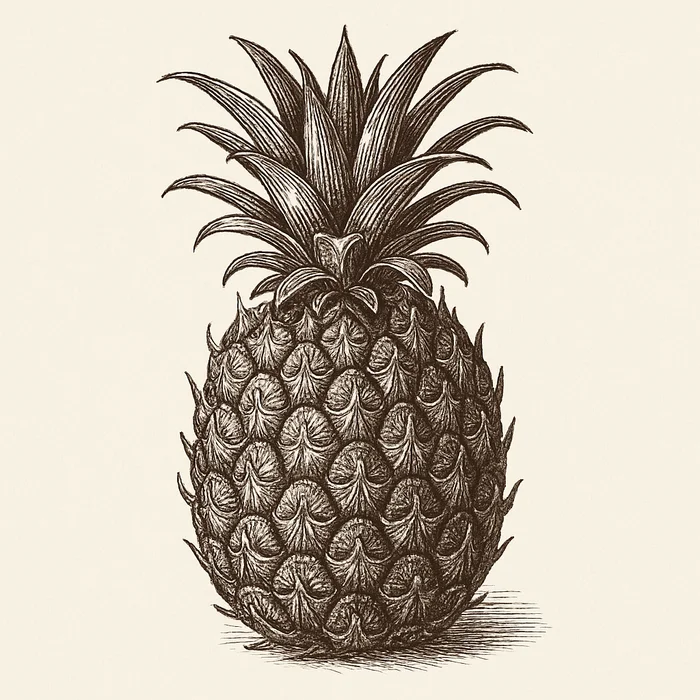
Pineapple
Pineapple is suggested as a 100 g fresh dessert option in the Longevity Diet. It is the only food source of bromelain, a family of proteolytic enzymes with clinically documented anti-inflammatory, anti-edematous, and immunomodulatory effects.
Why It Matters for Longevity
Pineapple provides natural sugars with accompanying fiber, vitamin C, and manganese — preferable to refined-sugar desserts — while its unique bromelain content adds anti-inflammatory activity not found in other fruits.
Bromelain: Mechanism and Clinical Evidence
Bromelain is a cysteine protease extracted from the stem and fruit of Ananas comosus. Its anti-inflammatory action operates through two converging pathways: direct inhibition of pro-inflammatory prostaglandin synthesis and downregulation of NF-κB signaling, which reduces transcription of TNF-α, IL-1β, and IL-6. Unlike NSAIDs, bromelain does not inhibit cyclooxygenase non-selectively, which may explain its relatively benign gastrointestinal safety profile.
A comprehensive review of bromelain's mechanisms and therapeutic applications confirmed that its anti-inflammatory, anti-edematous, and fibrinolytic activities have been demonstrated across multiple human trials, with potential applications in reducing chronic low-grade inflammation associated with aging (Pavan et al., 2012, Biotechnol Res Int).
A 2023 systematic review and meta-analysis of bromelain's clinical efficacy and safety evaluated 54 studies, including 39 eligible for quantitative meta-analysis. For pain reduction, oral bromelain produced a statistically significant mean difference of −0.27 on pain scales (95% CI: −0.45, −0.08; I² = 29%) compared to controls. For wound debridement, topical bromelain reduced treatment duration by a mean of 6.89 days (95% CI: −7.94, −5.83; I² = 2%). The analysis also found benefit for sinusitis outcomes. Major adverse effects were not reported, with gastrointestinal complaints (flatulence, nausea) being the most common minor reactions (Leelakanok et al., 2023, Nutr Health).
A separate 2023 systematic review of seven RCTs specifically examining bromelain's effect on circulating inflammatory markers (IL-6, IL-8, TNF-α, CRP) found that isolated bromelain at 200–1050 mg/day or in combination with other enzymes at 99.9–1200 mg/day reduced inflammatory parameters in most studies, across treatment durations of 1 to 16 weeks. The authors note that population heterogeneity and non-standardized dosing protocols make pooled conclusions difficult, but the directional effect across trials favors reduction of inflammatory markers (Pereira et al., 2023, Clin Nutr ESPEN).
Bromelain retains proteolytic activity after oral absorption — confirmed by studies detecting intact enzyme in plasma — which is unusual for dietary proteins. Its gastric stability enables systemic rather than only local digestive effects.
Vitamin C: Immune Competence
Pineapple provides 47.8 mg vitamin C per 100 g — approximately 53% of the daily requirement from a single 100 g serving. Vitamin C accumulates within immune cells at concentrations 10- to 100-fold higher than plasma levels, supporting neutrophil chemotaxis and oxidant scavenging at sites of infection. Adequate vitamin C intake supports immune function at all stages, from epithelial barrier integrity to lymphocyte proliferation, as documented in systematic reviews of vitamin C and immune function (Carr & Maggini, 2017, Nutrients).
Manganese and Mitochondrial Antioxidant Defense
Pineapple provides 0.93 mg manganese per 100 g, approximately 40% of the daily value, making it one of the richest common dietary sources of this trace mineral. Manganese is the obligate metal cofactor of mitochondrial superoxide dismutase (MnSOD, encoded by SOD2), the primary enzymatic defense against superoxide radicals generated during electron transport chain activity. When cells are cultured in manganese-deficient media, SOD2 accumulates in an iron-bearing inactive form rather than its functional manganese-containing state. Reviews have established that diminished MnSOD activity correlates with pathologies including cardiovascular disease, cancer, and neurodegenerative disorders, positioning adequate manganese intake as relevant to mitochondrial redox homeostasis and healthy aging (Holley et al., 2011, Int J Mol Sci).
Glycemic Context
Pineapple has a measured glycemic index of 82±4 in healthy volunteers, classifying it as a high-GI fruit — higher than papaya (GI 58) or watermelon (GI 55). This is relevant for portion discipline: the Longevity Diet's recommended 100 g serving limits the absolute glycemic load, but the high GI means that larger portions eaten without fat or protein would produce rapid postprandial glucose excursions. Pairing pineapple with a handful of nuts or yogurt substantially attenuates the glycemic response.
Fruit Intake and Mortality
A dose-response meta-analysis of 95 prospective studies confirmed that fruit consumption is associated with significant reductions in all-cause and cardiovascular mortality, with dose-dependent benefits extending across fruit types including tropical fruits (Aune et al., 2017, Int J Epidemiol).
How to Use It
Eat 100 g fresh pineapple as dessert. Choose fresh over canned — canning destroys bromelain enzyme activity through heat treatment. Fresh pineapple retains full enzyme activity; frozen pineapple retains most of it. The core contains the highest bromelain concentration, though it is tougher; include it in smoothies. Pair with a protein or fat source to attenuate the high glycemic index.
What to Pair It With
| Ingredient | Why | Tradition |
|---|---|---|
| Ginger | Both pineapple bromelain and ginger gingerols share anti-inflammatory mechanisms | Tropical culinary |
| Spinach | Vitamin C enhances non-heme iron absorption from plant greens | General |
| Mixed berries | Diversifies the polyphenol and antioxidant portfolio per the Longevity Diet's variety principle | The Longevity Diet |
| Mint | Cooling aromatic complement to pineapple's bright tropical sweetness | Caribbean / South Asian |
| Greek yogurt | Protein and fat slow glucose absorption; mitigates high GI | Modern |
Flavor Profile
Sweet, tart, and intensely tropical. Aroma is fruity, floral, and ester-rich. Texture is juicy and fibrous when fresh. Category: fresh tropical fruit.
The Science
- Pavan et al., 2012, Biotechnol Res Int: Review of bromelain properties — anti-inflammatory, anti-edematous, immunomodulatory, and fibrinolytic activities demonstrated in human trials; NF-κB and cytokine modulation supporting reduction of chronic low-grade inflammation.
- Leelakanok et al., 2023, Nutr Health: Systematic review and meta-analysis of 54 studies — oral bromelain reduced pain scores (mean difference −0.27; 95% CI −0.45 to −0.08); topical bromelain reduced wound debridement time by ~7 days; no major adverse effects.
- Pereira et al., 2023, Clin Nutr ESPEN: Systematic review of 7 RCTs — bromelain (200–1050 mg/day, 1–16 weeks) reduced inflammatory markers including IL-6, TNF-α, and CRP in most trials; population heterogeneity limits pooled conclusions.
- Carr & Maggini, 2017, Nutrients: Systematic review — vitamin C supports all stages of immune function; 100 g fresh pineapple provides approximately 53% of the daily requirement.
- Holley et al., 2011, Int J Mol Sci: Review — MnSOD is the primary mitochondrial antioxidant defense; manganese deficiency inactivates the enzyme; low MnSOD activity correlates with cardiovascular disease and cancer.
- Aune et al., 2017, Int J Epidemiol: Dose-response meta-analysis of 95 prospective studies — fruit consumption associated with significant reductions in all-cause and cardiovascular mortality.
References
- Pavan R, Jain S, Shraddha, Kumar A. Properties and therapeutic application of bromelain: a review. Biotechnol Res Int. 2012;2012:976203. PMID: 23304525. doi:10.1155/2012/976203
- Leelakanok N, Petchsomrit A, Janurai T, Saechan C, Sunsandee N. Efficacy and safety of bromelain: a systematic review and meta-analysis. Nutr Health. 2023. PMID: 37157782. doi:10.1177/02601060231173732
- Pereira IC, Vieira EES, Torres LRO, et al. Bromelain supplementation and inflammatory markers: a systematic review of clinical trials. Clin Nutr ESPEN. 2023. PMID: 37202035. doi:10.1016/j.clnesp.2023.02.028
- Carr AC, Maggini S. Vitamin C and immune function. Nutrients. 2017;9(11):1211. PMID: 29099763. doi:10.3390/nu9111211
- Holley AK, Bakthavatchalu V, Velez-Roman JM, St Clair DK. Manganese superoxide dismutase: guardian of the powerhouse. Int J Mol Sci. 2011;12(10):7114-7162. PMID: 22072939. doi:10.3390/ijms12107114
- Aune D, Giovannucci E, Boffetta P, et al. Fruit and vegetable intake and the risk of cardiovascular disease, total cancer and all-cause mortality — a systematic review and dose-response meta-analysis of prospective studies. Int J Epidemiol. 2017;46(3):1029-1056. PMID: 28338764. doi:10.1093/ije/dyw319
Key Nutrients
| Nutrient | Per 100g | Notes |
|---|---|---|
| Bromelain | ~40–60 mg (varies by ripeness and part) | Survives gastric transit in part; active in fresh and frozen; destroyed by heat (canning) |
| Vitamin C | 47.8 mg | Bioavailable in fresh fruit; reduced by ~50% in canned or cooked pineapple |
| Manganese | 0.93 mg (~40% DV) | Essential cofactor for mitochondrial superoxide dismutase (MnSOD); pineapple is one of the richest dietary sources |
| Dietary fiber | 1.4 g | Modest fiber content; includes some soluble fiber supporting gut microbiome health |
| Glycemic index | 82 ± 4 | High GI; 100 g serving limits absolute glycemic load; pair with fat or protein to attenuate response |