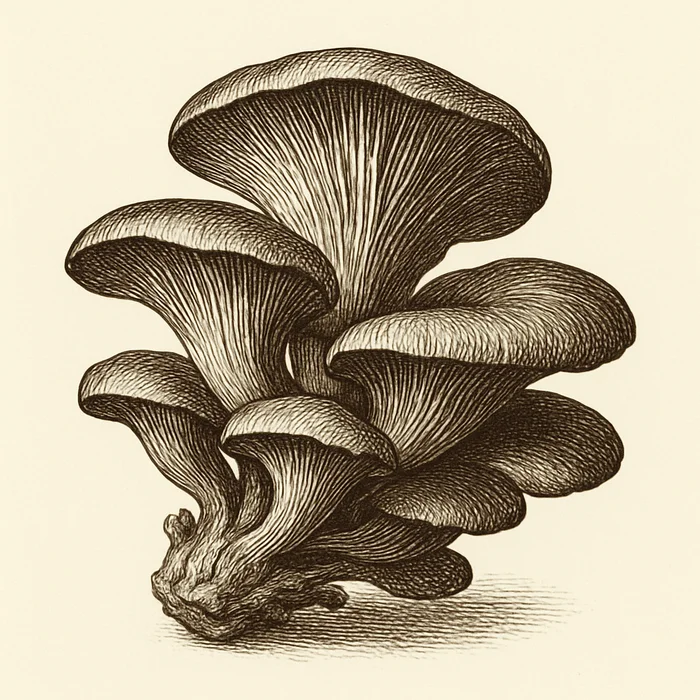
Oyster Mushrooms
Oyster mushrooms (Pleurotus ostreatus) are part of the mushroom group used in multiple Longevity Diet dishes. Like other mushrooms, they synthesize vitamin D2 (ergocalciferol) upon UV light exposure, and contain beta-glucans, ergothioneine, lovastatin, and phenolic antioxidants — a bioactive profile studied for cardiovascular, immune, and anti-tumor effects.
Why It Matters for Longevity
Mushrooms represent a unique category of edible fungi with antitumor and immunomodulating polysaccharides — primarily beta-glucans — that activate innate immune receptors including dectin-1, TLR-2, and CR3. A comprehensive review of medicinal mushrooms documented that Pleurotus species contribute beta-glucans, phenolic antioxidants, and other bioactive compounds with evidence for immune activation, LDL cholesterol reduction, and antiproliferative effects across multiple cancer cell lines (Wasser, 2002, Appl Microbiol Biotechnol).
Oyster mushrooms also synthesize ergocalciferol (vitamin D2) when exposed to sunlight or UV irradiation through conversion of ergosterol. A randomized controlled trial demonstrated that UV-irradiated button mushrooms (the same ergosterol-to-ergocalciferol mechanism operating in oyster mushrooms) significantly raised serum 25-hydroxyvitamin D levels in vitamin D-deficient subjects, with bioavailability comparable to vitamin D2 supplement capsules (Urbain et al., 2011, Eur J Clin Nutr). Exposing oyster mushrooms gills-up to sunlight for 15–30 minutes before use maximizes their vitamin D2 content.
Ergothioneine and Cardiovascular Mortality
Ergothioneine is a sulfur-containing amino acid synthesized only by fungi and certain bacteria; humans cannot produce it and must obtain it from dietary sources, with mushrooms being the dominant supplier. Pleurotus ostreatus is among the richest known dietary sources, providing roughly 0.5–5 mg per 100 g fresh weight depending on the strain and growing conditions.
Unlike most dietary antioxidants, ergothioneine has a dedicated transporter protein (OCTN1/SLC22A4) that actively accumulates it in tissues exposed to high oxidative stress — including erythrocytes, liver, bone marrow, and the lens of the eye — suggesting it evolved as a targeted cellular protectant rather than a general free-radical scavenger.
A prospective cohort study measuring 112 plasma metabolites in 3,236 participants from the population-based Malmö Diet and Cancer study followed subjects for a median 21.4 years. Higher circulating ergothioneine was the metabolite most strongly linked to a health-conscious dietary pattern and was independently associated with a 15% lower risk of coronary disease (HR 0.85, p=0.01), a 21% lower risk of cardiovascular mortality (HR 0.79, p=0.002), and a 14% reduction in all-cause mortality (HR 0.86, p<0.001) per 1 SD increment — after adjustment for age, sex, lifestyle, and other metabolites (Smith et al., 2020, Heart). The authors note the association is likely partially mediated by diet quality, but the independent signal after metabolite adjustment suggests ergothioneine itself, or closely co-occurring mushroom compounds, may have direct protective effects.
Pleuran (Beta-Glucan from Pleurotus) and Immune Function
The beta-glucan fraction extracted from Pleurotus ostreatus — commercially known as pleuran — has been the subject of several human clinical trials. In a double-blind, placebo-controlled randomized trial in 50 elite athletes undergoing intensive training, three months of pleuran supplementation significantly reduced the incidence of upper respiratory tract infection (URTI) symptoms, increased circulating natural killer (NK) cell counts, and prevented the exercise-induced decline in phagocytic activity seen in the placebo group (Bergendiova et al., 2011, Eur J Appl Physiol). Intense exercise suppresses mucosal immunity, creating an open window for infection; pleuran's ability to maintain NK cell numbers and phagocytic function during this period is mechanistically relevant for anyone under significant physical stress.
In a randomized double-blind placebo-controlled trial in children with recurrent respiratory tract infections, pleuran treatment produced a significant reduction in peripheral blood eosinophilia and stabilized total serum IgE levels, with the effect more pronounced in atopic subjects (Jesenak et al., 2014, Phytother Res). This anti-allergic effect — mediated through modulation of the Th1/Th2 balance — distinguishes Pleurotus-derived beta-glucan from oat or barley beta-glucan, which lack this allergen-dampening signal in clinical studies.
A systematic review of edible mushrooms and beta-glucans in human health confirmed that Pleurotus ostreatus contains approximately 24 g beta-glucan per 100 g dry matter — substantially higher than many other edible species — and identified clinical signals for cardiometabolic benefit, though the authors called for larger, more rigorously controlled trials to confirm the LDL-lowering effects suggested by smaller studies (Cerletti et al., 2021, Nutrients).
Lovastatin Content
Pleurotus ostreatus contains trace amounts of lovastatin, a natural HMG-CoA reductase inhibitor. The concentrations found in dietary portions (roughly 1–2.7 mg per 100 g dry weight) are far below the 20–80 mg pharmacological doses used clinically, so the LDL-lowering signal attributed to oyster mushrooms in dietary studies is more plausibly explained by its beta-glucan content forming a gel matrix that traps bile acids in the gut and disrupts cholesterol enterohepatic recycling — the same mechanism by which oat beta-glucan lowers LDL by approximately 0.25 mmol/L per 3 g dose in meta-analyses of randomized trials.
How to Use It
Sauté in extra-virgin olive oil with garlic at medium heat. Use 75–150 g raw per dish per Longevity Diet guidelines. Place gills-up in direct sunlight for 15–30 minutes before cooking to maximize vitamin D2 generation. Do not overcook — oyster mushrooms lose texture quickly; 3–4 minutes in a hot pan with olive oil and garlic is optimal.
What to Pair It With
| Ingredient | Why | Tradition |
|---|---|---|
| Garlic | Allicin and mushroom beta-glucans each independently modulate innate immunity | Mediterranean |
| Extra-virgin olive oil | Fat enhances absorption of fat-soluble vitamin D2 and ergothioneine | Mediterranean |
| Pasta | Classic Longevity Diet pairing; mushroom glutamates create intense umami with minimal protein | The Longevity Diet |
| Parmesan cheese | Both are high-glutamate ingredients; stacking umami makes plant-forward dishes satisfying | Italian |
Flavor Profile
Mild, delicate, and slightly sweet with umami depth. Aroma is fresh, earthy, and faintly anise-like. Texture is velvety and tender, slightly chewy at the edges when sautéed. Category: mushroom / fungus.
The Science
- Wasser, 2002, Appl Microbiol Biotechnol: Review of medicinal mushrooms including Pleurotus species — beta-glucans and other polysaccharides activate innate immune receptors, with evidence for LDL reduction, antiproliferative effects, and immunomodulation across multiple mushroom genera.
- Urbain et al., 2011, Eur J Clin Nutr: RCT — UV-irradiated mushrooms significantly raised serum 25-hydroxyvitamin D in deficient subjects; bioavailability of mushroom-derived vitamin D2 comparable to supplement capsules.
- Smith et al., 2020, Heart: Prospective cohort (n=3,236, median 21.4-year follow-up) — higher plasma ergothioneine independently associated with 15% lower coronary disease risk, 21% lower cardiovascular mortality, and 14% lower all-cause mortality per 1 SD increment.
- Bergendiova et al., 2011, Eur J Appl Physiol: Double-blind RCT (n=50 athletes) — pleuran supplementation significantly reduced URTI incidence, increased circulating NK cell counts, and prevented exercise-induced decline in phagocytic activity versus placebo.
- Jesenak et al., 2014, Phytother Res: Double-blind RCT — pleuran from Pleurotus ostreatus significantly reduced blood eosinophilia and stabilized total IgE in children with recurrent respiratory infections; anti-allergic effect more pronounced in atopic subjects.
- Cerletti et al., 2021, Nutrients: Systematic review of edible mushrooms and beta-glucans — Pleurotus ostreatus contains ~24 g beta-glucan per 100 g dry matter; identified cardiometabolic signals but noted need for larger trials.
References
- Wasser SP. Medicinal mushrooms as a source of antitumor and immunomodulating polysaccharides. Appl Microbiol Biotechnol. 2002;60(3):258-274. PMID: 12436306. doi:10.1007/s00253-002-1076-7
- Urbain P, Singler F, Ihorst G, Biesalski HK, Bertz H. Bioavailability of vitamin D₂ from UV-B-irradiated button mushrooms in healthy adults deficient in serum 25-hydroxyvitamin D: a randomised controlled trial. Eur J Clin Nutr. 2011;65(8):965-971. PMID: 21540874. doi:10.1038/ejcn.2011.53
- Smith E, Ottosson F, Hellstrand S, et al. Ergothioneine is associated with reduced mortality and decreased risk of cardiovascular disease. Heart. 2020;106(9):691-697. PMID: 31672783. doi:10.1136/heartjnl-2019-315485
- Bergendiova K, Tibenska E, Majtan J. Pleuran (β-glucan from Pleurotus ostreatus) supplementation, cellular immune response and respiratory tract infections in athletes. Eur J Appl Physiol. 2011;111(9):2033-2040. PMID: 21249381. doi:10.1007/s00421-011-1837-z
- Jesenak M, Hrubisko M, Majtan J, Rennerova Z, Banovcin P. Anti-allergic effect of Pleuran (β-glucan from Pleurotus ostreatus) in children with recurrent respiratory tract infections. Phytother Res. 2014;28(3):471-474. PMID: 23744488. doi:10.1002/ptr.5020
- Cerletti C, Esposito S, Iacoviello L. Edible Mushrooms and Beta-Glucans: Impact on Human Health. Nutrients. 2021;13(7):2195. PMID: 34202377. doi:10.3390/nu13072195
Key Nutrients
| Nutrient | Per 100g | Notes |
|---|---|---|
| Beta-glucans (pleuran) | ~0.6–2 g fresh; ~24 g dry weight | Immune-modulating polysaccharides; activate innate immune receptors; partially fermented by gut bacteria; clinically studied as isolated pleuran in RCTs |
| Ergothioneine | ~0.5–5 mg | Rare dietary antioxidant with dedicated transporter (OCTN1); accumulates in tissues under oxidative stress; independently associated with lower cardiovascular and all-cause mortality in prospective data |
| Vitamin D2 (ergocalciferol, UV-exposed) | Up to 400 IU (UV-treated) | Less potent than D3 but raises serum 25(OH)D; store gills-up in sunlight 15–30 min to maximize |
| Lovastatin | Trace amounts | Natural HMG-CoA reductase inhibitor; dietary amounts too low for pharmacological effect but may contribute to modest LDL-lowering alongside beta-glucan bile acid trapping |