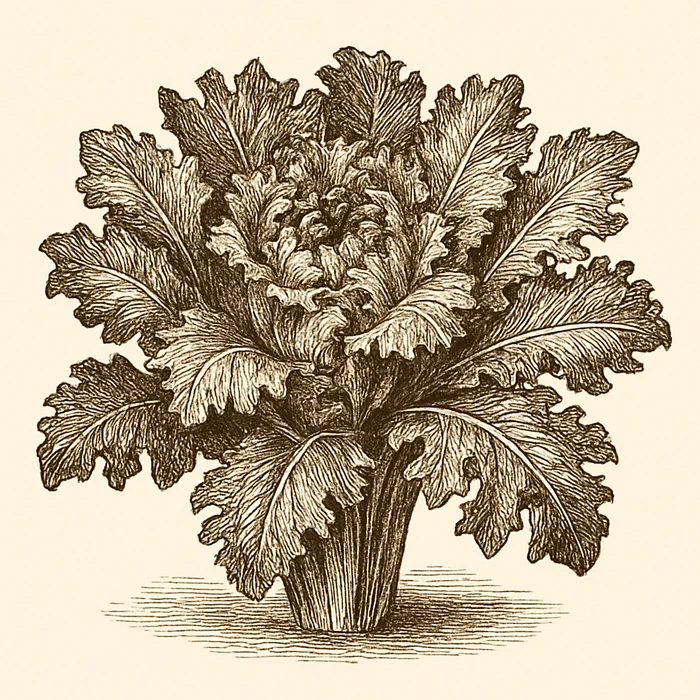
Escarole
Leafy green vegetable used in the Longevity Diet lunch dish with olives, pine nuts, and sun-dried tomatoes. Recommended serving: 150 g boiled, dressed with olive oil, sun-dried tomatoes, and basil.
Why It Matters for Longevity
Escarole (Cichorium endivia) is a bitter leafy green providing dietary fiber including prebiotic inulin, folate, vitamin K, and flavonoid polyphenols — particularly quercetin and kaempferol glucosides. It fits the Mediterranean dietary pattern of longevity-associated populations in Southern Italy.
Higher intake of leafy green vegetables is the dietary factor most consistently associated with slower cognitive aging: the MIND diet trial found that highest-tertile leafy green consumption corresponded to cognitive function approximately 7.5 years younger than the lowest tertile (Agarwal et al., 2023, Neurology).
A dose-response meta-analysis of 95 prospective studies found that each 100 g/day increment of vegetable consumption was associated with a 10% lower risk of all-cause mortality, with leafy greens among the most protective categories (Aune et al., 2017, Int J Epidemiol).
Folate and Colorectal Cancer Risk
Escarole provides approximately 142 mcg folate per 100g raw — about 36% of the daily AI — as polyglutamate forms with 50–85% estimated bioavailability. Folate is the methyl donor for DNA synthesis (thymidylate) and for maintaining DNA methylation patterns that suppress oncogene expression; inadequate folate leads to uracil misincorporation into DNA and hypomethylation at repeat elements. The clinical relevance is substantial: a meta-analysis of 24 cohort studies comprising 6,165,894 individuals and 37,280 colorectal cancer cases found that high dietary folate intake was associated with a combined RR of 0.88 (95% CI 0.83–0.92, p < 0.0001) for colorectal cancer, with the protective effect concentrated at the colon (RR 0.86; 95% CI 0.81–0.92) (Fu et al., 2023, Eur J Cancer Prev). A 150g serving of escarole contributes approximately 213 mcg folate before cooking losses.
Quercetin and Kaempferol: Cardiovascular Evidence
Escarole provides quercetin and kaempferol glucosides at approximately 3–7 mg combined per 100g. These flavonols inhibit LDL oxidation, reduce platelet aggregation, suppress NF-κB-mediated inflammatory signaling, and improve endothelial nitric oxide synthase (eNOS) activity. A comprehensive dose-response meta-analysis of 39 prospective cohort studies (1,501,645 individuals; 33,637 CVD cases; 23,664 CHD cases) found that quercetin intake shows a linear inverse association with CHD risk, and kaempferol intake shows a linear inverse association with CVD risk (Micek et al., 2021, Mol Nutr Food Res). A complementary meta-analysis of 15 cohort studies further established that the highest flavonoid intake was associated with an RR of 0.86 (95% CI 0.75–0.98) for CVD mortality and 0.86 (95% CI 0.73–1.00) for all-cause mortality (Kim & Je, 2017, Clin Nutr ESPEN). The olive oil in the Longevity Diet preparation also enhances absorption of these lipophilic flavonoids.
Inulin and Gut Microbiome
Escarole, like all Cichorium species, contains inulin-type fructans at 3–5 g per 100g fresh weight — a higher concentration than most leafy greens. Inulin is a prebiotic fiber that resists small intestinal digestion and is fermented selectively by colonic bacteria, particularly Bifidobacterium species, producing short-chain fatty acids (propionate, butyrate, acetate). A systematic review of 9 human randomized trials found that inulin supplementation (5–20 g/day) most consistently increased Bifidobacterium populations, with additional increases in Anaerostipes and Faecalibacterium — genera associated with butyrate production — and reductions in Bacteroides (Le Bastard et al., 2020, Eur J Clin Microbiol Infect Dis). Butyrate is the primary energy substrate of colonocytes and suppresses NF-κB-driven inflammation in the intestinal epithelium; propionate reaches the liver and influences glucose homeostasis. A 150g portion of escarole supplies approximately 4.5–7.5 g of inulin, an effective prebiotic dose within the range studied.
Vitamin K1 and Vascular Calcification
Escarole provides approximately 231 mcg vitamin K1 per 100g, placing a 150g serving at approximately 347 mcg — nearly three times the daily adequate intake. Phylloquinone activates matrix Gla protein (MGP), the principal inhibitor of vascular calcification in arterial walls. Inadequate vitamin K leaves MGP in an uncarboxylated, inactive form, enabling calcium deposition in vessel walls. In a participant-level meta-analysis of 3 US cohort studies (3,891 adults; median 13 years follow-up), low plasma phylloquinone (≤0.5 nmol/L) was associated with a 19% higher all-cause mortality risk (HR 1.19; 95% CI 1.03–1.38) compared to adequate status (Shea et al., 2020, Am J Clin Nutr). As with all fat-soluble vitamins, the olive oil in the preparation is mechanistically necessary: phylloquinone absorption drops substantially in the absence of dietary fat at the same meal.
Sesquiterpene Lactones: Bitterness as Biology
Escarole's characteristic bitter flavor comes from sesquiterpene lactones — primarily lactucopicrin and 11β,13-dihydrolactucin. Lactucopicrin is one of the most intestinally permeable of these compounds, enabling it to reach systemic circulation after oral ingestion. In vitro research using Caco-2 intestinal cell models found that 11β,13-dihydrolactucin inhibited up to 54% of calcineurin-Crz1 inflammatory pathway activation, the yeast orthologue of the NFAT pathway operative in human immune cells (Matos et al., 2020, Nutrients). Blanching reduces bitterness by leaching water-soluble lactones, but the Longevity Diet preparation's brief boiling preserves meaningful concentrations. Sesquiterpene lactone content also varies with escarole variety and growing conditions — outer leaves contain higher concentrations than the paler inner leaves.
How to Use It
Boil briefly in salted water, then dress with extra-virgin olive oil, sun-dried tomatoes, and basil as in the Longevity Diet prescription. Pair with white beans for a traditional Italian scarola e fagioli. The bitterness (from sesquiterpene lactones) diminishes with brief cooking.
What to Pair It With
| Ingredient | Why | Tradition |
|---|---|---|
| Extra-virgin olive oil | Required for absorption of fat-soluble vitamin K and polyphenols | The Longevity Diet |
| White beans | Classic Italian scarola e fagioli; complementary protein and fiber | Southern Italian |
| Pine nuts | Fat enhances fat-soluble vitamin K absorption; Longevity Diet combination | The Longevity Diet |
| Sun-dried tomatoes | Longevity Diet prescription pairing; lycopene and polyphenol synergy | The Longevity Diet |
Flavor Profile
Mildly bitter, slightly nutty, fresh. Aroma is green, faintly herbal, clean. Texture is crisp raw, tender when cooked, less bitter when wilted. The bitterness from sesquiterpene lactones (lactucopicrin) decreases with blanching.
The Science
- Agarwal et al., 2023, Neurology: MIND diet analysis found highest-tertile leafy green vegetable intake associated with cognitive function 7.5 years younger than lowest-tertile intake in older adults.
- Aune et al., 2017, Int J Epidemiol: Dose-response meta-analysis of 95 prospective studies found each 100 g/day increment of vegetable consumption associated with 10% lower all-cause mortality risk.
- Fu et al., 2023, Eur J Cancer Prev: Meta-analysis of 24 cohort studies (6.2M participants): high folate intake associated with RR 0.88 (95% CI 0.83–0.92) for colorectal cancer; escarole provides ~142 mcg folate/100g, a meaningful per-serving contribution.
- Micek et al., 2021, Mol Nutr Food Res: Dose-response meta-analysis of 39 cohort studies (1.5M people): quercetin and kaempferol — the dominant flavonols in escarole — linearly inversely associated with CHD and CVD risk respectively.
- Kim & Je, 2017, Clin Nutr ESPEN: Meta-analysis of 15 cohort studies: highest flavonoid intake associated with RR 0.86 (95% CI 0.75–0.98) for CVD mortality and 0.86 (95% CI 0.73–1.00) for all-cause mortality.
- Le Bastard et al., 2020, Eur J Clin Microbiol Infect Dis: Systematic review of 9 human RCTs: inulin (5–20 g/day) consistently increases Bifidobacterium and Faecalibacterium populations; escarole provides 3–5 g inulin per 100g.
- Shea et al., 2020, Am J Clin Nutr: Meta-analysis of 3 US cohorts (3,891 adults): low phylloquinone status associated with 19% higher all-cause mortality (HR 1.19; 95% CI 1.03–1.38); escarole provides ~231 mcg vitamin K1/100g.
- Matos et al., 2020, Nutrients: Chicory sesquiterpene lactone 11β,13-dihydrolactucin inhibited up to 54% of calcineurin-NFAT pathway activation in Caco-2 intestinal cell model; lactucopicrin most permeable compound.
References
- Agarwal P, Holland TM, Wang Y, et al. Association of Mediterranean-DASH Intervention for Neurodegenerative Delay and Mediterranean Diets With Alzheimer Disease Pathology. Neurology. 2023;100(22):e2259-e2268. PMID: 36889921. doi:10.1212/WNL.0000000000207176
- Aune D, Giovannucci E, Boffetta P, et al. Fruit and vegetable intake and the risk of cardiovascular disease, total cancer and all-cause mortality -- a systematic review and dose-response meta-analysis of prospective studies. Int J Epidemiol. 2017;46(3):1029-1056. PMID: 28338764. doi:10.1093/ije/dyw319
- Fu H, He J, Li C, Deng Z, Chang H. Folate intake and risk of colorectal cancer: a systematic review and up-to-date meta-analysis of prospective studies. Eur J Cancer Prev. 2023;32(1):1-9. PMID: 35579178. doi:10.1097/CEJ.0000000000000744
- Micek A, Godos J, Del Rio D, Galvano F, Grosso G. Dietary flavonoids and cardiovascular disease: a comprehensive dose-response meta-analysis. Mol Nutr Food Res. 2021;65(6):e2001019. PMID: 33559970. doi:10.1002/mnfr.202001019
- Kim Y, Je Y. Flavonoid intake and mortality from cardiovascular disease and all causes: a meta-analysis of prospective cohort studies. Clin Nutr ESPEN. 2017;20:68-77. PMID: 29072172. doi:10.1016/j.clnesp.2017.03.004
- Le Bastard Q, Chapelet G, Javaudin F, Lepelletier D, Batard E, Montassier E. The effects of inulin on gut microbial composition: a systematic review of evidence from human studies. Eur J Clin Microbiol Infect Dis. 2020;39(3):403-413. PMID: 31707507. doi:10.1007/s10096-019-03721-w
- Shea MK, Barger K, Booth SL, et al. Vitamin K status, cardiovascular disease, and all-cause mortality: a participant-level meta-analysis of 3 US cohorts. Am J Clin Nutr. 2020;111(6):1228-1237. PMID: 32359159. doi:10.1093/ajcn/nqaa082
- Matos MS, Anastácio JD, Allwood JW, et al. Assessing the intestinal permeability and anti-inflammatory potential of sesquiterpene lactones from chicory. Nutrients. 2020;12(11):3547. PMID: 33228214. doi:10.3390/nu12113547
Key Nutrients
| Nutrient | Per 100g | Notes |
|---|---|---|
| Folate (vitamin B9) | ~142 mcg (raw) | Food folate polyglutamates; bioavailability ~50–85%; high dietary folate associated with RR 0.88 for colorectal cancer in meta-analysis of 6.2M participants |
| Vitamin K1 (phylloquinone) | ~231 mcg | Fat-soluble; absorption enhanced by olive oil dressing; low plasma vitamin K associated with 19% higher all-cause mortality in prospective meta-analysis |
| Quercetin and kaempferol glucosides | ~3–7 mg combined | Flavonol polyphenols; quercetin inversely associated with CHD risk, kaempferol inversely associated with CVD risk, in dose-response meta-analysis of 1.5M people |
| Inulin (prebiotic fiber) | ~3-5 g | Chicory-type fructan; consistently increases Bifidobacterium and Faecalibacterium in human RCTs; supports SCFA production |