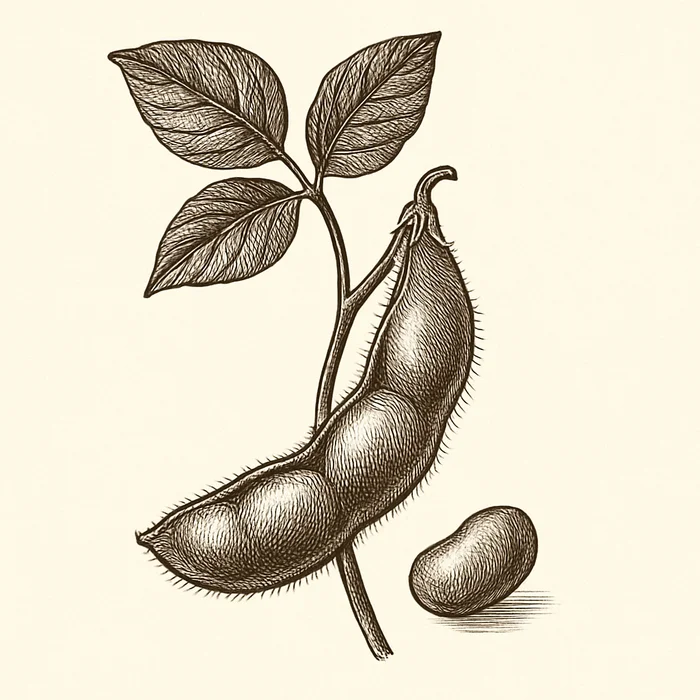
Edamame
Listed as a source of magnesium (50 mg per ½ cup shelled cooked, 13% DV) in the Longevity Diet. Immature soybeans providing magnesium, complete plant protein, and isoflavones. Recommended serving: ½ cup shelled cooked.
Why It Matters for Longevity
Edamame are immature soybeans -- one of the very few plant foods with a complete essential amino acid profile and a meaningful isoflavone content -- making them one of the most longevity-relevant legumes in the Longevity Diet.
A meta-analysis of prospective cohort studies (Xue et al., 2022, Eur J Nutr) found that higher soy food consumption was associated with significantly reduced all-cause mortality and cardiovascular mortality. The protective effect was consistent across sex and was particularly pronounced for coronary heart disease, supporting the Longevity Diet's use of soy as a primary protein source alongside legumes.
The LDL-lowering effect of soy protein is well-established. A meta-analysis of 46 RCTs identified by the FDA (Blanco Mejia et al., 2019, J Nutr) found that soy protein significantly reduces LDL cholesterol, non-HDL cholesterol, and apolipoprotein B compared to control proteins -- with the greatest effects at higher doses. This is the mechanistic basis for the FDA's qualified health claim for soy protein and cardiovascular disease.
Edamame's isoflavones (genistein and daidzein) add a second longevity dimension. These phytoestrogens modulate estrogen receptor signalling, with documented associations with reduced cancer risk, improved menopausal symptom management, and cardiovascular protection particularly in postmenopausal women. Edamame provides the highest isoflavone content per serving of any whole soy food -- substantially more than tofu or soy milk -- because the immature bean has not yet undergone the processing steps (fermentation, precipitation, or high-temperature treatment) that degrade or redistribute isoflavone conjugates.
The magnesium content (50 mg per ½ cup) also contributes to longevity. Magnesium is a cofactor for over 300 enzymatic reactions including ATP synthesis, DNA repair, and insulin receptor signalling, and adequate magnesium status is consistently associated with reduced cardiovascular disease and all-cause mortality risk.
Genistein: The Cardiovascular Isoflavone
The dominant isoflavone in edamame is genistein, a tyrosine kinase inhibitor and partial estrogen receptor agonist that exerts cardiovascular effects through at least three documented pathways: modulation of hepatic LDL receptor expression, inhibition of LDL oxidation, and direct vasodilatory effects via endothelial nitric oxide synthase (eNOS) activation.
A 2025 systematic review and meta-analysis of 21 RCTs involving 1,859 participants (Feng et al., 2025, J Nutr Metab) quantified these effects. Pure genistein supplementation reduced total cholesterol by 9.38 mg/dL (p < 0.001), LDL cholesterol by 11.14 mg/dL (p < 0.001), systolic blood pressure by 8.32 mmHg (p < 0.01), and diastolic blood pressure by 3.57 mmHg (p = 0.04). Fasting glucose and insulin resistance markers (HOMA-IR) also improved significantly. The optimal dose appeared to be approximately 50 mg/day, forming a J-shaped dose-response curve for cholesterol parameters. These are clinically meaningful reductions -- an 11 mg/dL drop in LDL corresponds to roughly a 10% reduction in major cardiovascular event risk at the population level.
Important nuance: HDL cholesterol, triglycerides, and CRP were not significantly affected, which means genistein's cardiovascular benefit runs primarily through LDL reduction and blood pressure lowering rather than broad anti-inflammatory action.
Isoflavones and Cancer Risk
Beyond cardiovascular disease, the isoflavone content of edamame is relevant to cancer prevention. A 2022 meta-analysis examining intake of soy, soy isoflavones, and soy protein across 12 cohort studies (Fan et al., 2022, Front Nutr) found that higher soy intake was associated with a 10% lower cancer incidence (RR 0.90; 95% CI 0.83–0.96), with each 10 mg/day increment in isoflavone intake reducing risk by 4%. The protective association was strongest for lung cancer (RR 0.67; 95% CI 0.52–0.86) and prostate cancer (RR 0.88; 95% CI 0.78–0.99). Notably, no significant association was found between soy intake and cancer mortality -- the data support a reduction in incidence, not treatment effect. The authors attributed the benefit primarily to isoflavones rather than soy protein.
Equol: The Variable Metabolite
Approximately 30--50% of adults harbour gut bacteria capable of converting daidzein to equol, a metabolite with higher estrogenic activity and longer plasma half-life than its precursor. Equol-producers consistently show larger protective associations in epidemiological studies, particularly for prostate and breast cancer outcomes. This interindividual variation is one reason isoflavone studies show heterogeneous effect sizes: population averages mask the distinct biology of equol-producers vs. non-producers. Consuming edamame with fermented foods (miso, kimchi) may support the gut microbiota populations associated with equol production, though this has not been tested in controlled trials.
How to Use It
Boil or steam in the pod, then shell. Toss with sea salt for a simple snack. Add to grain bowls, salads, or stir-fries. Use in Japanese-style preparations (cold with flaky sea salt, in sunomono). Pairs excellently with miso, ginger, and sesame. Frozen edamame retains most nutritional value. At the daily serving size recommended by the Longevity Diet (½ cup shelled), you consume approximately 9 mg of total isoflavones -- about one-fifth of the 50 mg/day dose associated with the strongest cardiovascular effects in the genistein meta-analysis, so consistent daily consumption across multiple soy sources is necessary to reach clinically active levels.
What to Pair It With
| Ingredient | Why | Tradition |
|---|---|---|
| Sea salt | Classic seasoning; highlights flavour | Japanese |
| Brown rice | Complementary amino acids (rice provides methionine; edamame provides lysine) | East Asian |
| Sesame oil | Sesame lignans enhance isoflavone bioavailability by inhibiting hepatic metabolism | Japanese |
| Miso | Fermented soy complements raw edamame; both provide isoflavones | Japanese |
| Ginger | Anti-inflammatory synergy; classic East Asian combination | East Asian |
Flavor Profile
Mildly sweet, fresh, and slightly grassy with a clean beany note. Aroma is fresh and green. Texture is firm with a slight waxiness -- satisfying and dense for a vegetable. Best eaten warm or at room temperature.
The Science
- Xue et al., 2022, Eur J Nutr: Meta-analysis of prospective cohort studies -- higher soy food consumption associated with significantly reduced all-cause and cardiovascular mortality; consistent across sex and geographies.
- Blanco Mejia et al., 2019, J Nutr: Meta-analysis of 46 FDA-identified RCTs -- soy protein significantly reduces LDL cholesterol, non-HDL cholesterol, and apolipoprotein B; supports cardiovascular benefit of soy as a primary protein source.
- Feng et al., 2025, J Nutr Metab: Meta-analysis of 21 RCTs (n=1,859) -- pure genistein supplementation reduced LDL by 11.14 mg/dL, total cholesterol by 9.38 mg/dL, systolic BP by 8.32 mmHg; optimal dose ~50 mg/day.
- Fan et al., 2022, Front Nutr: Meta-analysis of 12 cohort studies -- higher soy isoflavone intake associated with 10% lower cancer incidence (RR 0.90); each 10 mg/day increment reduces risk by 4%; strongest effect for lung and prostate cancer.
References
- Xue T, Li XL, Lou XX, Li CJ. Association of soy food with cardiovascular outcomes and all-cause mortality: systematic review and meta-analysis. Eur J Nutr. 2022;61(2):593-605. PMID: 35001219. doi:10.1007/s00394-021-02654-3
- Blanco Mejia S, Messina M, Li SS, et al. A Meta-Analysis of 46 Studies Identified by the FDA Demonstrates that Soy Protein Reduces LDL Cholesterol. J Nutr. 2019;149(6):968-981. PMID: 31006811. doi:10.1093/jn/nxz020
- Feng H, Jiang K, Zhang Y, Zhuang J, Ku C, Yang J, Zhang Y. Improvement of Cardiovascular Risk Factors by Genistein Supplementation: A Systematic Review and Meta-Analysis in Diverse Population-Based RCTs. J Nutr Metab. 2025. PMID: 40134817. doi:10.1155/jnme/1827252
- Fan Y, Wang M, Li Z, et al. Intake of Soy, Soy Isoflavones and Soy Protein and Risk of Cancer Incidence and Mortality. Front Nutr. 2022;9:847421. PMID: 35308286. doi:10.3389/fnut.2022.847421
Key Nutrients
| Nutrient | Per 100g (cooked) | Notes |
|---|---|---|
| Magnesium | ~64 mg | 300+ enzymatic cofactor; ATP synthesis, DNA repair, insulin signalling; ~30--40% dietary absorption |
| Isoflavones (genistein + daidzein) | ~18 mg | Highest isoflavone content per serving among soy foods; equol conversion by gut bacteria (~30--50% of adults) amplifies effects |
| Complete plant protein | ~11 g | One of few plant foods with a complete essential amino acid profile; PDCAAS ~0.91; leucine-rich for muscle protein synthesis |
| Fibre | ~5.2 g | Prebiotic effect; moderates postprandial glucose and cholesterol absorption |