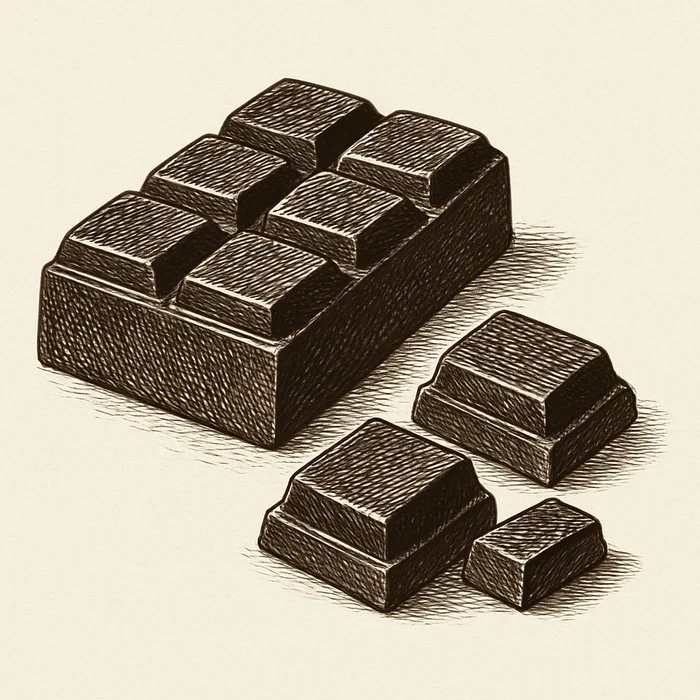
Dark Chocolate
A square of dark chocolate is not a guilty pleasure — it is a concentrated delivery system for epicatechin and theobromine, two compounds with mounting evidence for cardiovascular protection and, more recently, slower biological aging. But only if you choose the right chocolate and eat it right.
Why It Matters for Longevity
Cardiovascular Protection
Dark chocolate's cardiovascular case is the best-established. A systematic review of chocolate, cocoa and flavan-3-ol RCTs (Hooper et al., 2012, Am J Clin Nutr) found chocolate and cocoa consumption improved flow-mediated dilation — a direct measure of blood vessel health — and modestly lowered blood pressure. The Cochrane update (Ried et al., 2017) confirmed a small but consistent BP-lowering effect of cocoa flavanols. The key compound is epicatechin, which increases plasma nitric oxide and relaxes blood vessel walls.
The most important large-scale evidence came from the COSMOS trial: Sesso et al. (2022, Am J Clin Nutr) found that cocoa flavanol supplementation in 21,442 adults over 3.6 years significantly reduced cardiovascular mortality — a 27% reduction in CVD death compared to placebo.[5] This is one of the largest and most rigorous flavanol trials ever conducted, and it measured hard outcomes, not just biomarkers.
Grassi et al. (2008, J Nutr) found that 100g/day of >70% cocoa dark chocolate for 15 days lowered blood pressure and improved insulin sensitivity in hypertensive, glucose-intolerant adults — precisely the population at highest cardiovascular risk.
Theobromine and Biological Aging
The more recent and arguably more exciting finding is about theobromine — the mild stimulant alkaloid in cocoa that gives dark chocolate its characteristic bitterness. A December 2025 study by Saad et al. (Aging, Albany NY) found that higher blood levels of theobromine are associated with slower epigenetic aging, as measured by DNA methylation clocks.[6] People with more theobromine in their bloodstream appeared biologically younger than their chronological age.
This is observational data, not a controlled trial, so causation is not established. But the mechanism is plausible: theobromine inhibits phosphodiesterase enzymes, increases cAMP, activates AMPK signaling, and has anti-inflammatory properties — several of which overlap with longevity-associated pathways. The study identified theobromine as a dietary compound to watch closely in aging research.
How Epicatechin Works
The critical caveat for both compounds: milk proteins bind epicatechin and substantially blunt absorption. Schroeter et al. (2006, PNAS) showed that pure (-)-epicatechin mediates the vascular benefit of flavanol-rich cocoa in humans — and that effect disappears when consumed with dairy. Eat it plain, or with water.
Dutch-processed (alkalized) cocoa powder is another trap: the alkalization treatment that makes cocoa milder and darker also destroys most of its flavanols. Miller et al. (2008, J Agric Food Chem) measured the impact of alkalization on commercial cocoa powders and found heavy Dutch processing reduced flavanol content by up to 90%.[7] Natural (non-alkalized) cocoa retains essentially all its flavanols. Labels to look for: "natural cocoa" or "cacao." Avoid anything labeled "Dutch process" or "alkalized."
How to Use It
Dark chocolate bars: Choose >70% cacao content from a brand that specifies "natural" or "non-alkalized" cocoa. Aim for 20–40g per day (2–4 squares). Eat alone, not with milk or dairy. Let it melt on the tongue to slow absorption.
Cocoa powder: Use natural (non-alkalized) cocoa powder in smoothies, oatmeal, or warm drinks. Avoid "Dutch process" or "European-style" cocoa for maximum flavanols.
Cacao nibs: The most unprocessed form — raw crushed cacao beans. Bitter, high flavanol, low sugar. Excellent as a topping on yogurt or salads.
Avoid: Milk chocolate (dairy blocks absorption), white chocolate (contains no flavanols), anything with vegetable oils substituted for cocoa butter.
Dosage
The COSMOS trial used cocoa flavanol supplements providing 500 mg of cocoa flavanols daily — roughly equivalent to 40–50g of high-quality >70% dark chocolate or 2–3 tablespoons of natural cocoa powder. Minimum effective dose for cardiovascular benefit is approximately 200 mg cocoa flavanols per day, achievable with 20–25g of quality dark chocolate.
For the theobromine anti-aging association, the relevant exposure is consistent long-term consumption — the Saad 2025 study measured habitual dietary theobromine intake and blood levels over time, not acute supplementation.
A reasonable daily target: 20–40g of >70% natural dark chocolate, or 2 tablespoons of natural cocoa powder, consumed without dairy.
What to Pair It With
| Ingredient | Why | Tradition |
|---|---|---|
| Coffee | Shared chlorogenic acid and flavanol compounds; combined antioxidant effect | Global (mocha) |
| Chili pepper | Ancient Mesoamerican tradition; capsaicin and epicatechin synergy | Mexican / Aztec |
| Cinnamon | Complementary blood glucose effects | Mexican / European |
| Blueberries | Complementary flavanol and anthocyanin profiles; additive antioxidant activity | Modern |
| Pomegranate | Complementary polyphenol profiles; both support cardiovascular health | Global |
Flavor Profile
Bitter, rich, with fruity and earthy complexity. High-quality dark chocolate has wine-like and slightly smoky aromas. Snappy when tempered, smooth and melting on the tongue. Cacao percentage directly correlates with flavanol content and bitterness — 70% is the practical floor for meaningful epicatechin delivery, 85–90% maximizes it.
The Science
- Hooper et al., 2012, Am J Clin Nutr: Systematic review and meta-analysis — chocolate, cocoa and flavan-3-ols improve flow-mediated dilation and modestly lower BP.
- Ried et al., 2017, Cochrane Database Syst Rev: Cochrane review confirming small but consistent BP reduction from cocoa flavanols.
- Schroeter et al., 2006, PNAS: Pure (-)-epicatechin mediates the vascular benefits of flavanol-rich cocoa in humans; dairy blocks this effect.
- Grassi et al., 2008, J Nutr: 100g/day of >70% dark chocolate for 15 days lowered BP and improved insulin sensitivity in at-risk adults.
- Sesso et al., 2022, Am J Clin Nutr: COSMOS RCT in 21,442 adults — cocoa flavanol supplementation reduced cardiovascular mortality by 27% over 3.6 years.
- Saad et al., 2025, Aging: Higher blood theobromine levels are associated with slower epigenetic aging as measured by DNA methylation clocks.
- Miller et al., 2008, J Agric Food Chem: Dutch (alkali) processing reduces flavanol content of commercial cocoa powders by up to 90%.
References
- Hooper L, Kay C, Abdelhamid A, et al. Effects of chocolate, cocoa, and flavan-3-ols on cardiovascular health: a systematic review and meta-analysis of randomized trials. Am J Clin Nutr. 2012;95(3):740-751. PMID: 22301923. doi:10.3945/ajcn.111.023457
- Ried K, Fakler P, Stocks NP. Effect of cocoa on blood pressure. Cochrane Database Syst Rev. 2017;4(4):CD008893. PMID: 28439881. doi:10.1002/14651858.CD008893.pub3
- Schroeter H, Heiss C, Balzer J, et al. (-)-Epicatechin mediates beneficial effects of flavanol-rich cocoa on vascular function in humans. Proc Natl Acad Sci USA. 2006;103(4):1024-1029. PMID: 16418281. doi:10.1073/pnas.0510168103
- Grassi D, Desideri G, Necozione S, et al. Blood pressure is reduced and insulin sensitivity increased in glucose-intolerant, hypertensive subjects after 15 days of consuming high-polyphenol dark chocolate. J Nutr. 2008;138(9):1671-1676. PMID: 18716168. doi:10.1093/jn/138.9.1671
- Sesso HD, Manson JE, Aragaki AK, et al. Effect of cocoa flavanol supplementation for the prevention of cardiovascular disease events: the COcoa Supplement and Multivitamin Outcomes Study (COSMOS) randomized clinical trial. Am J Clin Nutr. 2022;115(6):1490-1500. PMID: 35294962. doi:10.1093/ajcn/nqac055
- Saad R, Valdes AM, Bell JT. Theobromine is associated with slower epigenetic ageing. Aging (Albany NY). 2025;17. PMID: 41397115. doi:10.18632/aging.206344
- Miller KB, Hurst WJ, Payne MJ, et al. Impact of alkalization on the antioxidant and flavanol content of commercial cocoa powders. J Agric Food Chem. 2008;56(18):8527-8533. PMID: 18710243. doi:10.1021/jf801670p
Key Nutrients
| Nutrient | Per 100g (>70% dark) | Notes |
|---|---|---|
| Epicatechin | 70–160 mg | Absorption blocked by dairy; peak plasma at 2 hours[3] |
| Theobromine | 460–790 mg | Linked to slower epigenetic aging in 2025 study[6]; half-life ~7 hours |
| Total flavanols | 170–560 mg | Dutch/alkali processing destroys up to 90%[7] |
| Magnesium | 228 mg (54% RDA) | Important for cardiovascular and muscle function |