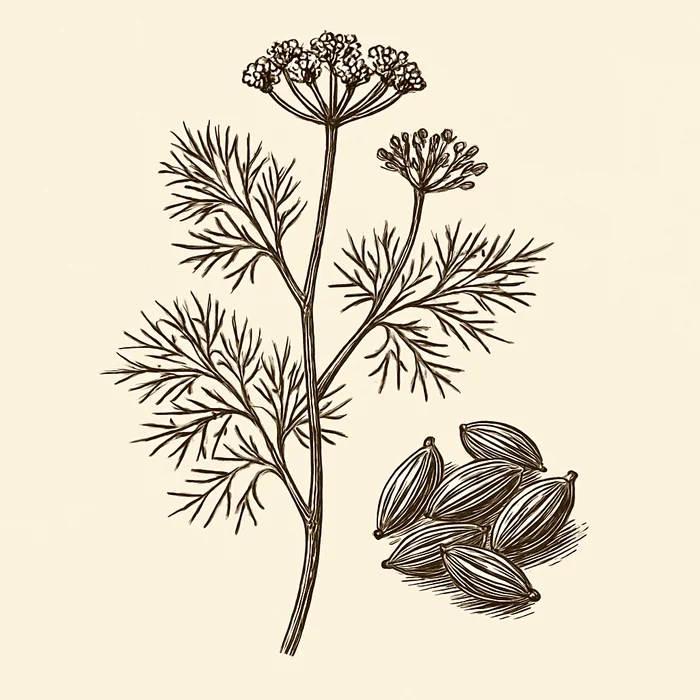
Cumin
Cumin does not appear prominently in the longevity book, but it is so deeply woven into the cuisines of every long-lived population that ignoring it would be a mistake. A small RCT found that 3g of cumin powder daily reduced body weight, BMI, and cholesterol in overweight women -- effects comparable to the weight-loss drug orlistat.
Why It Matters for Longevity
Cumin sits at the intersection of weight management, blood sugar control, and anti-inflammatory activity. Zare et al. (2014, Complement Ther Clin Pract) ran a randomised trial with overweight women taking just 3g of cumin powder daily for three months. The results were striking: significant reductions in body weight, BMI, waist circumference, fat mass, fasting cholesterol, triglycerides, and LDL, plus increased HDL. The comparison to orlistat was not rhetorical -- the effect sizes were genuinely similar.
For blood sugar, a systematic review and meta-analysis by Tavakoli-Rouzbehani et al. (2021, J Ethnopharmacol) pooled the evidence from randomised trials on Cuminum cyminum and glycaemic parameters, finding significant reductions in fasting blood glucose and HbA1c in individuals with metabolic disorders -- consistent with the insulin-sensitising and glucose metabolism effects proposed from animal studies.
Cumin is also one of the richest food sources of iron -- 66 mg per 100g, covering 367% of the RDA. While typical serving sizes are smaller, regular use in legume dishes (where cumin traditionally appears) meaningfully contributes to iron intake. Pair cumin-spiced legume dishes with vitamin C from fresh chillies, tomatoes, or lemon to maximise iron uptake.
The practical significance of cumin is that it appears in virtually every longevity-relevant cuisine: Indian dals, Middle Eastern hummus and falafel, Mexican bean dishes, and North African tagines. It is the default spice for legumes worldwide, and since legumes are among the most consistently longevity-associated foods, cumin's role as their primary flavouring agent gives it outsized dietary importance.
Blood Lipid Evidence: Meta-Analysis of RCTs
The most rigorous clinical evidence for cumin's cardiovascular effects comes from a systematic review and meta-analysis by Hadi et al. (2018, Phytother Res) that pooled six RCTs comprising 376 participants. The analysis found that cumin supplementation significantly reduced total cholesterol by approximately 10.9 mg/dL (p = 0.042) and LDL cholesterol by 6.9 mg/dL (p = 0.003), while raising HDL cholesterol by 3.4 mg/dL (p < 0.001). Triglycerides did not change significantly on average, but in the subgroup of participants with baseline hypertriglyceridemia, a meaningful reduction was observed. These effect sizes are modest by pharmaceutical standards but clinically relevant for dietary interventions, particularly because they are achieved with the doses used in cooking (approximately 1–3 g/day) rather than with pharmacological extracts.
The mechanism behind cumin's lipid-lowering activity likely involves multiple pathways. Cuminaldehyde — the dominant volatile compound, constituting approximately 49% of cumin essential oil — inhibits HMG-CoA reductase activity in animal models. Cumin also contains luteolin-7-glucoside and apigenin, flavonoids that reduce hepatic cholesterol synthesis and increase LDL receptor expression. Additionally, cumin seed fiber contributes to bile acid sequestration in the intestine, reducing enterohepatic recirculation of cholesterol.
Antioxidant Effects: Human RCT Data
Oxidative stress is a central driver of metabolic syndrome, cardiovascular disease, and accelerated aging. A randomised, triple-blind, placebo-controlled trial by Morovati et al. (2019, Phytother Res) assigned 56 patients with metabolic syndrome to either 75 mg cumin essential oil three times daily (225 mg/day total) or placebo for 8 weeks. The cumin group showed significant improvements in antioxidant capacity: superoxide dismutase (SOD) increased by 149 units (95% CI: 68–230), total antioxidant capacity (TAC) increased by 0.24 units (95% CI: 0.09–0.38), and malondialdehyde (MDA) — the primary marker of lipid peroxidation — decreased by 0.36 units (95% CI: −0.66 to −0.06). Within the treatment group, MDA fell by 13.3% and TAC rose by 6.7% (p < 0.04). These findings are particularly relevant for metabolic syndrome patients, whose elevated oxidative stress amplifies cardiovascular and diabetic risk.
Cuminaldehyde and NF-κB: The Anti-Inflammatory Mechanism
The anti-inflammatory activity of cumin essential oil has been characterised at the signalling pathway level. Wei et al. (2015, Evid Based Complement Alternat Med) demonstrated that cumin essential oil — in which cuminaldehyde comprises 48.8% of volatiles — blocked LPS-induced transcriptional activation of NF-κB and inhibited phosphorylation of both ERK and JNK in macrophages, simultaneously suppressing mRNA expression of iNOS, COX-2, IL-1, and IL-6. This profile is notable because it targets three separate inflammatory signalling arms (NF-κB, MAPK-ERK, MAPK-JNK) with a single compound family. Cuminaldehyde's electrophilic aldehyde group is thought to covalently modify cysteine residues in IκB kinase, preventing IKK-mediated NF-κB activation — an irreversible inhibitory mechanism that persists even after the compound is cleared.
While the Wei study used cell culture models, the pathway targets it identifies are the same ones disrupted by chronic inflammation in metabolic syndrome and atherosclerosis. The human antioxidant RCT data (PMID 30762267) provides clinical grounding for these in vitro mechanistic findings.
Traditional Use Meets Modern Trials
Cumin has been used medicinally in Ayurvedic, Unani, and traditional Persian medicine for over two millennia, prescribed for digestive complaints, infections, and metabolic imbalances. Modern RCTs now provide mechanistic rationale for these uses. The convergence of blood sugar control (reduced FBG and HbA1c), lipid modulation (reduced LDL, raised HDL), reduced oxidative stress (lower MDA, higher SOD and TAC), and anti-inflammatory pathway inhibition (NF-κB, ERK, JNK suppression) positions cumin as a spice with unusually broad metabolic coverage per gram consumed.
The dose used across most positive RCTs — 3 g/day of whole powder or 75–225 mg/day of essential oil — is well within the range of daily culinary use. One level teaspoon of ground cumin weighs approximately 2.6–3.0 g, meaning a single well-spiced dal or bean dish meets the studied therapeutic dose without supplementation.
How to Use It
Dry-roast whole cumin seeds in a pan for 60--90 seconds until fragrant before grinding -- this intensifies flavour dramatically. Use freshly ground cumin in dals, hummus, bean soups, and chilli. Whole seeds retain flavour far longer than ground. Studies used 3g/day (roughly one teaspoon) for metabolic benefits. Store in airtight containers away from light.
What to Pair It With
| Ingredient | Why | Tradition |
|---|---|---|
| Legumes | Universal legume spice across cultures; aids digestibility | Global |
| Garlic | Foundational spice combination in curries and hummus | Middle Eastern / Indian |
| Turmeric | Core curry spice trio with coriander | Indian |
| Chilli pepper | Heat and earthiness in chilli and curries | Mexican / Indian |
| Coriander | Classic equal-parts pairing in spice blends | Indian / Middle Eastern |
| Tomatoes | Base for salsas, curry sauces, and stewed dishes | Mexican / Indian |
Flavor Profile
Earthy, warm, and nutty with a slight bitterness and peppery finish. Dry-roasting transforms it: the mustiness recedes and a toasted-nut depth emerges. The aroma is distinctive and penetrating -- warm and slightly musty, immediately recognisable in any curry or chilli. Assertive enough to stand up to garlic and chilli but versatile enough for subtle uses in breads and yogurt dips.
The Science
- Zare et al., 2014, Complement Ther Clin Pract: RCT -- 3g cumin powder daily for 3 months significantly reduced body weight, BMI, fat mass, total cholesterol, triglycerides, and LDL in overweight women; effects comparable to orlistat.
- Tavakoli-Rouzbehani et al., 2021, J Ethnopharmacol: Systematic review and meta-analysis of RCTs -- Cuminum cyminum supplementation significantly reduces fasting blood glucose and HbA1c in individuals with metabolic disorders.
- Hadi et al., 2018, Phytother Res: Meta-analysis of 6 RCTs (n = 376) -- cumin supplementation reduced total cholesterol by 10.9 mg/dL and LDL by 6.9 mg/dL, raised HDL by 3.4 mg/dL; significant triglyceride reduction in hypertriglyceridemic subgroup.
- Morovati et al., 2019, Phytother Res: RCT (n = 56 metabolic syndrome patients, 225 mg/day cumin EO for 8 weeks) -- SOD increased 149 units, TAC increased 0.24 units, MDA decreased 13.3%; significant reduction in oxidative stress markers.
- Wei et al., 2015, Evid Based Complement Alternat Med: Cell culture -- cumin essential oil (cuminaldehyde 48.8%) blocked NF-κB, inhibited ERK and JNK phosphorylation, suppressed iNOS, COX-2, IL-1, and IL-6 in LPS-stimulated macrophages.
References
- Zare R, Heshmati F, Fallahzadeh H, Nadjarzadeh A. Effect of cumin powder on body composition and lipid profile in overweight and obese women. Complement Ther Clin Pract. 2014;20(4):297-301. PMID: 25456022. doi:10.1016/j.ctcp.2014.10.001
- Tavakoli-Rouzbehani OM, Abbasalizad Farhangi M, Jafarabadi MA. The effects of Cuminum cyminum on glycemic parameters: A systematic review and meta-analysis of randomized controlled trials. J Ethnopharmacol. 2021;279:114273. PMID: 34371114. doi:10.1016/j.jep.2021.114273
- Hadi A, Mohammadi H, Hadi Z, Roshanravan N, Kafeshani M. Cumin (Cuminum cyminum L.) is a safe approach for management of lipid parameters: A systematic review and meta-analysis of randomized controlled trials. Phytother Res. 2018;32(11):2146-2154. PMID: 30088304. doi:10.1002/ptr.6175
- Morovati A, Pourghassem Gargari B, Sarbakhsh P, Azari H, Lotfi-Dizaji L. The effect of cumin supplementation on metabolic profiles in patients with metabolic syndrome: A randomized, triple blind, placebo-controlled clinical trial. Phytother Res. 2019;33(4):1182-1190. PMID: 30762267. doi:10.1002/ptr.6317
- Wei J, Zhang X, Bi Y, Miao R, Zhang Z, Su H. Anti-inflammatory effects of cumin essential oil by blocking JNK, ERK, and NF-κB signaling pathways in LPS-stimulated RAW 264.7 cells. Evid Based Complement Alternat Med. 2015;2015:474509. PMID: 26425131. doi:10.1155/2015/474509
Key Nutrients
| Nutrient | Per 100g | Notes |
|---|---|---|
| Cuminaldehyde | Primary volatile (48–49% of essential oil) | Anti-inflammatory via NF-κB, ERK, and JNK inhibition; characteristic aroma compound |
| Iron | 66 mg (367% RDA) | One of the richest food sources; pair with vitamin C for maximum absorption |
| Thymoquinone | Trace in Cuminum cyminum | Anti-inflammatory; more concentrated in black cumin (Nigella sativa), a related spice |
| Manganese | 3.3 mg (143% RDA) | Antioxidant enzyme cofactor; supports SOD activity |