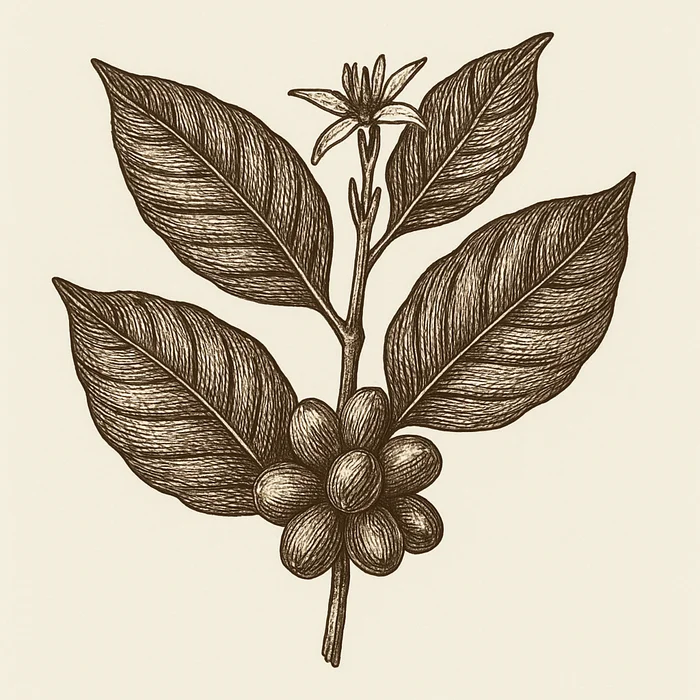
Coffee
Three to four cups a day. That is the dose associated with the largest reduction in cardiovascular disease, cancer, and all-cause mortality -- a consistent 17% lower risk of death compared to non-drinkers.
Why It Matters for Longevity
An umbrella review of 201 meta-analyses (Poole et al., 2017, BMJ) found coffee consumption consistently reduces risk of all-cause mortality, cardiovascular disease, type 2 diabetes, Parkinson's, and several cancers. The association is remarkably robust: ground, instant, and decaffeinated coffee all show protective effects, pointing to chlorogenic acids -- not caffeine -- as the primary active compounds.
Both caffeinated and decaf show benefits for diabetes prevention. Ding et al. (2014, Diabetes Care) analysed data from three large US prospective cohorts and found that both caffeinated and decaffeinated coffee consumption were associated with significantly lower risk of type 2 diabetes, with a dose-response relationship extending to 6+ cups per day. The mechanism involves chlorogenic acid inhibiting glucose-6-phosphatase and intestinal glucose absorption, as well as improving insulin sensitivity.
Coffee also has hepatoprotective properties. Ebadi et al. (2021, Nutrients) reviewed the evidence on coffee and non-alcoholic fatty liver disease, finding that coffee consumption was associated with significantly lower NAFLD incidence and progression to fibrosis -- an increasingly common aging-associated condition with strong metabolic disease links.
Use a paper filter. Unfiltered methods (French press, boiled, moka pot) leave diterpene oils (cafestol, kahweol) that raise LDL cholesterol by 0.1--0.4 mmol/L. Paper removes 80--90% of these. The LDL-raising effect of unfiltered coffee is the main reason to prefer filtered methods for daily consumption.
Glucose Metabolism: Short-term vs. Long-term
There is a counterintuitive pattern in coffee's glucose effects worth understanding. A systematic review of eight clinical trials by Reis et al. (2019, J Tradit Complement Med) found that in the short term (1--3 hours after drinking), caffeinated coffee can transiently increase the blood glucose area under the curve. Over longer periods -- two to sixteen weeks of regular consumption -- the direction reverses: caffeinated coffee reduces the glucose curve and increases the insulin response. This divergence likely explains why epidemiological studies consistently show lower type 2 diabetes risk in habitual coffee drinkers despite coffee's acute glucose-spiking effect. The mechanism involves chlorogenic acid activating AMPK and improving insulin receptor signalling over time, effects that accumulate with regular intake.
Parkinson's Disease: A Caffeine-Specific Effect
The Parkinson's inverse association is one of coffee's most consistently replicated findings -- and uniquely, it appears to require caffeine. A meta-analysis of thirteen studies by Hong et al. (2020, Nutrients) found that regular caffeine consumption was associated with a hazard ratio of 0.797 (95% CI: 0.748--0.849, p < 0.001) for Parkinson's disease incidence -- roughly a 20% lower risk. The effect extended to disease progression: in people already diagnosed with Parkinson's, caffeine was associated with slower progression (HR = 0.834, 95% CI: 0.707--0.984).
A large prospective cohort study in the EPIC4PD cohort -- 184,024 participants across six European countries -- found an even stronger signal in the highest coffee consumers: adjusted HR 0.63 (95% CI: 0.46--0.88) compared to non-drinkers, representing a 37% lower risk (Zhao et al., 2024, Neurology). Prediagnostic plasma caffeine metabolites (paraxanthine, theophylline) were independently inversely associated with Parkinson's incidence, confirming the relationship is not confounded by reverse causation.
The neuroprotective mechanism centers on adenosine A2A receptor (A2AR) antagonism. Caffeine blocks A2AR in the striatum, preventing adenosine from suppressing dopamine signalling -- the precise pathway that degenerates in Parkinson's. This receptor antagonism also reduces neuroinflammation and may slow alpha-synuclein aggregation in preclinical models.
How to Use It
Drink between meals, not with food. Coffee polyphenols chelate non-heme iron and reduce absorption by 20--73%. Wait at least an hour after eating. Light roasts retain more chlorogenic acids than dark roasts. Freshly ground beans preserve volatile compounds best.
What to Pair It With
| Ingredient | Why | Tradition |
|---|---|---|
| Dark chocolate | Shared chlorogenic acid family; complementary flavanols | Global (mocha) |
| Cinnamon | Complementary blood glucose effects | Middle Eastern / Turkish |
| Cardamom | Adds complexity and digestive benefits | Arabic / Turkish tradition |
| Walnuts | Shared polyphenol benefits | European |
Flavor Profile
Bitter and complex. Light roasts are acidic and fruity; dark roasts are chocolatey and smoky. French press gives full body; filter coffee is clean and bright.
The Science
- Poole et al., 2017, BMJ: Umbrella review of 201 meta-analyses -- coffee consistently reduces all-cause mortality, CVD, T2D, Parkinson's, and several cancers; 3--4 cups/day associated with greatest benefit.
- Ding et al., 2014, Diabetes Care: Three large US cohorts -- both caffeinated and decaffeinated coffee reduce type 2 diabetes risk with dose-response; chlorogenic acids implicated as primary mechanism.
- Ebadi et al., 2021, Nutrients: Review of coffee and NAFLD -- coffee consumption associated with significantly lower non-alcoholic fatty liver disease incidence and reduced progression to fibrosis.
- Reis et al., 2019, J Tradit Complement Med: Systematic review of eight clinical trials -- caffeinated coffee transiently raises postprandial glucose acutely but improves glycaemic metabolism over 2--16 weeks via AMPK activation and improved insulin response.
- Hong et al., 2020, Nutrients: Meta-analysis of 13 studies -- caffeine associated with HR 0.797 for Parkinson's disease incidence and HR 0.834 for disease progression; A2AR antagonism as primary mechanism.
- Zhao et al., 2024, Neurology: Prospective cohort of 184,024 Europeans -- highest coffee consumers had HR 0.63 for Parkinson's disease versus non-drinkers; prediagnostic caffeine metabolites independently confirmed inverse association.
References
- Poole R, Kennedy OJ, Roderick P, Fallowfield JA, Hayes PC, Parkes J. Coffee consumption and health: umbrella review of meta-analyses of multiple health outcomes. BMJ. 2017;359:j5024. PMID: 29167102. doi:10.1136/bmj.j5024
- Ding M, Bhupathiraju SN, Satija A, van Dam RM, Hu FB. Long-term coffee consumption and risk of cardiovascular disease: a systematic review and a dose-response meta-analysis of prospective cohort studies. Diabetes Care. 2014;37(2):569-586. PMID: 24459154. doi:10.2337/dc13-1203
- Ebadi M, Ip S, Lytvyak E, et al. Effect of Coffee Consumption on Non-Alcoholic Fatty Liver Disease Incidence, Prevalence and Risk of Significant Liver Fibrosis. Nutrients. 2021;13(9):3137. PMID: 34578919. doi:10.3390/nu13093137
- Reis CEG, Dórea JG, da Costa THM. Effects of coffee consumption on glucose metabolism: A systematic review of clinical trials. J Tradit Complement Med. 2019;9(3):184-191. PMID: 31193893. doi:10.1016/j.jtcme.2018.01.001
- Hong CT, Chan L, Bai CH. The Effect of Caffeine on the Risk and Progression of Parkinson's Disease: A Meta-Analysis. Nutrients. 2020;12(6):1860. PMID: 32580456. doi:10.3390/nu12061860
- Zhao Y, Lai Y, Konijnenberg H, et al. Association of Coffee Consumption and Prediagnostic Caffeine Metabolites With Incident Parkinson Disease in a Population-Based Cohort. Neurology. 2024;102(9):e209201. PMID: 38513162. doi:10.1212/WNL.0000000000209201
Key Nutrients
| Nutrient | Per cup (filter) | Notes |
|---|---|---|
| Chlorogenic acids | 35--175 mg | Primary bioactive; light roasts have more; degraded by dark roasting |
| Caffeine | 80--100 mg | Half-life 3--7 hours; varies by CYP1A2 genotype; required for Parkinson's protection but not for diabetes/liver benefit (decaf works) |
| Trigonelline | 40--110 mg | Anti-diabetic and neuroprotective in animal models; destroyed by dark roasting |
| Diterpenes | High in unfiltered | Cafestol and kahweol raise LDL; removed 80--90% by paper filter |