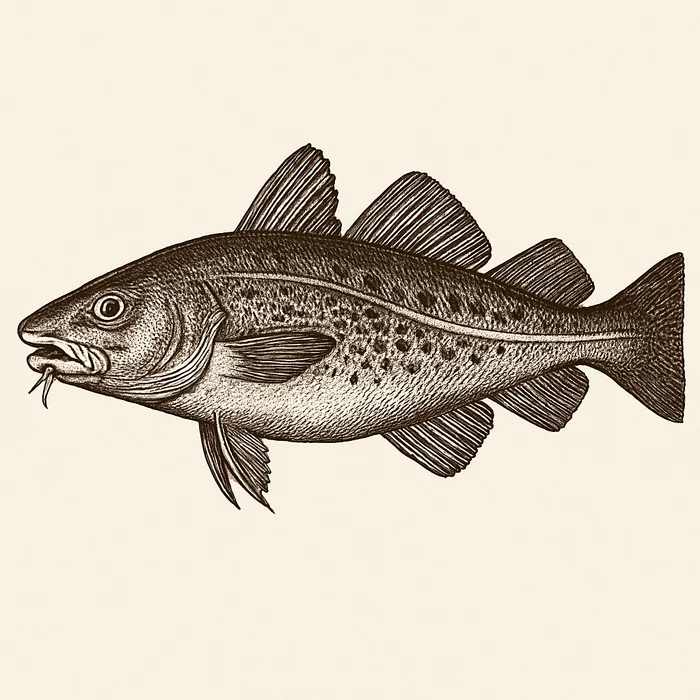
Cod
Cod and dried stockfish (baccalà) are historically consumed by Molochio centenarians -- the Calabrian longevity cluster that Fontana studied -- as a primary protein source 2--3 times per week. Low in mercury, high in complete protein, and a meaningful source of omega-3 EPA/DHA, selenium, and iodine.
Why It Matters for Longevity
Cod is a lean white fish that provides high-quality complete protein (18g per 100g cooked) alongside selenium, iodine, vitamin B12, and modest omega-3 EPA/DHA -- without the mercury burden of large predatory fish like tuna or swordfish.
The evidence for fish consumption and longevity is substantial. Mozaffarian and Rimm (2006, JAMA) reviewed the totality of evidence on fish intake and found that 1--2 seafood servings per week reduces coronary heart disease mortality by approximately 36% and total mortality by 17%, with the benefits outweighing contaminant risks for lean white fish like cod. A large prospective study (Zhong et al., 2020, JAMA Intern Med) confirmed that higher fish and seafood intake was associated with significantly lower all-cause and cardiovascular mortality, with the strongest protection from non-fried fish preparations.
Cod's protein quality deserves particular attention in a longevity context. Lees et al. (2020, Nutrients) reviewed fish-derived protein hydrolysates and whole fish protein, finding that marine-sourced proteins support muscle protein synthesis, reduce inflammatory markers, and provide bioactive peptides with ACE-inhibitory (blood pressure-lowering) properties -- all relevant to preventing the sarcopenia and cardiovascular decline associated with aging.
Selenium content (~36 mcg per 100g cooked) is particularly notable in cod. Selenium is an essential cofactor for glutathione peroxidase (GPx) and thioredoxin reductase, the primary enzymatic antioxidant defences against lipid peroxidation and reactive oxygen species. The clinical relevance of dietary selenium on GPx activity was directly demonstrated by Schnabel et al. (2008, Am Heart J), who randomised 465 coronary artery disease patients to selenium supplementation and found that GPx-1 activity increased from 37.0 to 41.1 U/gHb in the 200 µg group (P < 0.0001) -- a direct enzymatic confirmation of the selenium-GPx axis. The selenomethionine form provided by fish is highly bioavailable (~90%), in contrast to inorganic supplementation forms. Iodine in cod (approximately 100--150 mcg per 100g) supports thyroid hormone synthesis, which regulates metabolic rate and cardiovascular function throughout life.
Vitamin B12 and homocysteine metabolism. Cod provides approximately 0.9 mcg vitamin B12 per 100g cooked -- roughly 38% of the daily reference value -- in a highly bioavailable form. Watanabe (2007, Exp Biol Med) reviewed B12 bioavailability across animal foods, finding that fish-derived B12 is absorbed at approximately 42% on average, modestly lower than meat (56--89%) but vastly higher than plant-based B12 analogues. B12 deficiency is prevalent in older adults due to declining gastric acid and intrinsic factor production, leading to elevated homocysteine -- an independent cardiovascular risk factor. Regular cod consumption contributes meaningfully to maintaining adequate B12 status, which in turn keeps homocysteine in the protective range.
TMAO: the fish paradox resolved. Trimethylamine N-oxide (TMAO) has attracted attention as a potential atherogenic metabolite derived from gut microbial metabolism of choline and carnitine. Fish naturally contains preformed TMAO and is sometimes cited as a risk food. The mechanistic evidence firmly dispels this concern. Wang et al. (2019, Eur Heart J) conducted a rigorous randomised crossover trial in 113 healthy adults comparing red meat, white meat, and non-meat protein diets (each sustained for 4 weeks). Chronic red meat, but not white meat or non-meat protein, increased plasma and urinary TMAO by more than two-fold (P < 0.0001). White fish like cod did not drive the microbial TMAO-producing pathway from carnitine that red meat does; the preformed TMAO in fish appears metabolically distinct and non-atherogenic at dietary quantities. This distinction matters: the epidemiological mortality benefits of fish consumption documented by Mozaffarian and Rimm hold up precisely because the TMAO generated via dietary fish does not mirror the carnitine-driven pathway responsible for elevated CVD risk in red-meat-heavy diets.
ACE-inhibitory peptides and blood pressure. Beyond its macronutrient profile, cod protein hydrolyses in the gut to yield bioactive peptides with angiotensin-converting enzyme (ACE) inhibitory activity. ACE catalyses the conversion of angiotensin I to the potent vasoconstrictor angiotensin II; peptides that inhibit ACE thereby reduce vascular tone and blood pressure by the same molecular mechanism targeted by pharmaceutical ACE-inhibitor drugs. Kim et al. (2012, Adv Food Nutr Res) reviewed the biochemical evidence and showed that hydrolysates from cod and closely related white fish species exhibit IC50 values in the low microgram per millimole range -- among the most potent food-derived ACE-inhibitory sources characterised to date. While human RCT data on cod peptides specifically remain limited, the mechanistic and preclinical evidence is consistent with the observed blood pressure benefits in fish-consuming populations.
How to Use It
Steam, poach, or bake at low temperatures (130--150°C) -- gentle cooking preserves omega-3s and prevents protein denaturation. Traditional preparations: salt cod with legumes and olive oil (bacalhau à brás, salt cod stew); fresh cod with tomatoes and capers. Pair with legumes to create a complete protein with complementary amino acid profiles (cod is rich in methionine; legumes are low in it).
What to Pair It With
| Ingredient | Why | Tradition |
|---|---|---|
| Legumes | Complementary amino acids (cod rich in methionine; legumes rich in lysine); classic Molochio combination | Calabrian (Italy) |
| Extra-virgin olive oil | Fat enhances absorption of fat-soluble vitamins; oleic acid provides complementary cardiovascular protection | Mediterranean |
| Tomatoes | Lycopene antioxidant; classic Italian preparation | Mediterranean |
| Garlic | Anti-inflammatory organosulfur compounds; traditional flavour combination | Mediterranean |
| Lemon | Vitamin C enhances non-heme iron absorption; brightens flavour | Mediterranean |
Flavor Profile
Mild, slightly sweet, and clean with a delicate briny note when fresh. Salted and dried stockfish has a much stronger, more concentrated flavour that mellows during soaking and cooking. Texture is firm and flaky, with large white flakes that hold their shape well. Virtually no bitterness.
The Science
- Mozaffarian and Rimm, 2006, JAMA: 1--2 seafood servings per week reduces coronary heart disease mortality by ~36% and total mortality by ~17%; contaminant risks are low for lean white fish like cod.
- Zhong et al., 2020, JAMA Intern Med: Higher fish and seafood intake associated with significantly lower all-cause and cardiovascular mortality in large US prospective cohort; strongest protection from non-fried preparations.
- Lees et al., 2020, Nutrients: Marine-sourced proteins including fish support muscle protein synthesis, reduce inflammatory markers, and provide bioactive peptides with ACE-inhibitory and antioxidant properties relevant to cardiovascular aging.
- Schnabel et al., 2008, Am Heart J: Selenium supplementation raised GPx-1 activity from ~37 to ~42 U/gHb (P < 0.0001) in 465 CAD patients, directly demonstrating the selenium → GPx enzymatic axis that cod's selenomethionine supports.
- Watanabe, 2007, Exp Biol Med: Vitamin B12 bioavailability from fish averages 42% in healthy adults; fish is among the most reliable dietary B12 sources for preventing deficiency-driven hyperhomocysteinaemia in older populations.
- Wang et al., 2019, Eur Heart J: Randomised crossover trial (n=113): chronic red meat, but not white meat or non-meat protein, raised plasma and urinary TMAO by more than two-fold (P < 0.0001); white fish does not drive the carnitine-TMAO atherogenic pathway.
- Kim et al., 2012, Adv Food Nutr Res: ACE-inhibitory peptides from cod and white fish hydrolysates show IC50 values in the low µg/mU range -- among the most potent food-derived ACE inhibitors characterised; mechanistic basis for blood pressure benefits of regular fish consumption.
References
- Mozaffarian D, Rimm EB. Fish intake, contaminants, and human health: evaluating the risks and the benefits. JAMA. 2006;296(15):1885-1899. PMID: 17047219. doi:10.1001/jama.296.15.1885
- Zhong VW, Van Horn L, Greenland P, et al. Associations of Processed Meat, Unprocessed Red Meat, Poultry, or Fish Intake With Incident Cardiovascular Disease and All-Cause Mortality. JAMA Intern Med. 2020;180(4):503-512. PMID: 32011623. doi:10.1001/jamainternmed.2019.6969
- Lees MJ, Hodson N, Baar K. The Potential Role of Fish-Derived Protein Hydrolysates on Metabolic Health and Functional Ageing. Nutrients. 2020;12(8):2480. PMID: 32823615. doi:10.3390/nu12082480
- Schnabel R, Lubos E, Messow CM, et al. Selenium supplementation improves antioxidant capacity in vitro and in vivo in patients with coronary artery disease: the SElenium Therapy in Coronary Artery disease Patients (SETCAP) Study. Am Heart J. 2008;156(6):1201.e1-11. PMID: 19033020. doi:10.1016/j.ahj.2008.09.004
- Watanabe F. Vitamin B12 sources and bioavailability. Exp Biol Med (Maywood). 2007;232(10):1266-1274. PMID: 17959839. doi:10.3181/0703-MR-67
- Wang Z, Bergeron N, Levison BS, et al. Impact of chronic dietary red meat, white meat, or non-meat protein on trimethylamine N-oxide metabolism and renal excretion in healthy men and women. Eur Heart J. 2019;40(7):583-594. PMID: 30535398. doi:10.1093/eurheartj/ehy799
- Kim SK, Ngo DH, Vo TS. Marine fish-derived bioactive peptides as potential antihypertensive agents. Adv Food Nutr Res. 2012;65:249-260. PMID: 22361192. doi:10.1016/B978-0-12-416003-3.00016-X
Key Nutrients
| Nutrient | Per 100g (cooked) | Notes |
|---|---|---|
| Protein | ~18 g | Complete protein; all essential amino acids; high DIAAS score; supports muscle protein synthesis against sarcopenia |
| Vitamin B12 | ~0.9 mcg | Highly bioavailable; critical for neurological function and homocysteine metabolism |
| Selenium | ~36 mcg (65% DV) | Organic selenomethionine form; ~90% bioavailability; antioxidant enzyme cofactor |
| Omega-3 (EPA + DHA) | ~0.3 g | Lower than oily fish but contributes to weekly intake; best preserved by steaming or poaching |
| Iodine | ~100--150 mcg | Supports thyroid hormone synthesis; regulates metabolism and cardiovascular function |