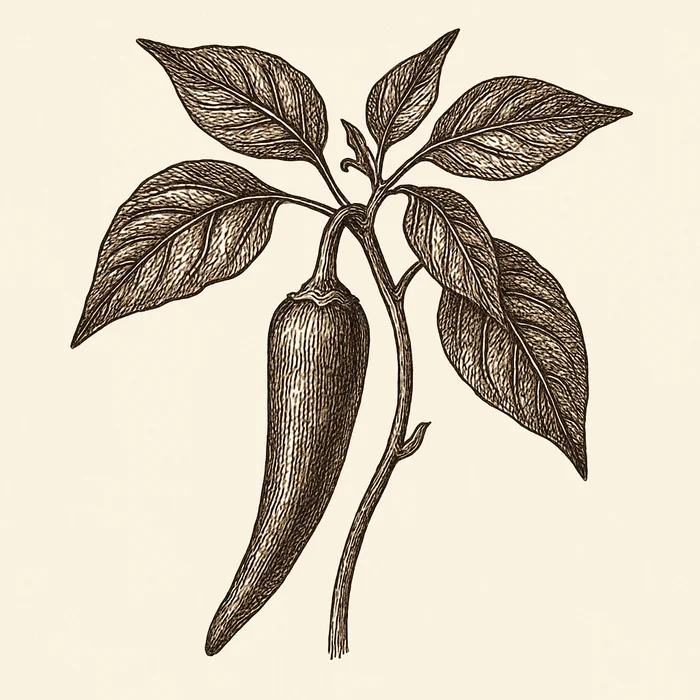
Chilli Pepper
A massive Chinese cohort study of nearly half a million people found that eating spicy food regularly -- primarily chilli peppers -- was associated with a 14% reduction in all-cause mortality. That is one of the largest observational signals for any single dietary habit.
Why It Matters for Longevity
Capsaicin, the compound that makes chillies burn, activates two molecular pathways the book highlights: TRPV1 (the vanilloid receptor that senses heat) and AMPK (a cellular energy sensor that drives fat burning and glucose uptake). Together, these pathways inhibit inflammation in fat and liver cells, improve glucose control, and increase energy expenditure.
The mortality data is striking. Lv et al. (2015, BMJ) followed over 485,000 Chinese adults for seven years and found that eating spicy food six or seven times per week was associated with a 14% lower risk of death from any cause compared to less than once weekly. The relationship held after adjusting for smoking, alcohol, and other dietary factors. This was observational, not causal proof, but the scale and consistency of the signal is hard to dismiss.
The obesity-prevention angle is backed by human data. Whiting et al. (2014, Obes Rev) conducted a meta-analysis showing capsaicin consumption increases energy expenditure by roughly 50 kcal/day and reduces appetite -- sustained over a year, equivalent to approximately 2.5 kg of fat.
The mechanism is concrete: Yoneshiro et al. (2012, Am J Clin Nutr) demonstrated that capsinoid supplementation (6 mg/day for 6 weeks) activated brown adipose tissue -- the heat-producing fat that burns calories rather than storing them. This directly confirms the book's claims about brown fat activation.
Sweet peppers deserve mention too. The book notes they contain capsinoids -- structurally similar to capsaicin but without the pungency. Capsinoids activate the same brown fat pathways without the burn, making them relevant for people who cannot tolerate heat.
Cardiovascular Protection: Beyond the Chinese Cohort
An Italian prospective cohort study added an important dimension to the mortality signal. Bonaccio et al. (2019, J Am Coll Cardiol) tracked 22,811 adults from the Moli-sani Study for a median of 8.2 years. Those consuming chilli pepper more than four times per week showed a 23% lower all-cause mortality (HR 0.77, 95% CI 0.66–0.90), a 34% lower cardiovascular mortality (HR 0.66, 95% CI 0.50–0.86), a 44% lower risk of ischemic heart disease death (HR 0.56, 95% CI 0.35–0.87), and a 61% lower cerebrovascular mortality (HR 0.39, 95% CI 0.20–0.75). The Italian cohort is significant because it controlled for adherence to the Mediterranean diet — meaning the benefit appeared above and beyond the protective effect of the diet as a whole. The cerebrovascular finding, a 61% lower risk, is among the most striking protective associations observed for any single food in a European population.
The mechanism connecting capsaicin to vascular protection runs through TRPV1-mediated nitric oxide (NO) production. TRPV1 activation in vascular endothelium stimulates eNOS phosphorylation, increasing NO bioavailability. NO drives vasodilation, inhibits platelet aggregation, and suppresses the expression of adhesion molecules that initiate atherosclerotic plaque formation. A detailed review of TRPV1 in the cardiovascular system confirmed that capsaicin activates endothelial TRPV1, triggering eNOS and reducing pro-inflammatory cytokine and chemokine production — a direct molecular link between chilli intake and cardiovascular protection (Munjuluri et al., 2022, Cells). The same review noted an important caveat: in the context of vascular inflammation, TRPV1 sensitisation can shift capsaicin's effect from vasodilatory to vasoconstrictive, suggesting that the protective signal is most robust in people without pre-existing inflammatory vascular disease.
Anti-Inflammatory Action at Physiological Doses
Capsaicin's anti-inflammatory effects operate at concentrations achievable through normal dietary consumption. At low concentrations, capsaicin suppresses NF-κB activation — the master transcription factor driving production of TNF-α, IL-1β, IL-6, and COX-2. This NF-κB inhibition reduces the chronic low-grade inflammatory tone that underlies most age-related disease. AMPK activation reinforces this effect: AMPK phosphorylates and inhibits IKKβ (the kinase that activates NF-κB), creating a second, mechanistically distinct anti-inflammatory brake that operates in liver, fat, and muscle cells simultaneously. The convergence of TRPV1-NO and AMPK-IKKβ pathways means that the anti-inflammatory effect of regular capsaicin consumption is not dependent on any single receptor being functional — it is pathway-redundant.
It is worth distinguishing the dose response: anti-inflammatory and metabolic benefits are associated with moderate habitual intake (consuming chillies three to seven times per week), while very high acute doses can trigger transient mucosal inflammation and, in individuals with underlying vascular inflammation, may provoke vasospasm. The protective effect in cohort studies accrues over time from regular moderate use, not from occasional heroic doses.
How to Use It
Use fresh or dried chillies several times per week, adjusted to your tolerance. There is no evidence that extreme heat is necessary -- even mild regular consumption appears beneficial. Fresh red chillies are excellent sources of vitamin C (144 mg per 100g, more than oranges). Start modest if you are not accustomed to heat; TRPV1 receptors desensitise with repeated exposure, meaning tolerance builds naturally over weeks.
What to Pair It With
| Ingredient | Why | Tradition |
|---|---|---|
| Garlic | Heat and pungency amplify each other | Global |
| Ginger | Complementary warming compounds | East Asian / Indian |
| Tomatoes | Salsa, arrabiata, Thai-style sauces | Mexican / Italian |
| Extra-virgin olive oil | Aglio, olio e peperoncino; fat carrier for capsaicin | Italian |
| Dark chocolate | Mole sauces; ancient Mesoamerican pairing | Mexican |
| Cumin | Heat and earthiness in curries and chilli | Mexican / Indian |
Flavor Profile
Fresh chillies are fruity and sharp with a bright, immediate heat. Dried varieties develop smoky, complex, almost sweet undertones (chipotle, ancho, guajillo). The heat builds and lingers -- capsaicin binds to fat-soluble receptors, which is why water does not help but dairy or oil does. Mild varieties like Anaheim contribute sweetness and colour without significant burn.
The Science
- Lv et al., 2015, BMJ: Population-based cohort of 485,000+ Chinese adults -- spicy food 6-7 times/week associated with 14% lower all-cause mortality over 7 years.
- Whiting et al., 2014, Obes Rev: Meta-analysis -- capsaicin increases energy expenditure ~50 kcal/day and reduces appetite via TRPV1 activation.
- Yoneshiro et al., 2012, Am J Clin Nutr: Capsinoid supplementation (6 mg/day for 6 weeks) activated brown adipose tissue and increased total energy expenditure in humans.
- Bonaccio et al., 2019, J Am Coll Cardiol: Moli-sani Italian cohort (22,811 adults, median 8.2 years) -- >4 servings/week chilli pepper associated with 23% lower all-cause mortality, 34% lower cardiovascular mortality, 44% lower ischemic heart disease mortality, 61% lower cerebrovascular mortality; effect independent of Mediterranean diet adherence.
- Munjuluri et al., 2022, Cells: Review of capsaicin and TRPV1 in the cardiovascular system -- TRPV1 activation in endothelium stimulates eNOS, increases NO, inhibits adhesion molecules and inflammatory cytokines; vasoconstrictive risk in pre-existing vascular inflammation.
References
- Lv J, Qi L, Yu C, et al. Consumption of spicy foods and total and cause specific mortality: population based cohort study. BMJ. 2015;351:h3942. PMID: 26242395. doi:10.1136/bmj.h3942
- Whiting S, Derbyshire E, Tiwari BK. Capsaicinoids and capsinoids. A potential role for weight management? A systematic review of the evidence. Obes Rev. 2012;13(12):1106-1115. PMID: 24246368. doi:10.1111/j.1467-789X.2012.01035.x
- Yoneshiro T, Aita S, Kawai Y, et al. Nonpungent capsaicin analogs (capsinoids) increase energy expenditure through the activation of brown adipose tissue in humans. Am J Clin Nutr. 2012;95(4):845-850. PMID: 22378725. doi:10.3945/ajcn.111.018606
- Bonaccio M, Di Castelnuovo A, Costanzo S, et al. Chili pepper consumption and mortality in Italian adults. J Am Coll Cardiol. 2019;74(25):3139-3149. PMID: 31856971. doi:10.1016/j.jacc.2019.09.068
- Munjuluri S, Wilkerson DA, Sooch G, et al. Capsaicin and TRPV1 channels in the cardiovascular system: the role of inflammation. Cells. 2022;11(1):18. PMID: 35011580. doi:10.3390/cells11010018
Key Nutrients
| Nutrient | Per 100g (fresh red) | Notes |
|---|---|---|
| Capsaicin | 0.1–6 mg (varies by variety) | Activates TRPV1 and AMPK; tolerance builds with repeated use |
| Vitamin C | 144 mg (160% RDA) | Among richest sources; degrades with drying |
| Beta-carotene | 534 mcg RAE (59% RDA) | Red/orange varieties richest; fat-soluble |
| Capsinoids | Present in sweet peppers | Same metabolic effects as capsaicin without the burn |