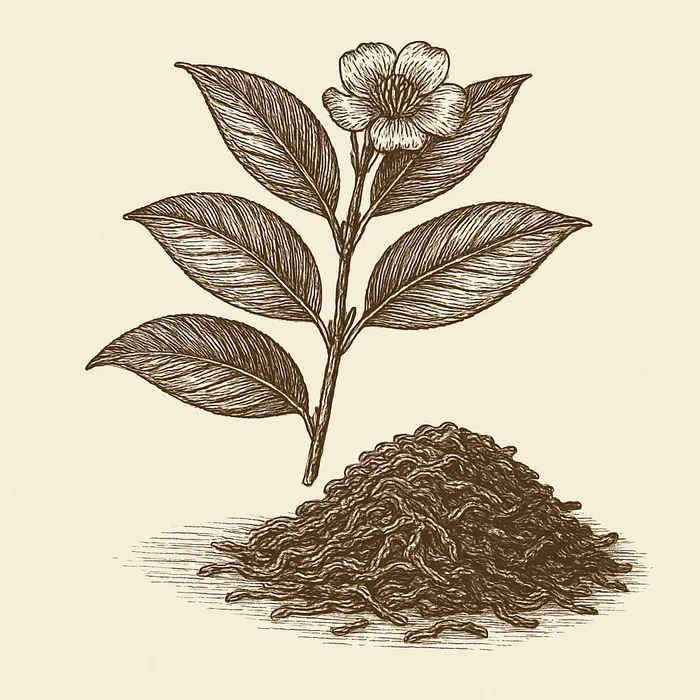
Black Tea
Black tea is a recommended breakfast beverage option in the Longevity Diet, typically combined with green tea and served with fresh-squeezed lemon (1 teabag per serving).
Why It Matters for Longevity
Black tea provides theaflavins and thearubigins — antioxidant polyphenols unique to the oxidation process — alongside caffeine and L-theanine for cognitive alertness. The Longevity Diet includes it as part of a morning tea routine, paired with green tea for complementary polyphenol coverage.
In the Ohsaki cohort of 40,530 Japanese adults, green and black tea consumption of 5+ cups per day was associated with 26% lower cardiovascular disease mortality and 16% lower all-cause mortality over 11 years (Kuriyama et al., 2006, JAMA). A systematic review and meta-analysis of randomised controlled trials found that black tea consumption produced small but consistent reductions in systolic blood pressure, with effects strongest in populations with higher baseline blood pressure (Greyling et al., 2014, PLoS One). Tea polyphenols including theaflavins and thearubigins are partially absorbed in the small intestine with the remainder fermented by colonic microbiota into bioactive phenolic metabolites (Clifford et al., 2013, Am J Clin Nutr).
Mortality and Cardiovascular Evidence at Scale
The strongest evidence base for black tea and longevity comes from large cohort data pooled in meta-analyses. Kim and Je (2024, Epidemiol Health) pooled 38 prospective cohort datasets covering 1,956,549 participants and found that the highest versus lowest category of tea consumption was associated with a 14% reduction in cardiovascular disease mortality (effect size 0.86, 95% CI 0.79–0.94) and a 10% reduction in all-cause mortality (ES 0.90, 95% CI 0.86–0.95). The dose-response analysis showed a non-linear relationship, with the greatest all-cause mortality benefit at approximately 2 cups per day — meaningful because it is achievable without unusual consumption patterns.
The mechanism linking tea polyphenols to cardiovascular outcomes involves multiple pathways. Van Duynhoven et al. (2013, Am J Clin Nutr) reviewed the interaction between black tea polyphenols and human gut microbiota, identifying three converging mechanisms: anti-inflammatory activity, blood pressure reduction, and improvement in platelet and endothelial function — all mediated by microbial bioconversion products of theaflavins and thearubigins in the colon. The theaflavin polymer structure survives gastric digestion largely intact; colonic bacteria convert these compounds into simpler phenolic acids (including 3,4-dihydroxyphenylpropionic acid and 3-hydroxyphenylacetic acid) that are absorbed and exert systemic effects at physiologically relevant concentrations.
Blood Pressure: RCT Evidence
A 2021 dose-response meta-analysis by Ma et al. (Food & Function, 13 RCTs, 22 study arms) quantified the blood pressure effect of black tea supplementation with more precision than earlier reviews: systolic BP decreased by 1.04 mmHg (95% CI −2.05 to −0.03; p=0.04) and diastolic BP by 0.59 mmHg (95% CI −1.05 to −0.13; p=0.01). While modest in absolute terms, these reductions are consistent across studies and comparable in magnitude to other dietary interventions. The effect was more pronounced in longer-duration trials (>7 days) and in male participants. The proposed pathway: theaflavins inhibit angiotensin-converting enzyme (ACE) and act as endothelium-dependent vasodilators, increasing nitric oxide bioavailability in vascular smooth muscle.
The earlier Greyling et al. (2014) systematic review reached consistent conclusions with effects concentrated in populations with elevated baseline blood pressure, which is where dietary blood pressure interventions are clinically most relevant. Given that hypertension is a primary driver of cardiovascular mortality, even a 1 mmHg reduction at population scale represents a meaningful shift in risk.
Bone Density
Habitual tea consumption has also been associated with reduced fracture risk and preserved bone mineral density in observational data. Zhou et al. (2024, J Bone Miner Metab, meta-analysis of 48 studies) found tea drinkers had a pooled relative risk of 0.910 (95% CI 0.845–0.980) for fractures across 20 studies and 0.800 (95% CI 0.674–0.950) for osteoporosis across 10 studies. The site-specific analysis showed protective effects at the hip (RR 0.903), femur (0.735), and lumbar spine (0.776). Dose-response analysis found the greatest protective benefit at fewer than 4.5 cups daily. The proposed mechanism involves fluoride content (tea accumulates fluoride from soil), flavonoid stimulation of osteoblast activity, and inhibition of osteoclast-driven bone resorption via NF-κB pathway modulation.
Theaflavins and Thearubigins: Oxidized Catechin Chemistry
The polyphenol chemistry of black tea is distinct from green tea. During full oxidation (fermentation), catechins are enzymatically converted to theaflavins (a group of benzotropolone-containing dimers) and thearubigins (a heterogeneous mixture of higher-molecular-weight oxidation polymers). A brewed 200 ml cup of black tea contains approximately 100 mg of theaflavins and 700 mg of thearubigins, compared to minimal amounts in green tea where oxidation has been halted.
Theaflavins reduce LDL oxidation through direct radical-scavenging and metal-chelating activity — oxidized LDL is a key driver of atherosclerotic plaque formation. Both theaflavin-3-gallate and theaflavin-3,3'-digallate inhibit LDL oxidation in cell models at concentrations achievable after habitual consumption. The thearubigins, despite being less well-characterized due to their structural complexity, appear to provide sustained antioxidant capacity in the colon after theaflavin absorption in the upper gut.
L-Theanine and Caffeine Synergy
Black tea provides L-theanine (~10–25 mg per cup) and caffeine (~47 mg per cup) in a ratio that produces measurable cognitive effects distinct from caffeine alone. Giesbrecht et al. (2010, Nutr Neurosci, 44 participants, double-blind RCT) demonstrated that 97 mg L-theanine combined with 40 mg caffeine — roughly equivalent to two cups of black tea — significantly improved task-switching accuracy and self-reported alertness (both p<0.01) and reduced tiredness (p<0.05) compared to placebo. The effect was specific to attention switching and was not observed for visual search, choice reaction time, or mental rotation.
The mechanism: L-theanine is a non-proteinogenic amino acid that crosses the blood-brain barrier and promotes alpha-wave activity, associated with a state of relaxed alertness. Caffeine antagonizes adenosine A1 and A2A receptors, preventing the accumulation of sleep pressure. Together, the theanine dampens the jitteriness associated with caffeine at equivalent stimulant doses, while caffeine amplifies the alerting effect. The combination produces a different cognitive state than either compound in isolation — focused attention rather than broad arousal.
Gut Microbiome Interactions
The gut microbiome mediates a substantial portion of black tea's cardiovascular effects. High-molecular-weight thearubigins reach the colon largely intact and are fermented by resident bacteria into bioactive catabolites. This creates individual variation in response to black tea consumption: people with gut microbiomes capable of efficient theaflavin conversion produce higher circulating levels of phenolic metabolites and show greater cardiovascular benefit. Regular tea consumption itself shifts microbiome composition, increasing populations of beneficial bacteria and reducing pathobionts — a self-reinforcing dynamic between the beverage and the microbial community that processes it.
How to Use It
Combine with green tea for complementary polyphenol profiles. Squeeze fresh lemon into the cup — vitamin C stabilises catechins in the gut and enhances their bioavailability. Avoid adding milk: casein binds polyphenols and reduces their absorption. The evidence for mortality benefit appears strongest at 2–5 cups per day; consuming 1 cup as part of a morning routine alongside green tea aligns with the Longevity Diet's recommendation.
What to Pair It With
| Ingredient | Why | Tradition |
|---|---|---|
| Lemon | Vitamin C stabilises catechins and enhances bioavailability | The Longevity Diet |
| Green tea | Complementary polyphenol profiles — catechins + theaflavins | The Longevity Diet |
| Plant milk | Avoids casein binding of polyphenols unlike dairy milk | General |
Flavor Profile
Bold, malty, slightly astringent, and tannic. Aroma is earthy and malty with floral notes in high-grown varieties and smokiness in Lapsang. Full-bodied in the cup, mellowing with a squeeze of lemon.
The Science
- Kuriyama et al., 2006, JAMA: Ohsaki cohort — 40,530 adults — green and black tea 5+ cups/day associated with 26% lower cardiovascular mortality and 16% lower all-cause mortality over 11 years.
- Greyling et al., 2014, PLoS One: Systematic review and meta-analysis of RCTs — black tea consumption produced consistent reductions in systolic blood pressure, strongest in those with elevated baseline.
- Clifford et al., 2013, Am J Clin Nutr: Tea polyphenols partially absorbed in small intestine; remainder fermented by colonic microbiota into bioactive phenolic metabolites with antioxidant and anti-inflammatory activity.
- Kim & Je, 2024, Epidemiol Health: Meta-analysis of 38 prospective cohort datasets (1,956,549 participants) — highest tea intake associated with 14% lower CVD mortality and 10% lower all-cause mortality; optimal dose ~2 cups/day.
- Ma et al., 2021, Food Funct: Dose-response meta-analysis of 13 RCTs (22 arms) — black tea supplementation reduced SBP by 1.04 mmHg and DBP by 0.59 mmHg; effect more pronounced in longer trials and male participants.
- Zhou et al., 2024, J Bone Miner Metab: Meta-analysis (48 studies) — tea consumption associated with RR 0.910 for fractures, 0.800 for osteoporosis, with site-specific protection at hip, femur, and lumbar spine.
- Giesbrecht et al., 2010, Nutr Neurosci: Double-blind RCT (n=44) — 97 mg L-theanine + 40 mg caffeine improved task-switching accuracy and alertness (p<0.01) and reduced tiredness (p<0.05) versus placebo.
- van Duynhoven et al., 2013, Am J Clin Nutr: Black tea polyphenols interact with colonic microbiota to produce cardiovascular-active metabolites via anti-inflammatory, blood pressure-lowering, and platelet/endothelial function pathways.
References
- Kuriyama S, Shimazu T, Ohmori K, et al. Green tea consumption and mortality due to cardiovascular disease, cancer, and all causes in Japan. JAMA. 2006;296(10):1255-1265. PMID: 16968850. doi:10.1001/jama.296.10.1255
- Greyling A, Ras RT, Zock PL, et al. The effect of black tea on blood pressure: a systematic review with meta-analysis of randomized controlled trials. PLoS One. 2014;9(7):e103247. PMID: 25079225. doi:10.1371/journal.pone.0103247
- Clifford MN, van der Hooft JJ, Crozier A. Human studies on the absorption, distribution, metabolism, and excretion of tea polyphenols. Am J Clin Nutr. 2013;98(6 Suppl):1619S-1630S. PMID: 24172307. doi:10.3945/ajcn.113.058958
- Kim Y, Je Y. Tea consumption and risk of all-cause, cardiovascular disease, and cancer mortality: a meta-analysis of thirty-eight prospective cohort data sets. Epidemiol Health. 2024;46:e2024056. PMID: 38938012. doi:10.4178/epih.e2024056
- Ma C, Zheng X, Yang Y, Bu P. The effect of black tea supplementation on blood pressure: a systematic review and dose-response meta-analysis of randomized controlled trials. Food Funct. 2021;12(2):582-594. PMID: 33237083. doi:10.1039/d0fo02122a
- Zhou F, Wang T, Li L, et al. Tea consumption and risk of bone health: an updated systematic review and meta-analysis. J Bone Miner Metab. 2024;42(1):1-16. PMID: 38057603. doi:10.1007/s00774-023-01479-y
- Giesbrecht T, Rycroft JA, Rowson MJ, De Bruin EA. The combination of L-theanine and caffeine improves cognitive performance and increases subjective alertness. Nutr Neurosci. 2010;13(6):283-290. PMID: 21040626. doi:10.1179/147683010X12611460764840
- van Duynhoven J, Vaughan EE, van Dorsten F, et al. Interactions of black tea polyphenols with human gut microbiota: implications for gut and cardiovascular health. Am J Clin Nutr. 2013;98(6 Suppl):1631S-1641S. PMID: 24172295. doi:10.3945/ajcn.113.058263
Key Nutrients
| Nutrient | Per 200 mL brewed cup | Notes |
|---|---|---|
| Theaflavins | ~100 mg | Benzotropolone dimers formed during oxidation; inhibit LDL oxidation and ACE activity |
| Thearubigins | ~700 mg | Complex polymer mixture; fermented by colonic microbiota to cardiovascular-active phenolic acids |
| L-Theanine | ~10-25 mg | Crosses blood-brain barrier; promotes alpha-wave activity; synergistic with caffeine for attention-switching |
| Caffeine | ~47 mg | Adenosine receptor antagonist; epidemiologically associated with reduced Parkinson's and T2D risk |